




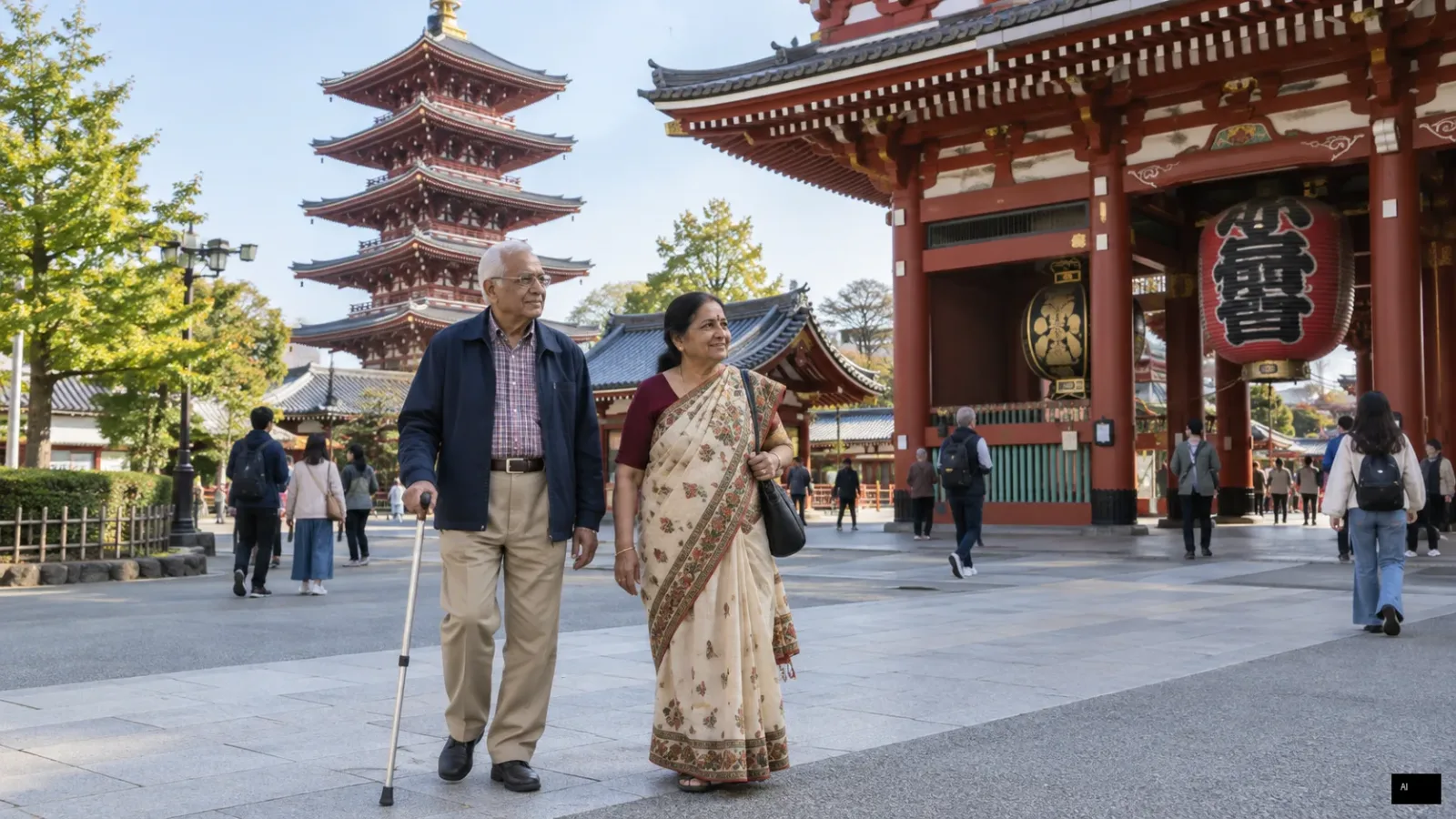
- Senso-ji window
- Before 9 am, or after 5 pm
- Nakamise walk
- Flat, paved, about 250 m
- Crowd peak
- 10 am-4 pm, worst on weekends
- Evening bonus
- Temple lit until about 11 pm, grounds open 24 hrs
- Rickshaw option
- About 9,000 yen per 30 minutes
Tokyo looks intimidating for parents, but the city rewards slow travel more than most: everything is punctual, clean and seated somewhere. The rule for this itinerary is simple: one sight per half-day, temples before the crowds, evenings spent sitting. Three days is enough for a gentle, complete first taste.
Day 1: land, settle, lanterns at dusk
Arrive, check in and do nothing ambitious. Around 5 pm, head to Asakusa and walk to Senso-ji. The temple grounds are open around the clock and the main structures stay illuminated until about 11 pm, so the evening visit is both practical and beautiful, and Nakamise-dori's crowds have thinned well before then. Dinner early at a restaurant with step-free entry (several along the surrounding streets have them), then back to the hotel by 9 pm.
Day 2: Senso-ji at the quiet hour, the seated version of Asakusa
Go back at 7:30 am. The walk from Kaminarimon Gate through Nakamise-dori to the main hall is paved, flat and about 250 metres; accessibility guides note that the shopping street gets extremely crowded between 10 am and 4 pm, worst on weekends, so the early hour is the whole trick. The grounds have wide paved walkways, about 20 steps in total, and an elevator on the west side of the main hall to the raised prayer area; ask a staff member and they will point you to it. Draw an omikuji fortune slip for 100 yen, the drawers are at wheelchair height, then coffee and a slow look at the five-story pagoda from the west side, where the paths are widest. Midday back at the hotel. Evening: a Sumida river cruise or a long dinner, both fully seated. If parents want the classic Asakusa experience without the walking, a jinrikisha rickshaw runs about 9,000 yen per 30 minutes.
Day 3: a garden morning, an easy afternoon
Keep the last day soft. Pick one: a morning in a large flat park or garden with benches, or a museum visit, which in Tokyo always means good lifts, loan wheelchairs and plenty of seating. Skip the temptation to add Shibuya crossing or Harajuku at midday; they are standing-room spectacles and the least parent-friendly hours in the city. Finish with an early dinner near the hotel and pack slowly.
Practical notes for parents in Tokyo
- Trains are excellent but the big interchange stations involve long indoor walks and rush-hour crush; travel 10 am-3 pm, and take a taxi for anything needing two changes (short hops start around 1,200 yen).
- Every station has elevators, but finding them can add 5-10 minutes; follow the yellow signs and budget the time.
- Convenience stores are the secret weapon: hot seating-light snacks, clean toilets, and onigiri parents can eat without a menu negotiation.
- Carry the hotel's business card in Japanese to hand to taxi drivers.
For getting into the city, Delhi to Tokyo flights covers the airport choice, and Tokyo Station shinkansen platforms sorts the rail side.

A Miranda House graduate and lawyer who traded courtrooms for slow travel. Cheshta travels with the batches we host ourselves, with a soft spot for travelling alongside elders.
Planning your next trip?
We'll handle insurance, hotels, airport assistance and the itinerary — the same way we do it for every trip.
Questions on this article
asked by readers, answered by us
Was this helpful?
one tap, no sign-up