




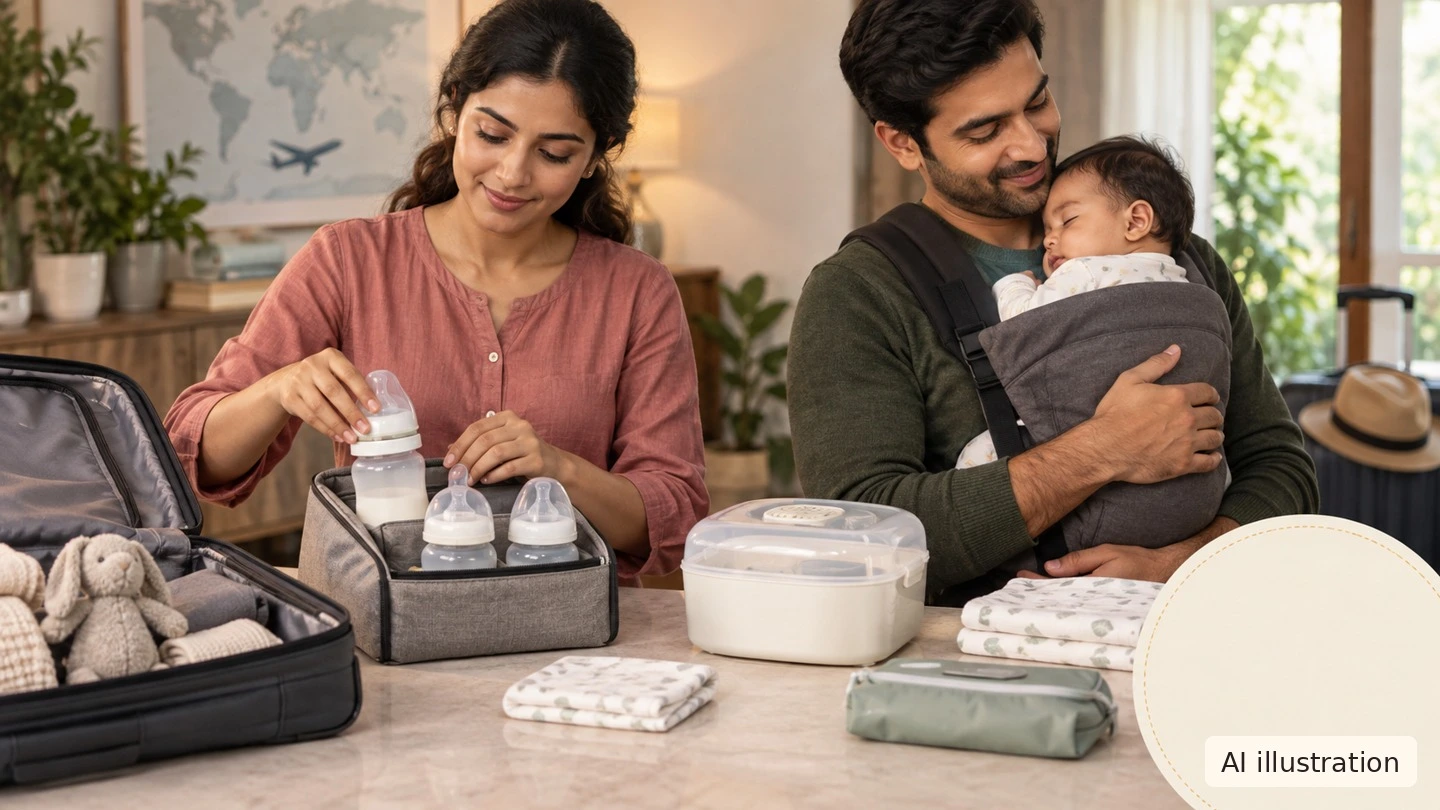
AI illustration: A fictional family prepares covered baby bottles before travel, not an aircraft sterilising service. Fictional scene, not an actual location, person or service.
A rinse is not sterilising. Plan enough prepared equipment and a workable cleaning method before travel rather than expecting the aircraft galley to become a kitchen.
Separate cleaning from sterilising
NHS guidance says to clean bottles, teats and feeding equipment in hot soapy water, rinse them, and then sterilise. A dishwasher cleans but does not sterilise. It recommends sterilising feeding equipment until the baby is at least 12 months old, whether used for expressed milk or formula. Follow your own health professional’s advice for the baby and equipment.
Choose a method you can actually carry out
The NHS lists cold-water sterilising solution, steam and boiling. Each needs appropriate equipment and the manufacturer’s instructions. A method that needs a pan, microwave, safe preparation surface or a large clean water supply may not be workable in the cabin. Do not improvise by putting a bottle briefly under a hot-water tap or treating a wipe as a validated sterilising process.
Prepare the journey, not only the flight time
Count the trip from leaving home to reaching a place where you can safely clean equipment, including airport waits and possible disruption. Discuss the number of prepared bottles and your feeding plan with a health professional if you are unsure. Carry equipment in a way that keeps clean and used items separate; check that the baby’s normal bottles remain intact and suitable for the chosen method.
Do not depend on a crew promise you have not obtained
Ask the operating airline what help or facilities it can provide, but do not assume access to a microwave, boiling pan, galley worktop or steriliser. A drink service is not confirmation of a bottle-cleaning service. If your plan cannot work without those facilities, change it before travel. A connecting airport or hotel also needs its own confirmed arrangement.
Keep the prepared equipment clean
The NHS advises leaving equipment in the steriliser until needed where possible. If removing it, put lids and teats on promptly, wash and dry your hands before handling, and assemble on a clean disinfected surface. Ask a health professional how to apply this safely to your journey. This article is about equipment hygiene, not formula preparation, milk storage times or airport liquid allowances.
Questions before you travel
Does a quick rinse sterilise a bottle?
No. Cleaning and sterilising are separate steps.
Can I assume the crew will sterilise equipment?
No. Confirm any help and carry a plan that does not depend on an unverified facility.
Does this explain safe milk storage time?
No. Get feeding and storage advice separately for the baby and journey.

A Miranda House graduate and lawyer who traded courtrooms for slow travel. Cheshta travels with the batches we host ourselves, with a soft spot for travelling alongside elders.
Planning your next trip?
We'll handle insurance, hotels, airport assistance and the itinerary — the same way we do it for every trip.
Questions on this article
asked by readers, answered by us
Was this helpful?
one tap, no sign-up