




- LINE
- identify the next line
- DIRECTION
- read the endpoint
- NEXT STOP
- cross-check sequence
- TRAIN
- check actual display
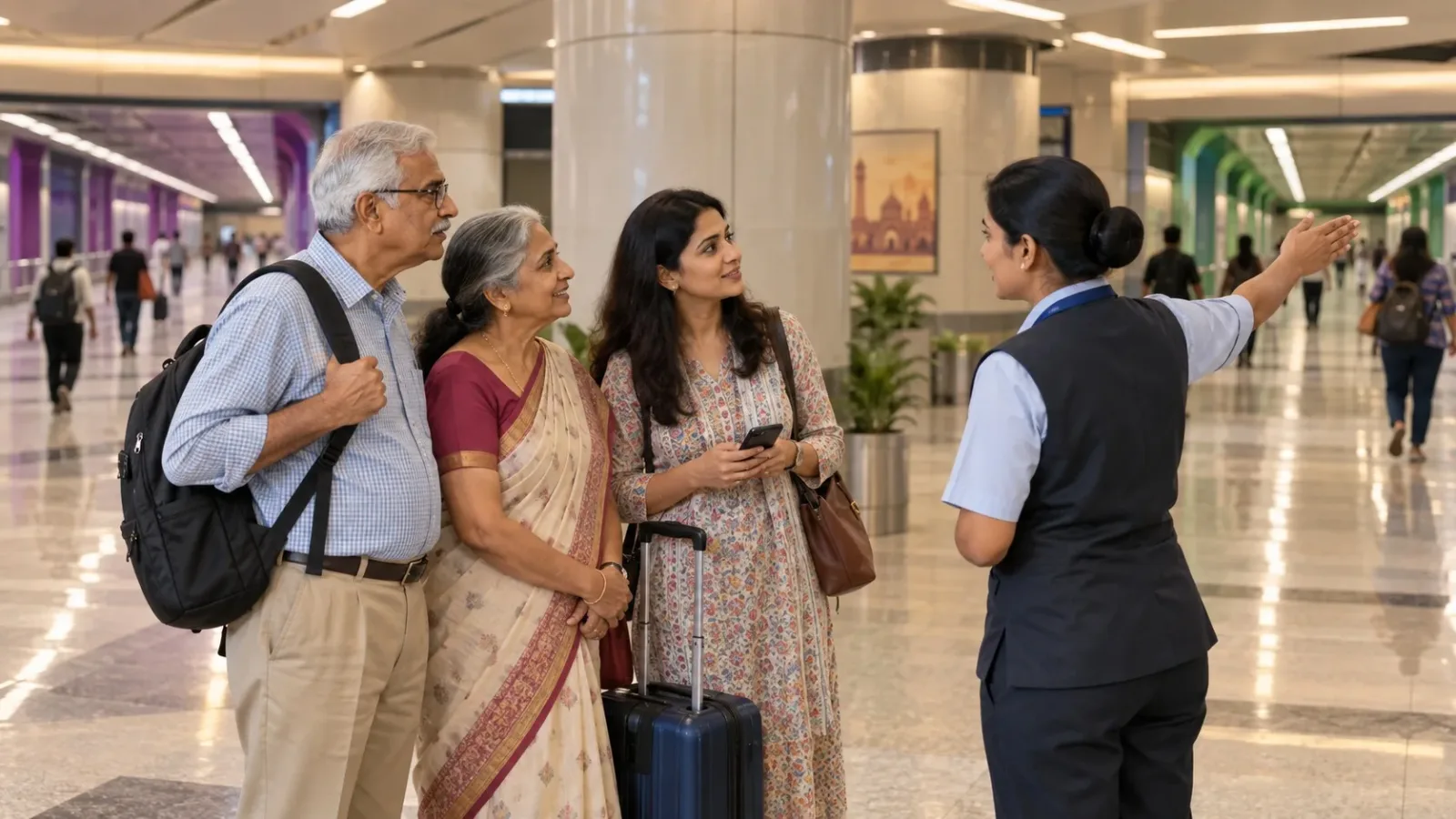
Illustration: a fictional family checks a platform direction with an attendant in a generic metro concourse. This is not a Bengaluru station photograph, actual sign or verified platform layout.
At a Bengaluru Metro change, identify the next line, the direction shown for that line and the next stop toward your destination before boarding. Do not choose a platform only because its colour matches your route or another passenger is heading there. If the display, map and your plan do not agree, ask staff before the train arrives.
Your destination may not be the name on the direction sign
A direction label can name a station farther along the line than your own stop. The useful question is whether your destination lies in that direction, not whether the sign exactly repeats the place you want. Follow the station sequence from the interchange toward your destination and identify the next stop on that side.
This is a reading method, not a claim about a particular live Bengaluru sign or platform number. A train's actual displayed destination also matters: do not assume that every train runs to the far endpoint in an old saved map. If a service ends before your stop, ask how to complete the journey.
Use the official map, and read its scope
BMRCL's official schematic route-map page provides an image rather than a text-only station sequence. The image inspected during this review is Kannada-labelled and distinguishes coloured corridors from other connections through its legend. The page does not establish here a dated instruction for the exact platform or train you should use today.
Read the legend and do not treat every drawn line or extension as an operating service. Match the actual station name, line and current operator guidance. If you cannot comfortably read the available map, ask station staff to identify your destination and the next stop with you. Do not guess from a similar-looking name.
The supplied official tickets and fare-rules pages concern ticketing, not proof of a current platform direction. Their retrieved content is undated. This article does not import a fare, penalty, time limit or wrong-direction correction rule from those pages.
A fictional sign-reading example
This example uses invented names and is not a Namma Metro map, station sign or current service. No real platform number is assigned.
| Item | Fictional example |
|---|---|
| Line sequence | West End - Market - Junction - Garden - East End |
| Where you change | Junction |
| Your destination | Garden |
| Direction to check | The side toward East End, because Garden lies on that side of Junction. |
| Next-stop cross-check | Garden is the next stop in this example. A direction toward Market would be the opposite way. |
| Train-specific check | Read the actual destination display and ask if it serves Garden. A line colour alone does not settle that. |
The lesson is not "always take the eastbound side". It is to compare your station's position with the direction label and actual train. A schematic map's visual left/right is not the same as the physical left/right of a concourse.
Use a four-field handover at the interchange
- Destination: save the exact Metro station name, separate from the hotel, hospital or other street address.
- Next line: identify the line you need after changing. Follow current signs for that line, not an exit sign simply because it points toward a familiar landmark.
- Direction and next stop: read the platform direction, locate your destination along that sequence and cross-check the next station.
- Actual train: check the arriving service's display or announcement. Ask staff if it differs from the platform heading or stops short of your destination.
Suggested question: "We are going to [exact station]. After changing here, which line and direction should we follow? What is the next stop on that side, and does this arriving train serve our destination? We need [lift or walking requirement]."
If you are unsure or have already gone the wrong way
Pause away from the platform edge and ask staff. Do not rush between closing doors or split the family across trains while one person checks the map. Agree a regrouping point before travelling, especially if phones or mobile data may be unreliable.
If you discover the mistake after boarding, use the displayed and announced stations to identify where you are, then ask staff for the appropriate correction. This guide does not establish that you can reverse direction through any paid area, use the same ticket in every situation or avoid an additional charge. Confirm the actual ticket and route before passing a fare gate.
With parents, the correct direction is only part of the change
Check the full accessible path between platforms, including lift location, any level change and walking distance. A short line change on a diagram is not a measured walk or a promise that the required lift is working. Keep one person responsible for bags and another for route confirmation if that suits your group.
Write the confirmed line, direction label and next stop in a short note that everyone can read. Update it if staff or current signs show a different service pattern. No fixed transfer time, live platform allocation or real sign photograph is supplied here.
Reviewed 6 November 2026. Official public pages and the map image were inspected. No journey, station-sign survey, ticket purchase or platform test was performed. Real-time direction, service destination, platform and ticket-correction conditions need confirmation from current operator information.

A Miranda House graduate and lawyer who traded courtrooms for slow travel. Cheshta travels with the batches we host ourselves, with a soft spot for travelling alongside elders.
Planning your next trip?
We'll handle insurance, hotels, airport assistance and the itinerary — the same way we do it for every trip.
Questions on this article
asked by readers, answered by us
Was this helpful?
one tap, no sign-up