




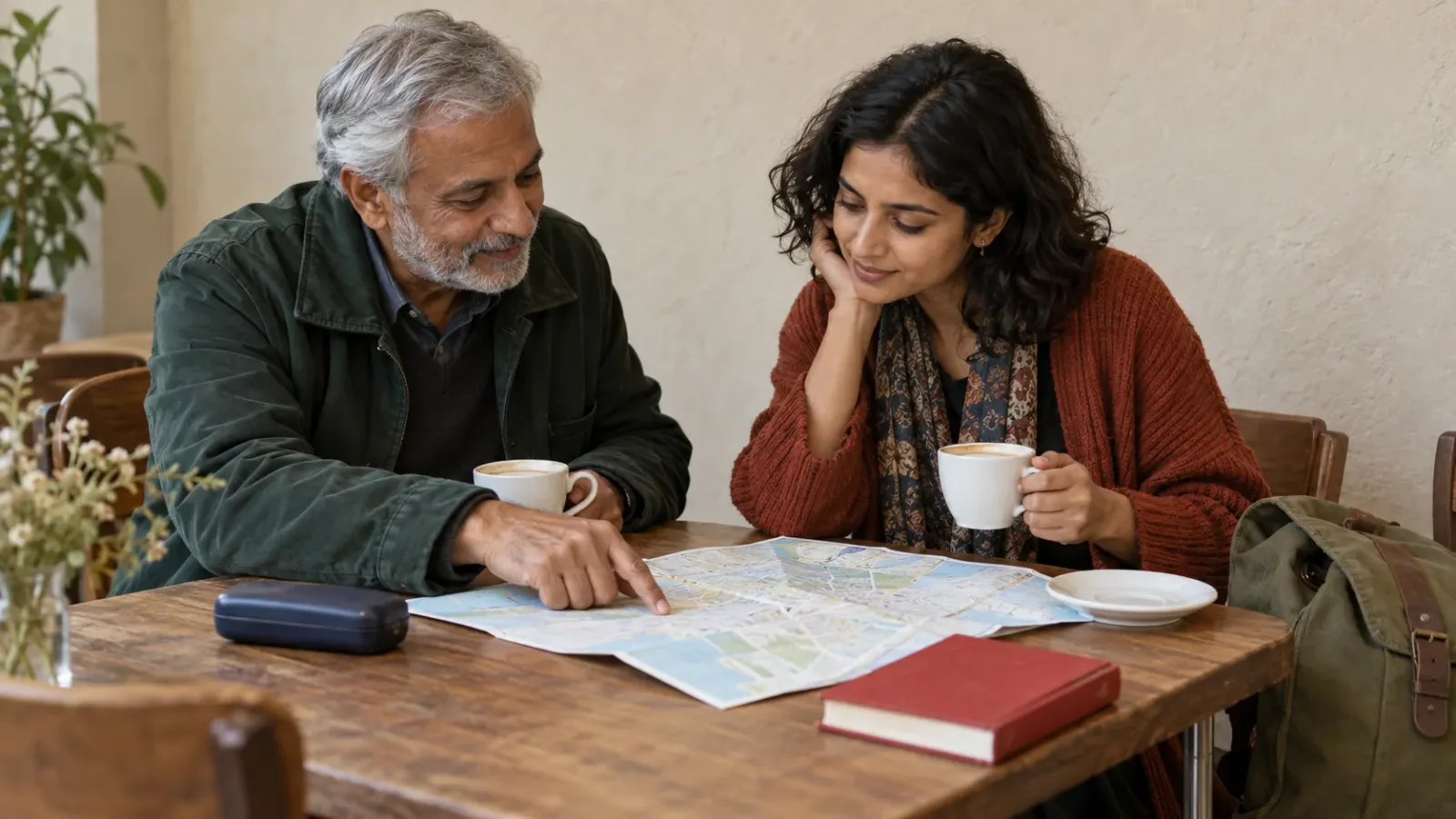
Brescia makes a rewarding day when the squares and museums have room to breathe. Begin with the old town, protect a meal break, and choose how much of Santa Giulia and Roman Brixia you want to explore. The castle hill can be an option, not a compulsory final climb after a large museum visit.
Primary sources checked: 16 November 2026. This is a suggested order, not a measured walking-time or step-free-route guarantee. Current closures and the exact ticket matter more than fitting every advertised attraction into one day.
1. Give the historic squares a proper beginning
The city's tourism material places Piazza della Loggia, Piazza Paolo VI and Piazza della Vittoria within the historic centre. Piazza Paolo VI brings together the Duomo Vecchio, Duomo Nuovo and Broletto, while Piazza della Loggia offers a different civic setting around the Loggia and clock tower.
Start with a small selection of these spaces rather than a timed march through all the squares. Cathedral interiors and the Broletto have their own visit arrangements; this guide does not confirm current interior hours or an included visit with a museum ticket.
Then make the Via Musei area the main cultural block if Santa Giulia and Brixia are your priorities. Choose a seated break before deciding whether to continue to another museum or the castle. Buying a ticket that includes more sites does not oblige the group to visit all of them that afternoon.
2. Choose €19 integrated or €18 museums-only deliberately
Fondazione Brescia Musei currently lists two main products. The €19 full-price Integrated Ticket includes Brixia's archaeological area, Santa Giulia, Pinacoteca Tosio Martinengo, the Luigi Marzoli Arms Museum and the Museum of the Risorgimento. It also includes one entry to the exhibition “Tesori. Il grande romanzo dei musei bresciani”.
The €18 full-price Museums Ticket includes those four civic museums and the same named exhibition, but not Brixia. If the Capitolium and archaeological area are central to your plan, the €18 product is not the equivalent ticket with a different name.
The published over-65 prices are €16 for integrated and €15 for museums-only. Confirm eligibility and accepted age documents for your visitors before selecting a reduced rate. These are current published prices, not a checked final basket total. Some exhibitions have separate ticketing, so the named exhibition inclusion does not make every exhibition free.
3. Long validity means one entry, not unlimited returns
The operator's Italian and English ticket pages say both products last until 22 August 2027 and allow one admission to each included site. That is not unlimited re-entry and is not a requirement to complete every museum on the day of purchase.
The separate group-ticket condition gives three days, ending at midnight on the third day. Do not transfer that group rule to an ordinary individual ticket, or assume an individual validity period overrides a chosen visit time or a room closure.
The operator says tickets are non-refundable and cannot be reissued if lost, stolen or damaged. Its emailed order summary, on paper or digitally, is the admission document. Keep that confirmation available and check the selected product, total, visit arrangements and proof of reduction before payment.
4. Check two different closures before relying on the route
Santa Giulia's own page currently says the cloisters of San Salvatore and Santa Maria in Solario are closed for extraordinary maintenance through Tuesday 17 November 2026 inclusive. That is a notice about two cloisters, not a statement that the whole museum is closed.
A later date should trigger a fresh check, not an automatic promise of reopening on 18 November. The museum's general account describes the free UNESCO Corridor linking the Capitolium area and Santa Giulia through a monumental route. With cloister work in progress, ask which part of that route is actually open instead of promising an uninterrupted walk.
Separately, the operator's visit page says the Roman Theatre is temporarily closed for works. Do not confuse the theatre closure with closure of all Brixia, or use a general description of the archaeological area to promise theatre access.
5. Use winter museum hours and choose fewer rooms
The current operator timetable is Tuesday-Sunday 10:00-18:00 from 1 October to 31 May, with last admission 17:15. Non-holiday Mondays are closed. From 1 June to 30 September, the published hours are 10:00-19:00 with last admission 18:15.
Santa Giulia occupies a former monastic complex and includes Roman domestic remains, San Salvatore, the Nuns' Choir and Santa Maria in Solario, where the operator describes the Cross of Desiderius. This is a large collection, so choose the rooms and objects that interest the group rather than treating its full scope as a short stop.
For actual openings, tours and available rooms, the booking centre is +39 030 8174200 or cup@bresciamusei.com. Its published enquiry hours are Monday-Saturday 10:00-18:00, excluding holidays. A request for a tour needs confirmation; Hindi interpretation has not been confirmed here.
6. The included museums do not have equal access
The operator describes Santa Giulia as partially accessible, with accessible lifts and toilets. It identifies the lower hall of Santa Maria in Solario and the crypt of San Salvatore as inaccessible to visitors with mobility disabilities, with virtual material offered instead. It says stairlift adaptation for the Chapter House and San Salvatore church is in progress, not already completed.
Brixia is described as accessible using two lifts, but older route text about its theatre gate does not cancel the current theatre closure. The Pinacoteca and Risorgimento museum are described as accessible with lifts and toilets; the Luigi Marzoli Arms Museum is described as inaccessible to visitors with mobility disabilities.
Confirm today's lift operation, reachable rooms, thresholds, toilet route and any mobility-aid availability for your group. An integrated ticket includes museums with different physical conditions. The castle grounds on Cidneo hill are free according to city tourism, but that is not a step-free route promise; its detailed displayed opening periods are old, so ask for current gate hours rather than relying on them.
7. Arrange lunch around the actual service
La Vineria is at Via X Giornate 4, near Piazza della Loggia. Its current site lists Monday closed, Tuesday-Friday 11:30-15:00 and 19:15-23:00, and Saturday-Sunday 11:30-15:00 and 18:30-23:00. Confirm the actual date, kitchen and last-order times rather than treating venue hours as a table reservation.
The published numbers are +39 030 280543 and +39 351 3023427. Ask about the table, entrance, toilet, complete menu and cancellation terms. The current menu lists €2.50 cover and €5 seasonal sides; individual dish prices and the final bill still need checking.
The restaurant's present home page links its current menu PDFs. Do not substitute an older tasting-menu price from a separately indexed tradition page just because that page is still reachable.
8. Read adaptation labels before ordering casoncelli
La Vineria's English and Italian menus explicitly say dishes labelled gluten-free, lactose-free or vegan/vegetarian can be prepared that way on specific request. The label is not proof that the default dish has already been changed.
Its Earth Cappuccino has Jerusalem artichoke foam, glazed root vegetables and porcini powder, but lists soy and milk allergens. Its Tarte Tatin includes onions, pear condiment and stracchino cheese, with gluten, egg, milk and mustard codes. Both carry adaptation labels. Ask exactly what changes are possible; neither description confirms a Jain or allergy-safe dish.
Casoncelli are listed with either Bagòss cheese or braised-meat filling and gluten, egg, milk, nut and celery allergens. The risotto contains squid and fermented garlic, while Bariloca has chicken ragù. A familiar pasta or vegetable-led title is not enough to establish a suitable meal.
The local tourism authority also explains that casoncelli recipes vary: some use bread and cheese, others meat or greens, and the Barbariga version includes ham and meat stock. Name the filling, sauce, stock and preparation you need checked, rather than assuming the regional dish is always vegetarian.
For a wider journey, see our private tours and plan your trip pages. These links do not mean a package includes Brescia, museums, transport or meals.
Sources and image disclosure
- City tourism itinerary: squares and museum geography, not a measured walking promise
- Museum operator Italian tickets: current 19/18 products, validity, proof and refund terms
- Museum operator English tickets: Brixia included versus excluded
- Museum operator: winter/summer hours and Roman Theatre closure
- Santa Giulia operator: two cloisters closed through 17 November inclusive, collection and corridor
- Museum operator: different physical access across included venues
- City tourism: free castle grounds, with old detailed hour periods not used
- Restaurant own current contacts, hours and linked menus
- Restaurant linked English menu: adaptations on request, ingredients and allergens
- Restaurant linked Italian menu: same adaptation wording and recipes
- Local tourism authority: casoncelli fillings vary, including ham and meat stock
Image disclosure: AI-generated fictional photograph of generic travellers planning a museum day. It does not show actual Brescia visitors or an identified local cafe.

A Miranda House graduate and lawyer who traded courtrooms for slow travel. Cheshta travels with the batches we host ourselves, with a soft spot for travelling alongside elders.
Planning your next trip?
We'll handle insurance, hotels, airport assistance and the itinerary — the same way we do it for every trip.
Questions on this article
asked by readers, answered by us
Was this helpful?
one tap, no sign-up