




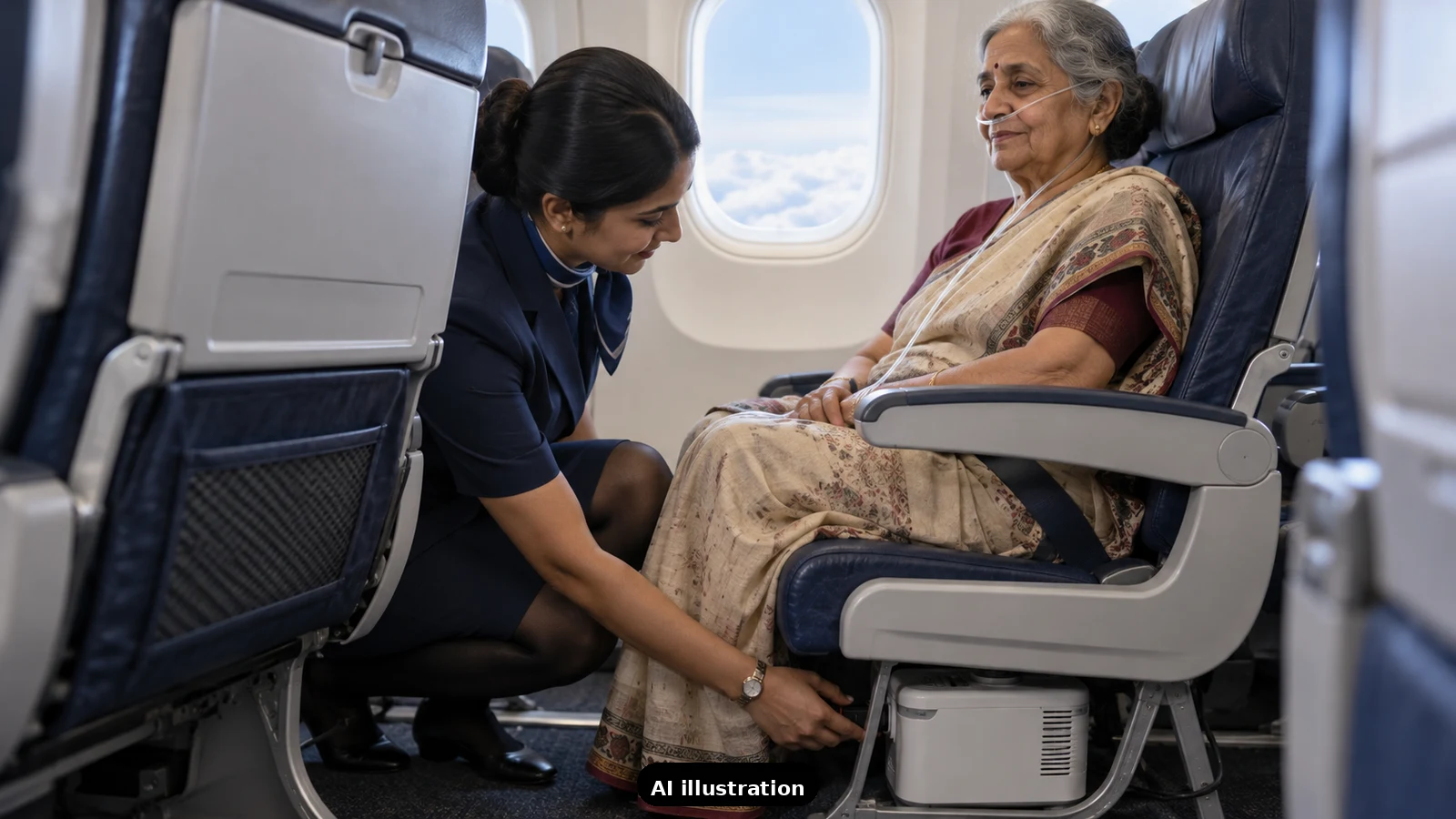
Short answer: yes. Air India permits passengers to use a portable oxygen concentrator (POC) in flight, provided the device is FAA/EASA-approved and you carry the right medical paperwork. The airline treats the concentrator and its battery bag as assistive devices, so they do not eat into your cabin baggage allowance. What takes effort is the documentation and the battery math - both are below.
The device itself. Your POC must meet FAA/EASA acceptance criteria and show the manufacturer's label saying so. Devices not on the recognised list (SFAR 106) must carry the manufacturer's red label confirming FAA conformity. The machine must run on a dry-cell, leakproof battery - and since Air India cannot guarantee aircraft power, battery is your plan, not the seat socket.
The paperwork, in order. One: a written statement from a licensed physician specifying how much oxygen you need per hour and the flow rate under normal operating conditions - keep it in your possession while travelling. Two: a medical certificate or report issued within 10 days of your departure, stating the condition and confirming fitness to fly. Three: for POC users Air India asks for a specialised physician statement covering the device details and battery compliance. Four: proof that the equipment is FAA-approved. Carry everything printed; the travel is authorised only after final document verification at departure.
The 150 percent battery rule. Air India strongly recommends carrying charged batteries for 150 percent of the expected flight time - a 10-hour journey means 15 hours of battery. In practice that is usually two or three batteries. Spare batteries must be protected from damage and short circuits - terminals capped, each in its own pouch.
On board. Tell the flight commander when the machine comes aboard and notify the cabin crew before and while operating it. During taxi, take-off and landing the POC must be stowed under the seat in front of you; you may use it in cruise. POC users cannot occupy an exit-row seat. And the aircraft's overhead oxygen mask remains the primary source in any decompression - not the concentrator.
If the POC route does not fit. Air India can supply supplementary oxygen instead, booked at the time of reservation: an oxygen mask is USD 275 per unit (single use) and an oxygen cylinder USD 50 per bottle. Your physician's statement decides which route is medically right; the booking desk handles the rest.
Connecting flights. If any leg is on another airline - including a codeshare not operated by Air India - arrange POC clearance with that airline separately. Approval on one carrier does not transfer.
Timing the preparation. Start two weeks out: physician statement and medical certificate (valid only if issued within 10 days of departure, so time the appointment), then register the device with Air India's medical clearance desk with the MEDIF form, and confirm approval before travel day.
How TripKeeper supports this. For travellers flying with medical equipment we build the clearance timeline into the trip plan - which forms, which doctor's letters, which deadlines - so the airport day is a formality. Send us a trip-planning inquiry if you would like that handled for your family.

A Miranda House graduate and lawyer who traded courtrooms for slow travel. Cheshta travels with the batches we host ourselves, with a soft spot for travelling alongside elders.
Planning your next trip?
We'll handle insurance, hotels, airport assistance and the itinerary — the same way we do it for every trip.
Questions on this article
asked by readers, answered by us
Was this helpful?
one tap, no sign-up