




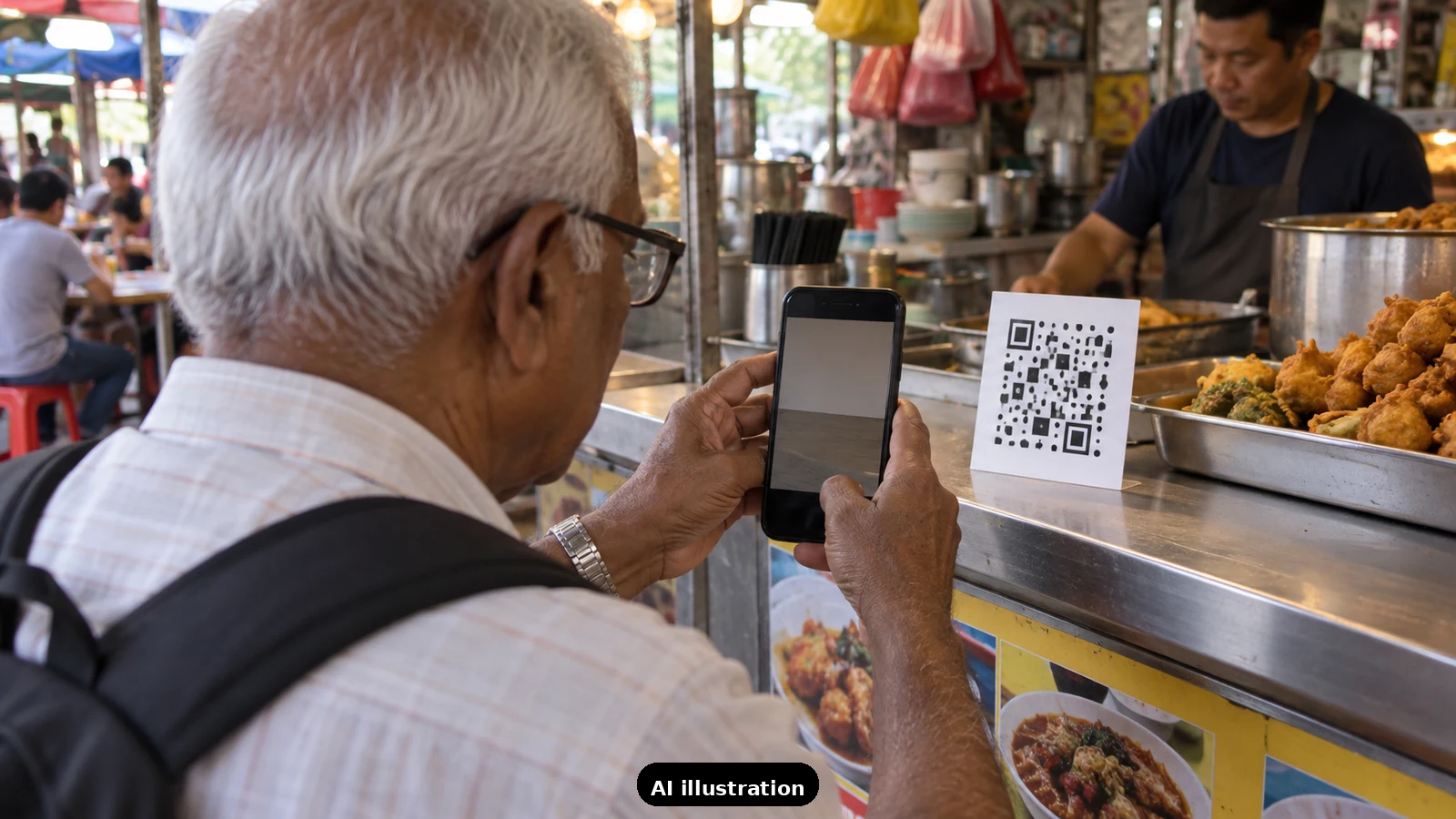
Short answer: yes, sometimes - and that "sometimes" is the whole story. UPI payments work in Singapore only at merchants specifically enabled for them: shops on the NETS network that accept BHIM UPI, and the merchant base of Liquid Group, which accepts UPI apps like PhonePe. Between them these cover Changi Airport, duty-free stores, tourist-heavy restaurants, retailers and attractions - but they are a minority of the island's QR codes. A random SGQR code at a hawker stall may simply not respond to your UPI app, and that is nobody's fault.
Why it works at all. India's NPCI International has been wiring UPI into Singapore for years through two pipes. The first is merchant acceptance: NETS - the company behind most of Singapore's payment terminals and SGQR labels - lets Indian tourists whose bank is UPI-enabled pay with BHIM at selected merchants, and Liquid Group's partnership with PhonePe and NIPL has spread UPI acceptance across tourist-centric locations, with transactions processed in rupees. The second pipe is the famous UPI-PayNow linkage, which is mainly for person-to-person remittances between India and Singapore, though the same rails can serve participating merchants.
How a payment actually looks. At an enabled shop, you scan the merchant's displayed QR with your UPI app exactly as you would in India. The app shows the amount; the debit happens from your Indian bank account in INR, with the conversion handled in the background. No card swipe, no DCC screen, no Singapore bank account needed. For a parent who has spent two years scanning the vegetable vendor's code at home, it is the most familiar payment motion they will find abroad.
The marks to look for. Teach parents to check before they order, not after. At the counter, look for a UPI or BHIM acceptance logo near the QR, or simply ask: "UPI chalega?" At Changi and tourist retailers the staff hear the question daily. If the app says the QR is unsupported or the merchant is not found, switch to the card without negotiation - the QR ecosystem in Singapore is a patchwork of SGQR, PayNow, Alipay+ and others, and each app speaks only to its part of it.
The limits and the fine print. International UPI transactions carry their own caps and daily limits, set by your bank and the scheme - expect them to be lower than domestic UPI. Large purchases like jewellery or electronics are still card territory. And because the debit is in rupees from an Indian account, the usual forex markup of a card disappears; what you see is the converted figure. Keep the app updated before travel, since older versions may not support international merchant payments.
The sensible setup for parents. UPI in Singapore is a convenience layer, not the foundation. The foundation remains a card that works internationally. UPI comes in as the pleasant surprise: the duty-free scan that feels exactly like home. Set expectations that way - "jahan chale, bonus hai; card hi asli sahara hai" - and a failed scan becomes a shrug, not a crisis.
The one line to teach your parents. "Singapore mein UPI har jagah nahi chalta - jahan UPI ka nishan ho wahan scan karo, warna card" - UPI does not work everywhere in Singapore; scan where you see the UPI mark, otherwise use the card. That is the entire lesson.
How we cover it at TripKeeper. For our Singapore-bound travellers we note which of their payment methods work where - UPI at enabled merchants, card everywhere else - and put it on their trip card so nobody experiments at a crowded counter. If you want your parents carrying that clarity, send us a trip-planning inquiry.

A Miranda House graduate and lawyer who traded courtrooms for slow travel. Cheshta travels with the batches we host ourselves, with a soft spot for travelling alongside elders.
Planning your next trip?
We'll handle insurance, hotels, airport assistance and the itinerary — the same way we do it for every trip.
Questions on this article
asked by readers, answered by us
Was this helpful?
one tap, no sign-up