




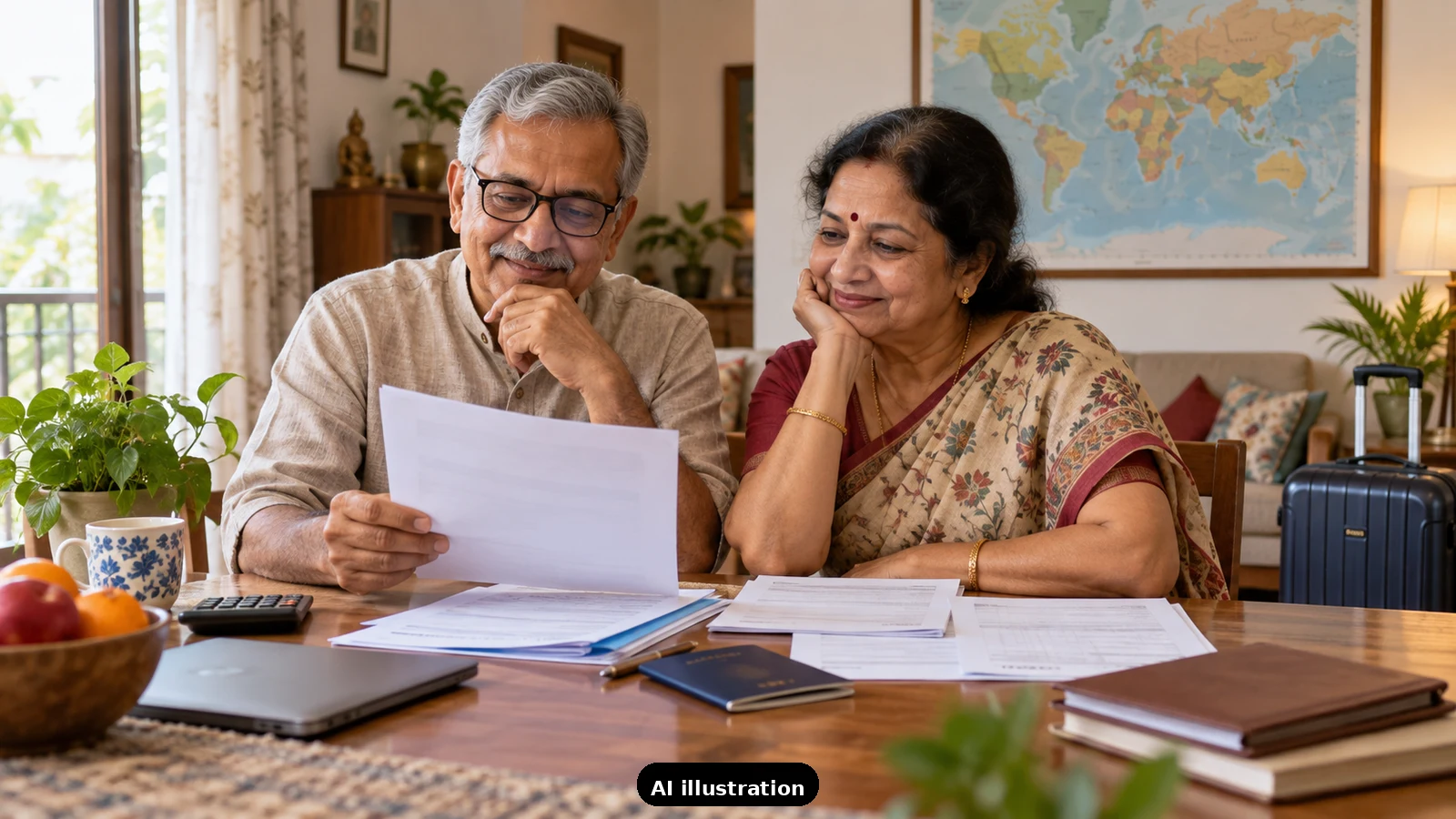
Short answer: yes, in most cases. Retirement does not disqualify you from a tourist visa - consulates simply need to see that you can fund the trip and that your money has a traceable source. Rental income answers both questions at once: it shows money coming in regularly and it shows you have ties at home. Some checklists say so directly. The VFS Switzerland tourist checklist for India has a dedicated retired-applicant line: a personal pension bank statement for the last three months plus proof of regular income generated by ownership of property or business. That second item is exactly what rental income is.
Why the paperwork matters more than the amount. Consulates are not looking for a magic balance. The UK's official supporting-documents guidance puts it plainly: financial documents must show that you have access to the funds - for example, bank statements which detail the origin of the funds held. A healthy balance with no explanation of where the money comes from is weaker than a modest balance backed by a visible, regular income. Rent arriving from your own property every month is as visible as income gets - if you document it.
The retiree financial file, document by document. One, the rent agreement: a current, preferably registered, rental or lease agreement naming you as the landlord. Two, bank statements: three to six months of personal bank statements, stamped by the bank where a checklist asks for it, showing the rent credits landing on a regular cycle. Three, your pension bank statement if you draw a pension - Schengen checklists for retired applicants ask for the pension statement for the last three months. Four, proof of ownership of the rented property: the sale deed, property tax receipts, or utility bills in your name - this ties the rent to an asset you actually own. Five, your income tax return: the Swiss checklist asks for personal ITR for the last two assessment years (ITR-V or acknowledgement), and rent declared on your ITR is dramatically stronger than rent that appears nowhere in your taxes.
Undeclared rent is the weak point. If your tenant pays in cash, or the rent never appears in your bank account or ITR, it barely exists as far as the consulate is concerned. The fix is boring but effective: route the rent into your bank account, declare it in your ITR, and keep the agreement current. A few months of clean, matching credits turn a claim into evidence.
Rent supplements the balance; it does not replace it. Think of the file as two questions. Can you afford the trip? That is answered by liquid funds - bank balance, pension credits, fixed deposits. Will you come back? That is answered by ties - and a property generating rent in India is a strong tie. You still need enough accessible funds to cover the trip's costs; owning a valuable flat does not, by itself, pay for hotels.
Avoid the classic retiree mistakes. Do not park a large lump sum in the account just before applying - unexplained deposits raise exactly the origin-of-funds question the UK guidance warns about. Do not submit only property documents: they prove ownership and ties, not spending money. And do not skip the cover letter - a short letter listing your income sources (pension, rent, interest) with the supporting documents attached makes the visa officer's job easy, which is always good for you.
Check the specific checklist before you apply. Financial-proof requirements are set per country and sometimes per visa category - the retired line above is from Switzerland's India checklist, and other Schengen states, the UK, Australia and others word theirs differently. Pull the current checklist for your destination from the official visa application centre or mission website, and match your documents to it item by item.
How we handle it at TripKeeper. When retired travellers book with us, we go through the destination's checklist line by line - pension statements, rent agreements, ITRs, ownership papers - and flag anything thin before it reaches the consulate. Send us a trip-planning inquiry and travel with a financial file that answers questions before they are asked.

A Miranda House graduate and lawyer who traded courtrooms for slow travel. Cheshta travels with the batches we host ourselves, with a soft spot for travelling alongside elders.
Planning your next trip?
We'll handle insurance, hotels, airport assistance and the itinerary — the same way we do it for every trip.
Questions on this article
asked by readers, answered by us
Was this helpful?
one tap, no sign-up