




Reviewed 18 November 2026. A focused collection guide using the museum’s archaeology and object pages. Check current official visitor information.
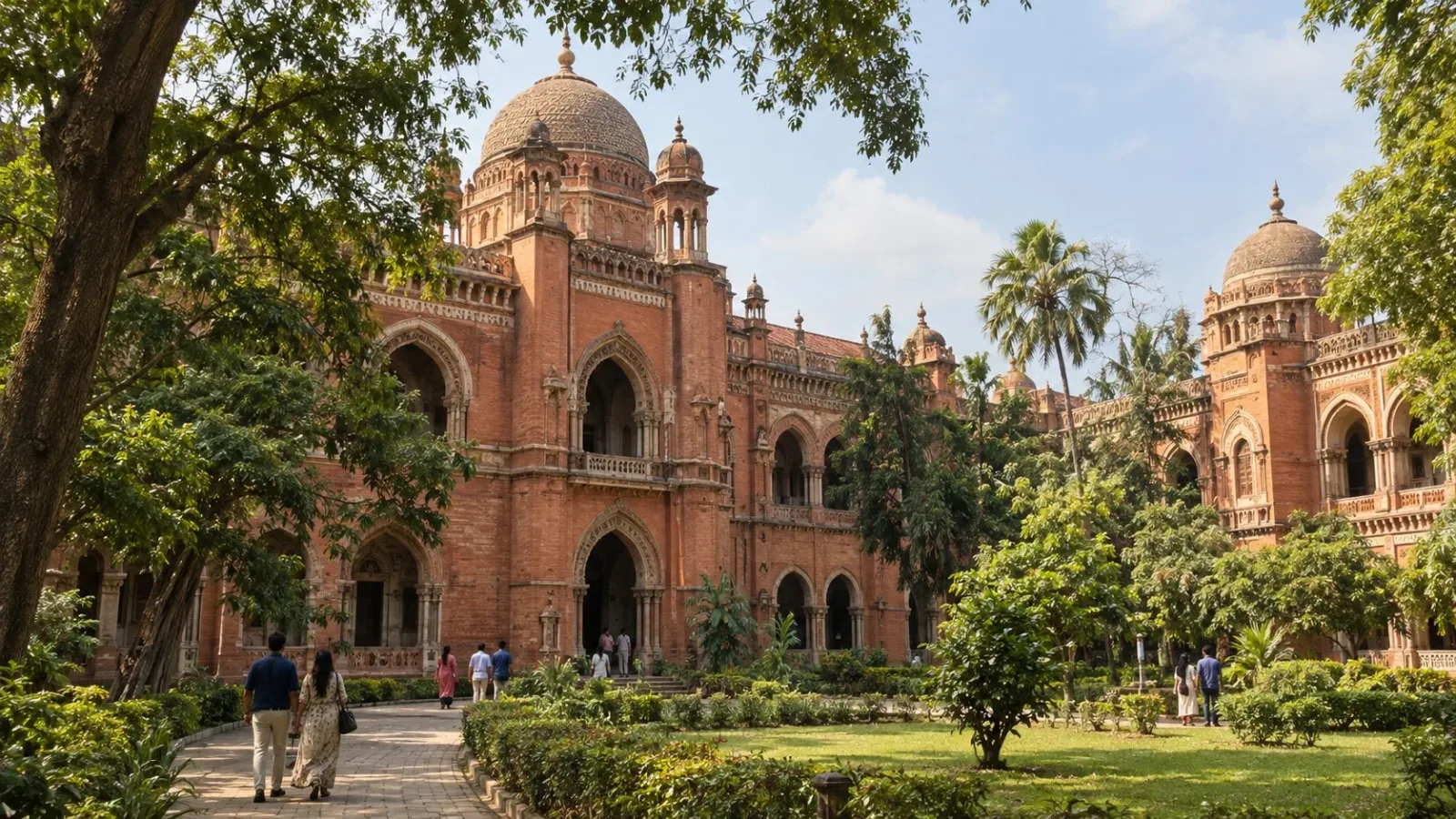
AI illustration: a fictional museum scene inspired by Chennai. Not an actual location, person, object record, route inspection or service.
Choose bronzes or Amaravati as the main thread
Government Museum in Egmore can be one focused Chennai outing. Its archaeology account describes bronze figures, sculpture, architectural pieces, inscriptions and industrial arts. Choose one subject rather than completing a collection list.
Our recommendation is a few objects understood together, food, a break and the real return. Check current official visitor information before fixing the rest of the day.
Read each bronze as an individual work
The museum describes bronze figures from several periods and religious traditions, including Buddhist, Jain and Hindu images. They are not all Chola works or a single kind of figure.
Compare pose, attributes and the relationship between a figure and its base. Use the individual description for identity and period rather than assigning the same age or original setting to the whole group.
Compare one figure with a bronze group
The Vaishnavite collection page names Rama, Varadaraja with associated figures, and Rama with Sita, Lakshmana and Hanuman. These give a subject for comparing an individual figure with relationships within a group.
A name helps begin interpretation; it does not explain every gesture or establish a common maker. Keep the object’s own description separate from an assumption made from appearance.
At Amaravati, read the carved scene
The museum’s Amaravati page names Maya’s Dream and Interpretation and a broken cross-bar. A named scene or an architectural fragment gives a specific starting point for looking at how figures occupy the stone.
The archaeology account discusses sculpture associated with the ruined stupa at Amaravati. These are sculptural and architectural pieces, not an intact stupa transported to Chennai or a complete reconstruction.
Keep the places and collecting histories distinct
The archaeology account distinguishes Amaravati material from Goli and Jaggayyapeta pieces. It also describes material reaching the museum in different batches, with some sculptures sent to London.
Do not treat every relief as the same date or from the same monument. A collection in Chennai does not mean every surviving Amaravati sculpture is there or that all pieces share one simple collecting history.
Use an inscription or material as another question
The archaeology account describes copper-plate and stone inscriptions in several scripts, as well as wood carving, metalware, inlay and embossed work. Those can be separate interests rather than compulsory additions after sculpture.
Choose what the group wants to understand, check current official visitor information and leave room for food and rest. A few works and a better question can be enough without an all-campus completion plan.
Sources
Questions people ask at the gate
What should be our main collection thread?
Our recommendation is bronzes or Amaravati sculpture, then a few individual works.
Are all the bronzes Chola works?
No. The museum describes different periods and Buddhist, Jain and Hindu traditions.
Which Vaishnavite works does the museum name?
Rama, Varadaraja with associated figures, and Rama with Sita, Lakshmana and Hanuman.
Does the Amaravati collection mean an intact stupa?
No. The account describes sculptural and architectural pieces, not a transported intact monument.
Are Amaravati, Goli and Jaggayyapeta interchangeable?
No. The museum distinguishes material associated with those places.
Must we complete the whole campus?
No. Choose a few works, check current official visitor information and keep food, rest and the return.
Next walk starts at a new gate.
Was this helpful?
one tap, no sign-up

A Miranda House graduate and lawyer who traded courtrooms for slow travel. Cheshta travels with the batches we host ourselves, with a soft spot for travelling alongside elders.