




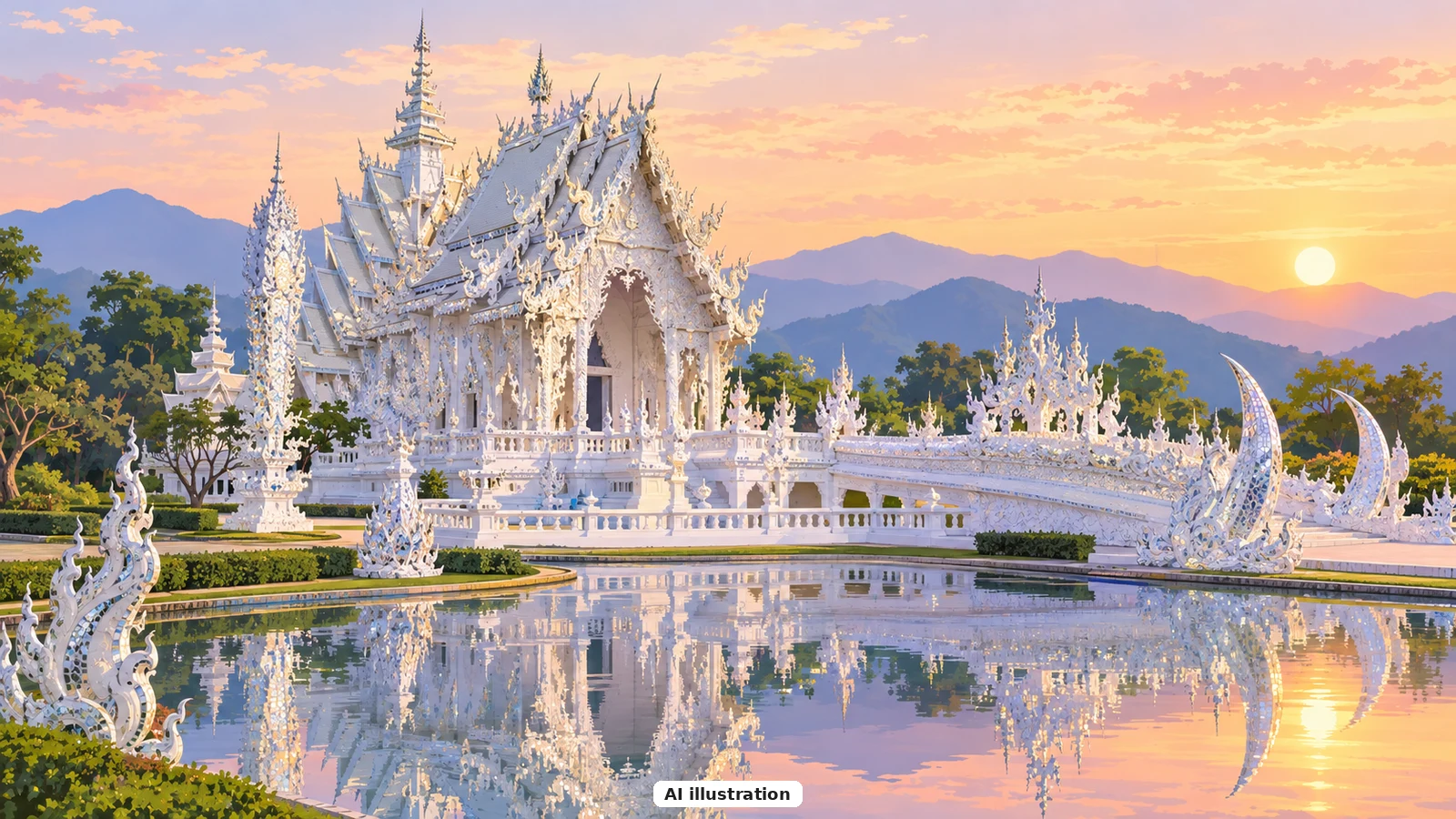
Chiang Rai rewards slowness. Its three famous sights each deserve an unhurried morning, its mountain roads are beautiful but winding, and its evenings were built for sitting down to eat outdoors. With parents along, the usual 3-day itineraries - a new mountain every day - trade the trip's best hours for time in a car. This version keeps one sight per morning, one mountain day instead of two, and a real break every afternoon. Every fee and hour below is dated, and where we could not verify access, we say so.
1. How this plan works
Base yourselves in town near the Clock Tower, the Night Bazaar or Bus Terminal 1, where dinner and the next morning's departure are both on foot. The rhythm is the same all three days: out by 08:00, one main sight before lunch, back to the hotel for a proper afternoon rest, then an easy evening. November to February is the comfortable season - cool mornings, warm middays, almost no rain - and it is also when the Chiang Mai tour coaches arrive in force from late morning, which is why every big sight here is scheduled at opening. For transport, a car with a driver booked by the day (about ฿2,000-2,800) removes every negotiation; for anything in town, songthaews and short Grab rides do the job.
2. Day 1: the White Temple at opening, the Blue Temple, an early night
Wat Rong Khun sits about 15 km south of town and opens at 08:00 (listed hours 08:00-17:30, last entry around 17:00; one guide claims a 06:30 opening, but 08:00 is the figure to plan on - confirm with your hotel the night before). Arriving in the first hour matters twice over: the light on the white mosaic is at its best, and the coaches from Chiang Mai, three hours away, cannot arrive much before late morning. The foreign entry fee is ฿200 since 1 January 2026 - doubled from the ฿100 many older blogs still quote - and visitors aged 70 and over, children under 120 cm and Thai citizens enter free; bring cash. Allow an hour for the main temple and bridge, up to two with the Cave of Art gallery. Access note: the grounds are largely level paths, but the bridge to the main hall involves steps, and we could not verify a published step-free route - if anyone in your party uses a wheelchair or struggles with stairs, confirm the current arrangement at the gate or through your hotel before committing. Back in town, break for lunch and a rest, then spend the late afternoon at the Blue Temple (Wat Rong Suea Ten), just north of the centre: no entry fee reported, compact grounds, and 20-30 unhurried minutes covers it. Dinner near the Clock Tower, early night.
3. Day 2: one mountain day - Doi Tung, or the Golden Triangle instead
Standard itineraries stack the Golden Triangle and Doi Tung into one long day; with parents, pick one. Our pick is Doi Tung: the road climbs to about 1,500 metres, the air turns noticeably cooler, and the Mae Fah Luang Garden beside the Royal Villa is the single most pleasant walk of the trip - flowers, shade and benches, though expect slopes and some steps, so treat it as a stroll with stops rather than a circuit to complete. Start by 08:00, lunch on the mountain, and be back at the hotel by mid-afternoon for the daily rest. The Golden Triangle alternative - the Mekong viewpoint where Thailand, Laos and Myanmar meet - is flatter but longer on the road and thinner on things to actually do; it suits parents who want the photo and the boat option more than the garden. Whichever you choose, keep the evening light: the Night Bazaar runs nightly on Phahonyothin Road near the bus terminal, with a seated food court and live folk music most evenings, so dinner doubles as the day's entertainment with no extra walking.
4. Day 3: tea country light, or a gentle city morning
Day 3 scales to knees and energy. The full version: an 08:00 start for Doi Mae Salong, the tea-growing ridge about 80 km northwest, settled by Yunnanese Chinese families after 1949 and still Mandarin-speaking. Go early - the valley mist burns off by about 10:00 - walk the morning market before 09:00 for Yunnanese dumplings and hill-tribe produce, and stop at a farm-side table for a tea tasting (free or a token ฿50 at the better farms). Ridge-top lunch with valley views, back by mid-afternoon. The gentle version, if the mountain roads have already taxed everyone: skip Mae Salong and keep the morning in town at Kat Luang, the covered central market (a morning operation, roughly 05:00 to noon), followed by a massage and the hotel pool. Either way, finish at the Night Bazaar for a last unhurried dinner. If you fly out the next morning, the airport is a flat ฿150 taxi ride from the counter at arrivals - about 15-25 minutes from the centre.
5. The comfort details that decide the trip
Four small things carry this itinerary. First, the afternoon break is not optional padding - November to February middays are still warm, and the parents who enjoy day three are the ones who rested after day one. Second, carry small baht notes: temple fees and market stalls are cash, and the White Temple's new ฿200 fee catches out travellers relying on older guides. Third, check fees at the gate everywhere: Baan Dam (the Black House, a worthwhile add-on only if a day runs short of energy for nothing else) charges at the entrance without a verifiable published tariff, and prices across the region have been moving. Fourth, manage step expectations honestly: Chiang Rai's sights are mostly level paths with occasional steps - the White Temple bridge, garden slopes on Doi Tung - but published wheelchair routes are not verifiable online, so a quick call from the hotel the evening before each outing is the reliable move. Build the days this way and three days is exactly right: full, but never forced.
Sources: White Temple tickets, hours and rules including the 2026 fee change (visit-thailand.org; thethaiger.com, November 2025) and a 3-day Chiang Rai temples, tea and culture itinerary (thailandjourney.org). Fees and hours change - confirm at the gate or through your hotel each evening.

A Miranda House graduate and lawyer who traded courtrooms for slow travel. Cheshta travels with the batches we host ourselves, with a soft spot for travelling alongside elders.
Planning your next trip?
We'll handle insurance, hotels, airport assistance and the itinerary — the same way we do it for every trip.
Questions on this article
asked by readers, answered by us
Was this helpful?
one tap, no sign-up