




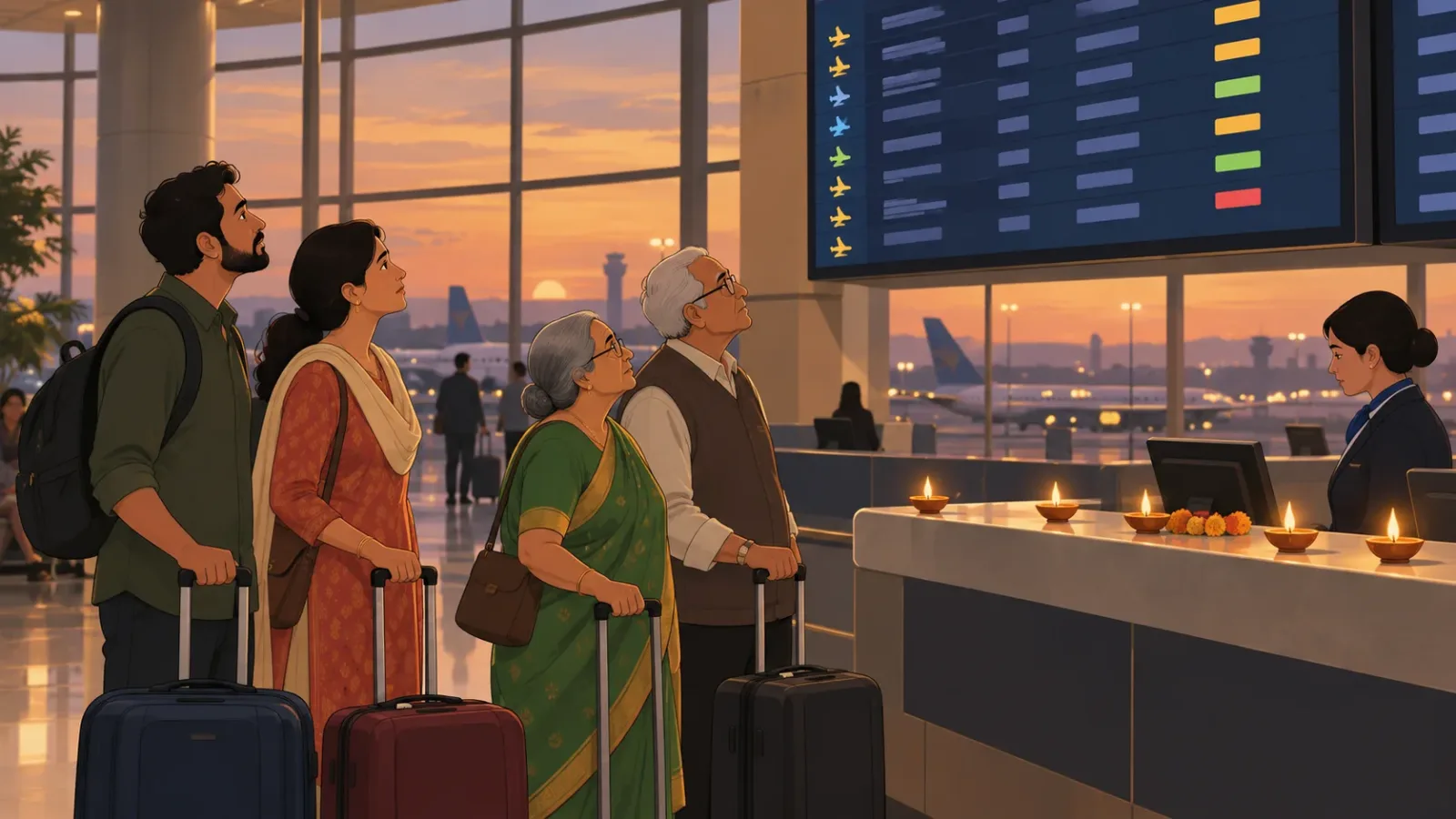
- Festive flights
- About 6% fewer than 2025
- First cut since
- 2020 (Covid)
- Fare pain
- One-way = old round trip
- Why
- Fuel, weak rupee, long routes
- Advice
- Book winter travel early
Airlines in India scheduled about 6 percent fewer flights across October and November than a year earlier, the first festive-season capacity cut since 2020, according to Cirium data reported by Bloomberg on 11 November 2026. Fewer flights with demand holding up means one thing for families: higher fares and seats selling out sooner. On some routes, a one-way ticket now costs what a round trip did a year ago. If you are planning winter or year-end travel, book earlier than you normally would.
What the numbers show
Airlines scheduled roughly 6 percent fewer flights across October and November compared with the same period last year, data from aviation analytics firm Cirium shows. That is the first capacity decline since 2020, when carriers slashed nearly 45 percent of capacity during the pandemic collapse.
The pullback follows a 6.5 percent fall in domestic passenger traffic in September. IndiGo, the country's largest airline, reduced capacity by 1 percent and carried 4.5 percent fewer passengers in the September quarter. Even with passenger yields up more than 34 percent, the airline reported a loss of Rs 18.8 billion for the quarter as its fuel bill jumped 67 percent.
Fare pain is real for travellers. One Hyderabad-based professional told Bloomberg his one-way Diwali ticket home to Siliguri had crossed Rs 20,000, roughly what he would normally pay for a round trip.
Why airlines are cutting flights
Three pressures are squeezing Indian carriers at once: higher fuel prices, a weaker rupee, and longer international flight paths caused by airspace restrictions. Airlines say demand remains resilient; IndiGo's chief executive said on an earnings call that demand had held up reasonably well, but that airlines have to balance affordability with financial stability. The practical result is schedule rationalisation: fewer flights on the routes where airlines lose the most money.
What this means for your family's winter bookings
1. Book year-end travel now, not in December. With about 6 percent fewer seats in the system, the cheaper fares on popular dates sell out first. Christmas, New Year and winter-wedding dates will feel this most.
2. Compare nearby dates and nearby airports. A day earlier or later, or a different departure time, can change the fare sharply when capacity is tight.
3. For parents travelling alone, leave margin. Fewer flights also means fewer same-day options if a connection breaks or a plan changes. Prefer changeable tickets and sensible layovers over the absolute cheapest fare.
4. Airspace restrictions still shape some routes. Longer flight paths are part of why costs are up. The same restrictions are behind IndiGo's extended Saudi suspension, while the reopening of Iraq's airspace is what allowed Air India's nonstop New York flights to return.
A note from The Trip Keeper
Fare spikes punish last-minute family bookings hardest, because a family of four pays four times the increase. When we plan a trip, we lock flights before hotels for exactly this reason: rooms can be swapped, a fare jump cannot be undone. If your dates are fixed, treat the flight booking as the urgent task this week.
Last verified: 11 November 2026. Source: The Economic Times (Bloomberg, 11 November 2026). Fares and schedules change daily; check current prices for your exact route and dates before booking.

A Miranda House graduate and lawyer who traded courtrooms for slow travel. Cheshta travels with the batches we host ourselves, with a soft spot for travelling alongside elders.
Planning your next trip?
We'll handle insurance, hotels, airport assistance and the itinerary — the same way we do it for every trip.
Questions on this article
asked by readers, answered by us
Was this helpful?
one tap, no sign-up