




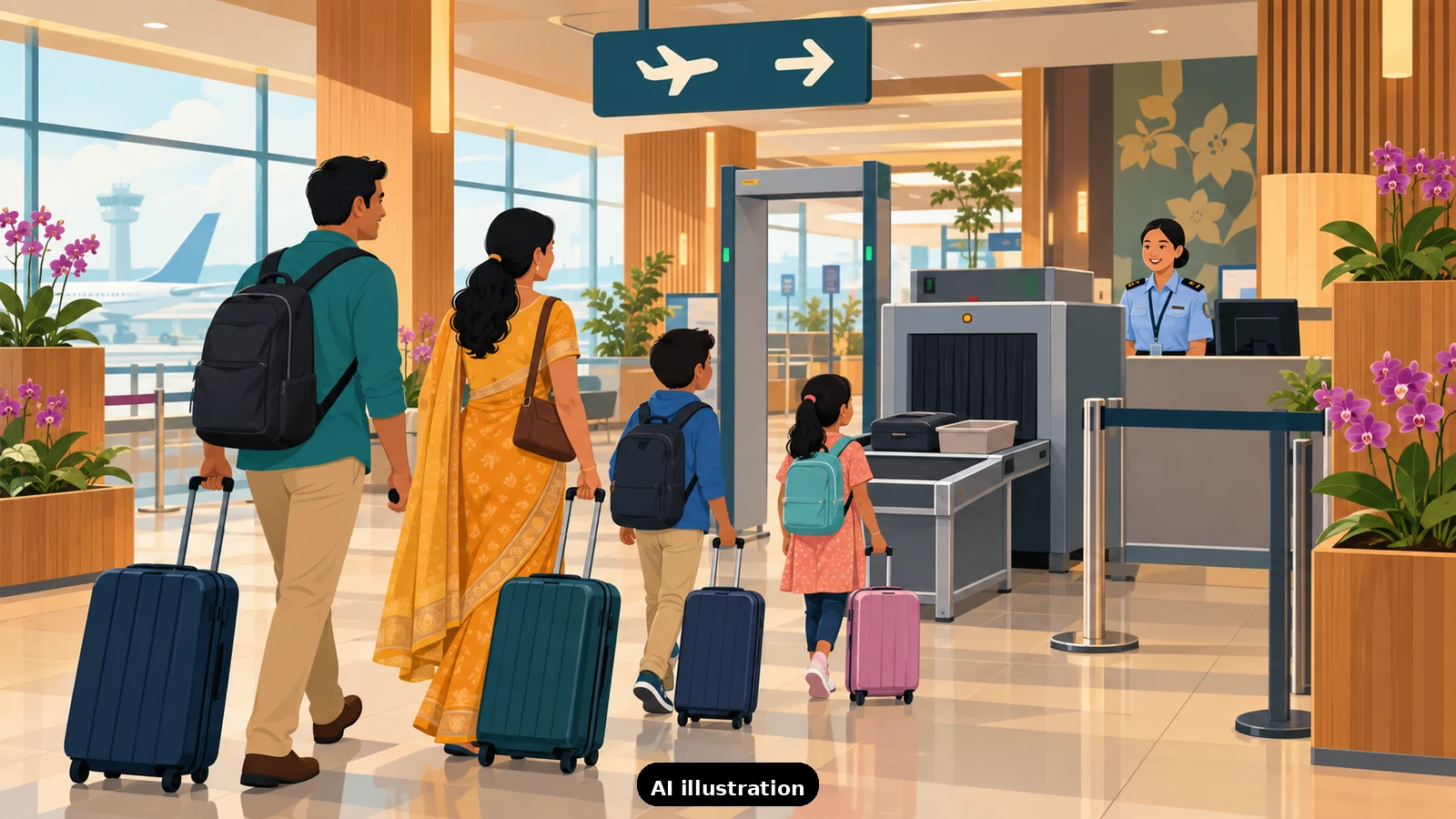
Short answer: yes on security, no on immigration. At Suvarnabhumi (BKK), international-to-international connecting passengers go through a dedicated transit security checkpoint before going up to the departure gates - bags through the X-ray again, laptops out, liquids rule applies again. What you do not do on a single through ticket is Thai immigration or customs: you stay airside the whole time, and your checked bags move to the onward flight without you touching them.
The transit flow, step by step. After landing, follow the 'Connecting Flights' signs instead of the immigration stream. If your onward boarding pass was issued in India, head straight for the transfer security checkpoint; if not, stop at your airline's transfer counter first to collect it, then proceed to security. The airport's own connecting-flight procedure spells this out: passengers without a boarding pass go to the airline counter, then to the security checkpoint, then up to the departure level and the gate. The screening is the standard one - cabin bags on the belt, electronics out, jacket off, walk through the frame.
The liquids trap that catches Indian families. Anything liquid bought airside in India - or carried from home and somehow through - faces the 100 ml rule again at Bangkok transit security. Duty-free liquor or perfume bought at your Indian departure airport normally survives if it stays sealed in the tamper-evident bag with the receipt, but the safe habit is: buy duty-free only if the bag stays sealed until the final destination, and finish or bin water bottles before the Bangkok checkpoint. Families carrying achaar, pickles or ghee in cabin bags should know these count as pastes and gels - over 100 ml, they will not pass transit screening.
How much time does the checkpoint add? The transit screening itself usually takes minutes, not hours, but queues build when several flights land together. A 90-minute connection on a single ticket is normally comfortable at BKK; under an hour gets tight if the first flight lands late. The useful protection: on one through ticket, a missed connection is the airline's problem - they rebook you and look after you. On separate tickets, it is yours.
When the rules change completely: separate tickets. If your two flights are on separate tickets - say, one airline into Bangkok and a different low-cost carrier out - the connection usually stops being airside. You clear Thai immigration (which needs the appropriate visa or visa-on-arrival eligibility for Indian passports), collect your bags, re-check them, and go through full departures security. That is immigration, baggage and security all over again, and it needs three hours, not ninety minutes. If your itinerary has separate tickets, build the buffer and check visa requirements before travel.
Connections through the satellite terminal. Newer gates at Suvarnabhumi sit in the SAT-1 satellite building, reached by an underground shuttle. The airport's published procedure for connections inside SAT-1 is the same shape: connecting passengers proceed to the designated transfer area, collect a boarding pass at the airline counter if needed, clear the security checkpoint, then go up to the departure level. Allow extra minutes for the shuttle when your gate is in the satellite.
How TripKeeper plans connections. When a family's itinerary routes through Bangkok, we check the ticket structure first - single ticket or split - then brief everyone on exactly what the transfer involves, down to which signs to follow. If you would like connections planned with that care, send us a trip-planning inquiry.

A Miranda House graduate and lawyer who traded courtrooms for slow travel. Cheshta travels with the batches we host ourselves, with a soft spot for travelling alongside elders.
Planning your next trip?
We'll handle insurance, hotels, airport assistance and the itinerary — the same way we do it for every trip.
Questions on this article
asked by readers, answered by us
Was this helpful?
one tap, no sign-up