




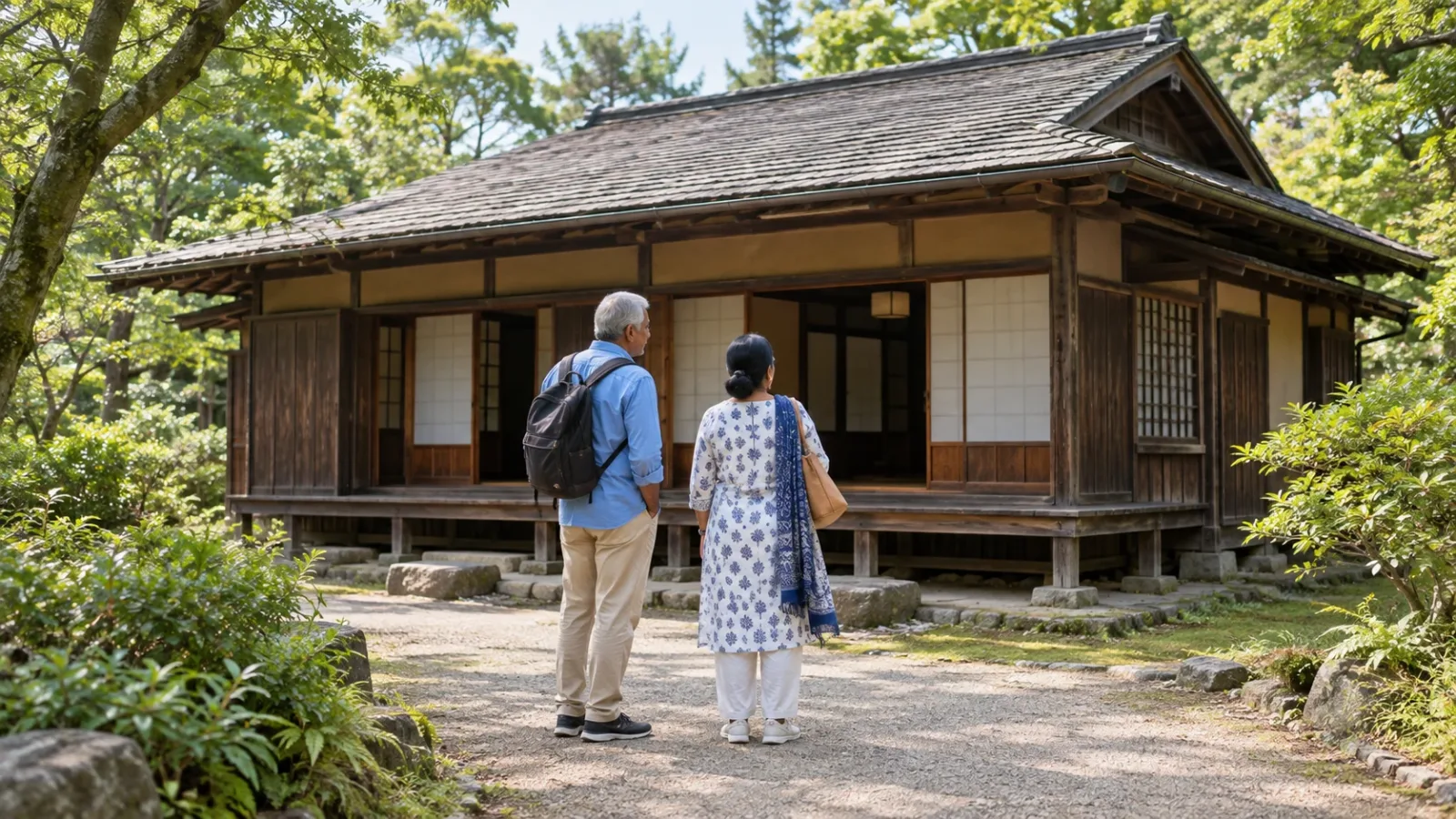
At the Edo-Tokyo Open-Air Architectural Museum, the family decision is not simply whether a parent can get around a park. It is which historic houses they want to see inside, and what is needed at each entrance.
The museum's English accessibility page allows wheelchairs, walking sticks and walking-support carts, but explicitly says some buildings cannot be viewed using them. A yes for the grounds is not a yes for every interior. Choose a small set of meaningful stops rather than promising that everyone will enter every house.
Make sure you have the right museum
This museum's official address is inside Koganei Park, Koganei, Tokyo. It is not the similarly named Edo-Tokyo Museum in Ryogoku. Check the full museum name and address in the family's plan before arranging transport or quoting facilities from another museum's website.
For this outing, keep three questions separate: how to reach the entrance, how to move between buildings, and how to enter the particular rooms you want to see. One confirmed section does not settle the others.
Ask about the named house, not the whole museum
The museum publishes a Japanese universal guidebook with building-level information. Use it as a discussion aid with the information desk, alongside the English accessibility page. Tell staff the building names, whether an upper floor matters, and the mobility aid's size and type.
A useful question is: “Can this person, using this chair, view this house's interior without transferring or using stairs?” Ask separately about any upper floor. This article does not confirm a particular lift's dimensions, operating status or an all-buildings step-free route. If an interior does not work, agree in advance whether an exterior view is enough. Do not make standing or transferring the default solution for someone else.
Shoe changes are part of the visit
The museum recommends shoes that are easy to put on and take off for the buildings whose interiors visitors can enter. It also says slippers are not provided. Discuss this before a parent arrives in footwear that is hard to remove repeatedly.
Easy fastening is a practical choice, not proof that a doorway or floor is suitable. If the family needs a seat or help while changing shoes, ask where that is possible; this article has not confirmed seating at every house entrance. There is no need to turn each interior into a task that everyone must complete.
Strollers, umbrellas and bags need their own plan
The accessibility page says to leave strollers at building entrances. Being able to use a stroller around the museum does not mean a child can remain in it through every house. Decide who stays with the child when an interior visit needs a different arrangement.
The visiting page also says not to take umbrellas inside the buildings and lists free lockers at the Visitor Center for baggage. It does not establish that your particular suitcase will fit or that a locker will be vacant. Carry the items you need without assuming that every bag can be stored on arrival.
A free loan is not a held wheelchair
The museum lists free wheelchair and stroller loans through its information service. The Tokyo Metropolitan Foundation's facility guide notes that numbers are limited. Do not treat a listed service as equipment reserved for your family.
If a loan chair is essential, ask the museum about arrangements before relying on it. An available chair also does not change the access limits of a particular building. Keep your chosen house list short enough that a change of plan does not ruin the outing.
The museum lists six wheelchair-accessible toilet locations. Ask for their positions when planning the sequence of stops rather than assuming one is beside every house. No personal assistance service or complete door-to-door route has been verified here.
Build a flexible day around the visit
Before setting the afternoon plan, agree which interiors are priorities and which are optional, what happens if a loan is unavailable, and how everyone returns to the exit. Check the current museum notices and opening calendar separately. This article has not checked a selected date's building openings or transport availability.
For a broader itinerary, use the Japan trip planning page to discuss the family's pace and interests. The museum visit and any assistance remain separate checks, not promised package inclusions.
Questions families ask
Does wheelchair admission cover every house interior?
No. The museum permits mobility aids but says some buildings cannot be viewed using them. Confirm each priority house and any upper floor.
Can a stroller stay with us inside every building?
No. The accessibility page says to leave strollers at building entrances. Plan the child's supervision separately.
Are slippers supplied for indoor visits?
No. The museum says it does not provide slippers and recommends shoes that are easy to put on and take off.
Is a free loan wheelchair guaranteed?
No. A free loan service is listed, but equipment numbers are limited. It is not a reservation or a guarantee of availability.
Sources and last check
Checked 9 November 2026: museum accessibility information, visiting guidance, official site and address, and the Tokyo Metropolitan Foundation facility guide. Facilities and building access should be reconfirmed for the visit. The hero is a generic AI illustration, not a photograph of a museum building or its access route.

A Miranda House graduate and lawyer who traded courtrooms for slow travel. Cheshta travels with the batches we host ourselves, with a soft spot for travelling alongside elders.
Planning your next trip?
We'll handle insurance, hotels, airport assistance and the itinerary — the same way we do it for every trip.
Was this helpful?
one tap, no sign-up