



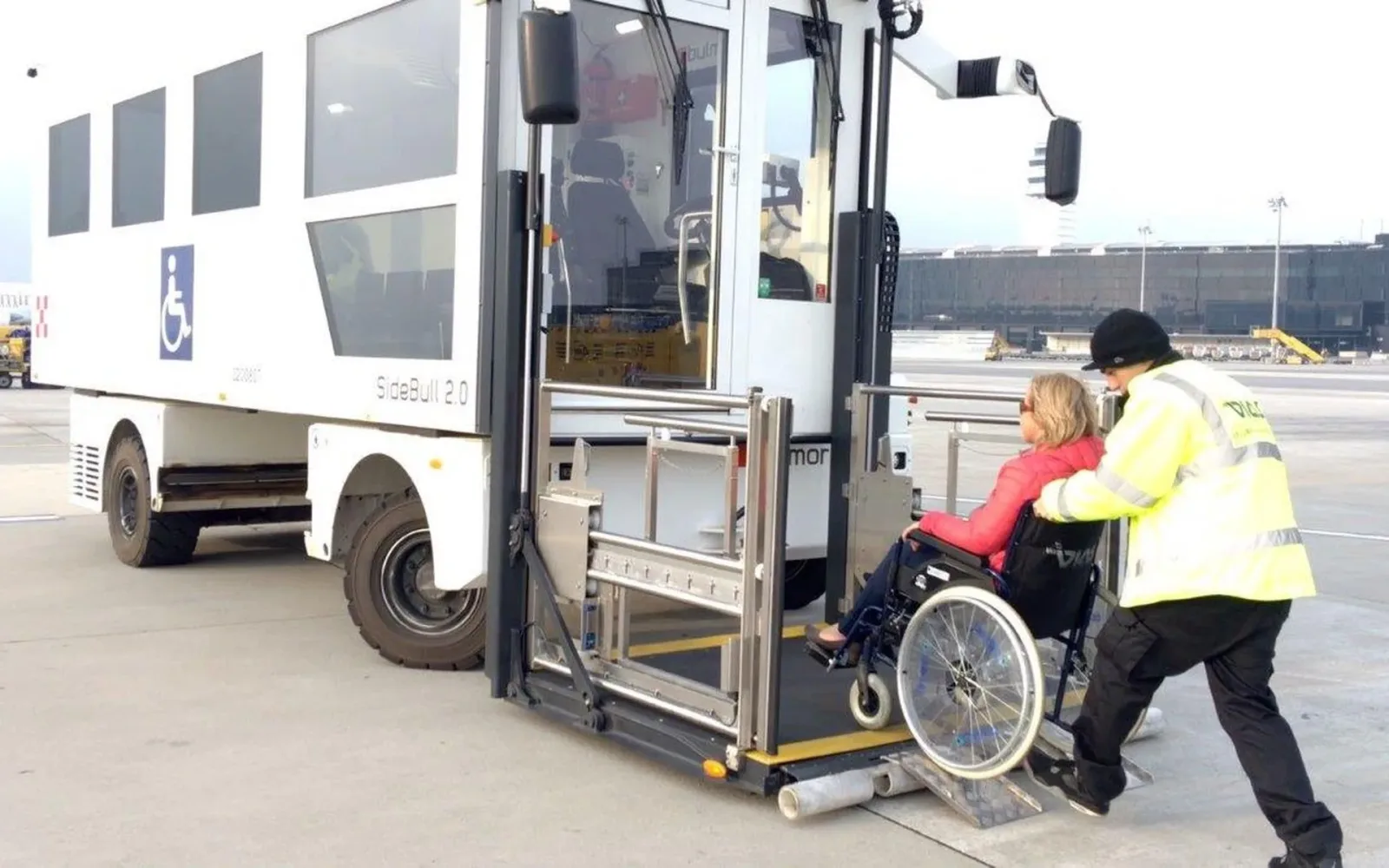

Photo: Silvassun, CC BY-SA 4.0, via Wikimedia Commons.

When the airline - not just your doctor - has a say
This article covers the airline's acceptance procedure for passengers with medical conditions other than pregnancy (pregnancy has its own airline-by-airline article on this site). Air India says medical clearance is required when a passenger's fitness to travel is in doubt because of recent illness, hospitalisation, injury or surgery; when an existing medical condition applies; when special services such as onboard oxygen or medical equipment are needed; or when the travel itself is for medical treatment. IndiGo requires customers with any particular medical condition to submit its medical form in advance so it can arrange assistance. Whether you should fly at all is your treating doctor's call, not the airline's - and this article is procedure, not medical advice.
Air India: the MEDIF route, with timelines
From Air India's medical-clearance page (read 25 November 2026):
- Fill out the Medical Information Form (MEDIF) while booking.
- Documents to submit: the completed MEDIF signed and certified by a registered physician; a medical certificate or report issued within 10 days of departure that states the condition and confirms fitness to fly; for stretcher, oxygen or Portable Oxygen Concentrator (POC) cases, a specialised physician statement with device details and battery compliance; escort details and an undertaking for stretcher cases; proof of FAA approval for medical devices such as POC or CPAP.
- Carry all documents and medical records on the day of travel: the booking is confirmed on the submitted documents, but travel is authorised only after final verification at departure.
- Oxygen service is chargeable: an oxygen mask at USD 275 per unit and oxygen cylinders at USD 50 per bottle, per the published page.
- Medical equipment must be battery-operated (no guaranteed onboard power), is not permitted during taxi, take-off, approach and landing, and most equipment - including nebulisers and ventilators - requires clearance.
- Critically ill cases are not accepted on commercial flights; case-by-case exceptions need medical, engineering and security clearances, plus an accompanying physician experienced in aeromedical transport.
- Stretcher cases are accommodated on domestic and international flights with prior information, after clearance from the medical services department and the chief medical officer.
Air India's condition-by-condition table: real waiting periods
Air India publishes a table of conditions with "not permitted" windows, "permitted after" timings, and whether a fit-to-fly certificate from the treating doctor is needed (its stated validity: not more than 3 days from the date of travel). Examples, exactly as published:
- Heart attack or cardiac surgery: not permitted less than 14 days after; permitted after 14 days.
- Angioplasty with or without stent: not permitted less than 5 days; after 5 days if asymptomatic.
- Major abdominal surgery: less than 10 days not permitted; after 10 days.
- Laparoscopic (keyhole) surgery: less than 5 days; after 5 days.
- Stroke: less than 14 days; after 14 days.
- Epilepsy: less than 24 hours after an episode; after 24 hours if controlled, with a dose of medicine before the flight.
- Communicable diseases have their own clocks: chicken pox within 14 days of rashes not permitted; measles, mumps and rubella within 7 days; H1N1 less than 10 days.
- Fractured mandible with a wired jaw is listed as not permitted at all.
These are Air India's own published rules, not universal medical thresholds - another airline's table will differ.
IndiGo: the 72-hour medical form
From IndiGo's medical-conditions page (read 25 November 2026):
- Customers with a medical condition travel after giving prior medical information through the medical form on IndiGo's website, at least 72 hours before the scheduled departure.
- Tell IndiGo about any hospitalisation requirement on arrival, and share the name and contact details of any safety assistant travelling with you.
- Crew limits are explicit: cabin crew are trained only in first aid, are not authorised to give special assistance such as lifting, and are not permitted to administer injections or medication.
- IndiGo's terms place travel on the customer's own volition, with liability limited to its Conditions of Carriage.
What this process is - and is not
Medical clearance is the airline's acceptance decision: forms, certificates, equipment rules and check-in verification. It does not certify that flying is medically safe for you - that judgement belongs to your treating doctor, and both airlines reserve final discretion at departure. Certificates have clocks on both sides: Air India's medical certificate within 10 days of departure and fit-to-fly certificates valid 3 days; IndiGo's form at least 72 hours out. Build the timeline backwards from your flight, and re-verify if the booking changes.
Last verified: 25 November 2026 against Air India's medical needs and clearance page, Air India's flying with medical conditions page and IndiGo's passengers with medical conditions page.
Questions people ask at the gate
Do I need airline clearance to fly after surgery?
On Air India, clearance (the MEDIF route) is required when fitness is in doubt due to recent surgery, and its condition table sets condition-specific waiting windows (for example 10 days for major abdominal surgery, 5 days for laparoscopic surgery). On IndiGo, a medical form is due at least 72 hours before departure. Your doctor decides whether you should fly; the airline decides acceptance.
What is a MEDIF?
The Medical Information Form - Air India's form completed while booking, signed and certified by a registered physician, accompanied by a medical certificate issued within 10 days of departure.
How recent can my medical certificate be?
Air India requires the certificate within 10 days of departure; its fit-to-fly certificates from the treating doctor are stated as valid not more than 3 days from the date of travel.
Can I use my own medical equipment on board?
Air India permits battery-operated equipment with prior clearance, not during taxi, take-off, approach or landing; POC/CPAP devices need FAA approval proof and 150% battery coverage of flight time. IndiGo's page directs medical cases through its 72-hour form. Check the operating carrier for every segment.
Is the airline's clearance a guarantee I am fit to fly?
No. It is the airline's acceptance procedure. Both airlines limit their roles - IndiGo's crew provide first aid only, and Air India verifies documents at departure. Fitness to fly remains your treating doctor's judgement.
Next walk starts at a new gate.
Was this helpful?
one tap, no sign-up

A Miranda House graduate and lawyer who traded courtrooms for slow travel. Cheshta travels with the batches we host ourselves, with a soft spot for travelling alongside elders.