




- Scope
- Dish and regional identities
- Hāngī
- Māori earth-oven tradition
- Pavlova
- Meringue-based dessert
- Availability
- Not verified
- Sources checked
- 17 November 2026
As per Tourism New Zealand food accounts checked on 17 November 2026. Descriptive food introduction, not a menu or recipe.
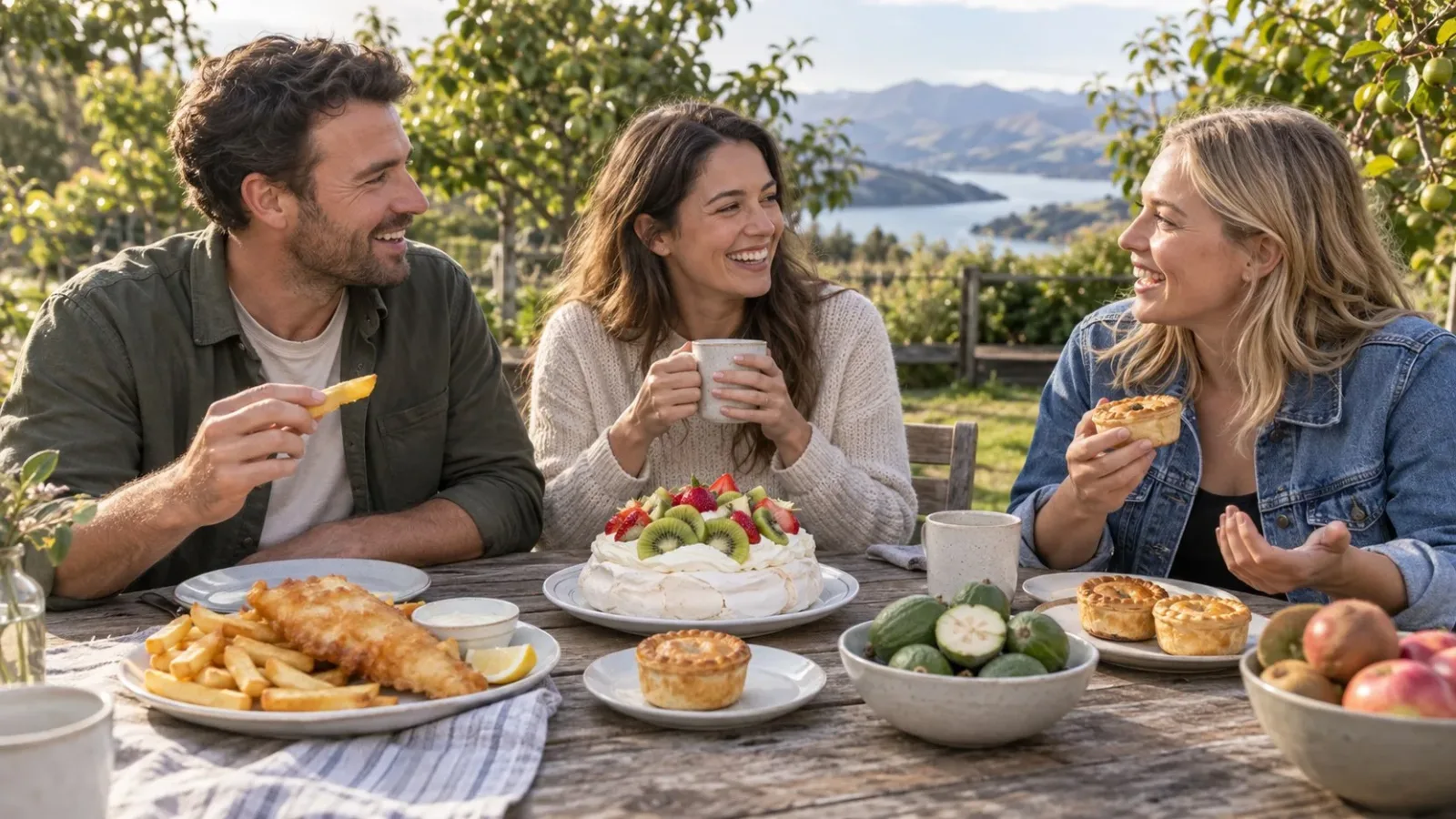
AI-generated fictional scene of three adults sharing pies, fish and chips, fruit and pavlova outdoors, not a real New Zealand venue, menu or certified dish.
A New Zealand food list becomes more useful when it explains what the dishes are and how they connect with the country. The range runs from Māori earth-oven cooking and coastal seafood to savoury pies, fruit-topped desserts and seasonal produce. It is more varied than a single national dish.
Tourism New Zealand's food accounts provide the basis for this introduction, checked on 17 November 2026. The aim is to help you recognise dishes and regional traditions, not prescribe a restaurant route or say every item will be available on your travel dates.
Understand hāngī and the shared meal
Hāngī is a traditional Māori earth-oven method of cooking. Tourism New Zealand describes foods such as chicken, pork, mutton, pumpkin, potato and kūmara, or sweet potato, cooked this way. The word describes a cooking tradition, not one fixed plate with identical contents every time.
The tourism account connects hāngī particularly with special occasions. Its seasonal-food guide also describes hākari, or feasts, around Matariki, the Māori New Year, with hāngī-cooked dishes among the foods shared. That cultural context matters: hāngī is not simply another name for any roast dinner. This is an introduction to the tradition, not instructions for preparing one.
Explore seafood and savoury classics
Seafood has strong regional associations. Tourism New Zealand links crayfish with Kaikōura and green-lipped mussels with Marlborough, particularly Havelock. These place connections help explain a food journey without turning them into a guarantee of the day's catch or a particular menu.
Fish and chips is another familiar part of the food picture: battered, fried fish served with chips. It belongs to a different kind of meal from a seafood tasting spread, and the tourism board associates it with a casual meal beside the beach. The setting is a cultural image, not a requirement for enjoying the dish.
Roast lamb is a further classic in the official food account, which describes it with rosemary and seasonal roasted vegetables. Savoury pies offer another format: pastry around a filling, with mince, steak and cheese, and potato-top pies among the examples named. Treat those as examples of a varied pie tradition, rather than assume every baker uses one recipe.
Leave room for sweets and fruit
Pavlova is a meringue-based dessert topped with whipped cream and fresh fruit. Tourism New Zealand associates it with Christmas tables and summer eating. It is a familiar part of the New Zealand food picture.
Hokey-pokey ice cream combines a creamy vanilla base with crunchy honeycomb pieces. The name is useful to recognise before ordering: it refers to a particular flavour combination, rather than fruit blended into ice cream. Real-fruit ice cream is another part of the seasonal-food picture described by the tourism board.
Fruit gives the list more regional and seasonal variety. The official accounts mention kiwifruit, feijoas, passionfruit and stone fruit. Feijoa appears in the autumn account in home baking and preserves as well as among the season's fruit. A list of foods to try need not consist entirely of elaborate prepared dishes.
Notice the region and season
Southland's cheese rolls add a distinct regional example. The seasonal guide describes a savoury cheese filling in a toasted roll, associated with homes and cafés in winter. This is a different food from a countrywide cheese-board recommendation and helps show why the region matters.
The wider cuisine account describes food shaped by local ingredients and cultural influences. Use that variety as a way into the trip: learn a dish's name, its usual form and any regional connection. A food tradition can be part of New Zealand life without being unique to the country, and a typical description does not fix the contents of every serving.
Frequently asked questions
What does hāngī mean?
A traditional Māori earth-oven method, used for foods that can include meat and vegetables. It is not one fixed recipe.
What is pavlova?
A meringue-based dessert topped with whipped cream and fresh fruit.
What is hokey-pokey ice cream?
Vanilla ice cream with crunchy honeycomb pieces.
Which regional foods are useful to recognise?
Examples include Kaikōura crayfish, Marlborough green-lipped mussels and Southland cheese rolls. These are regional associations, not live availability claims.
Does this guide recommend a restaurant or current menu?
No. It introduces dishes and cultural or regional associations. It does not verify a venue, menu, price or availability.
Does a typical dish description certify the ingredients of a serving?
No. A general description does not establish the contents of every serving. No health or dietary assurance is given.
Official sources and limits
Tourism New Zealand accounts checked 17 November 2026. Descriptive dish identities only, not recipes, exclusive origins, venues, menus, prices, current availability, health or dietary claims.

A Miranda House graduate and lawyer who traded courtrooms for slow travel. Cheshta travels with the batches we host ourselves, with a soft spot for travelling alongside elders.
Planning your next trip?
We'll handle insurance, hotels, airport assistance and the itinerary — the same way we do it for every trip.
Questions on this article
asked by readers, answered by us
Was this helpful?
one tap, no sign-up