




Checked 17 November 2026. Give Ganzhou two city days: one for the Jiangnan Song City districts, walls and river viewpoints; another for Ganzhou Museum, a shorter old-street walk and Hakka food. Keep the floating bridge optional, and do not turn a city break into a rushed circuit of distant counties.
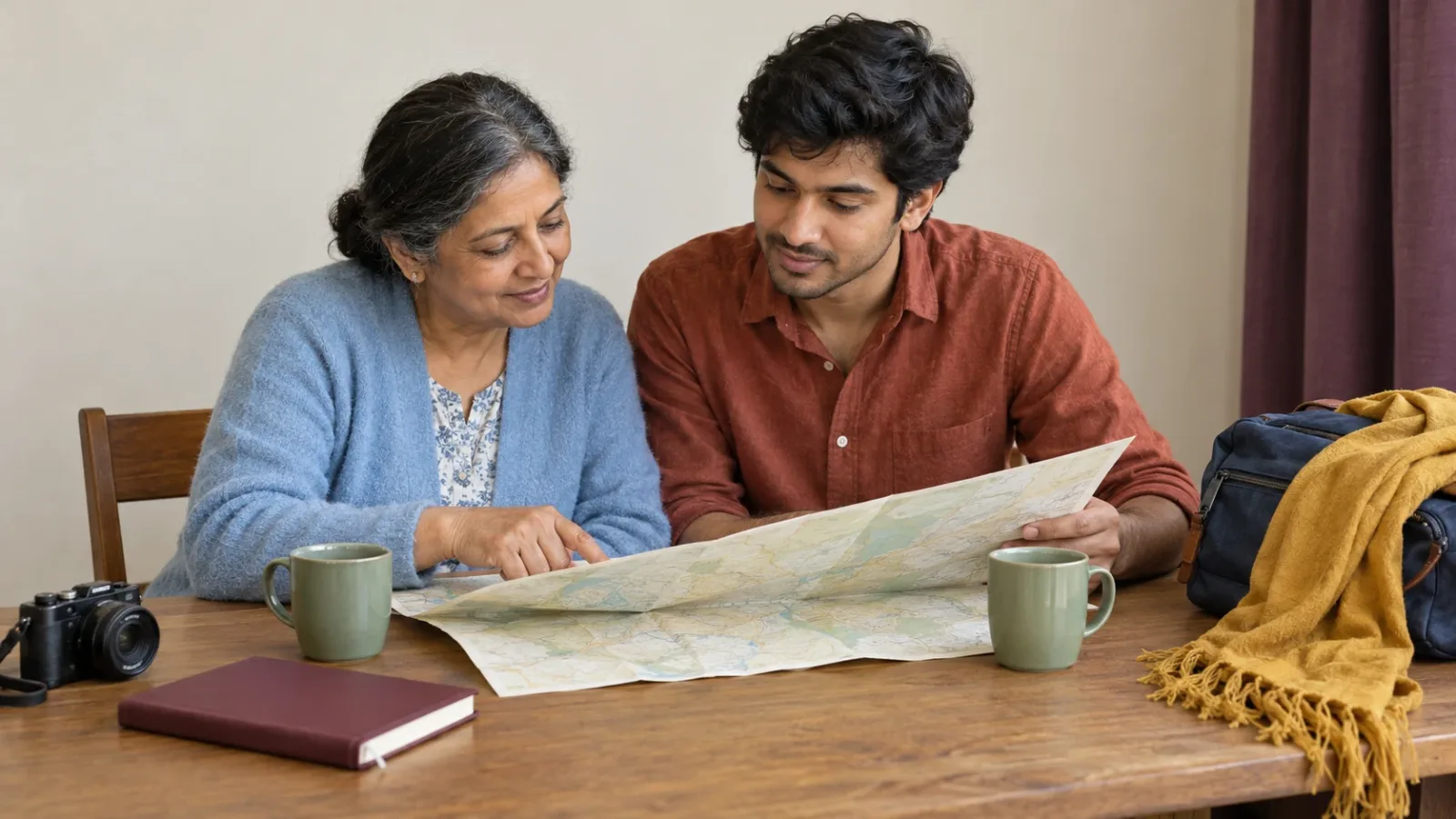
Image disclosure: the hero is an AI-generated fictional photographic-style trip-planning scene. It does not depict an actual Ganzhou hotel, attraction, museum or traveler.
1. A two-day plan that stays in the city
Day 1: choose a Yugu Terrace district walk, the old wall and Bajing Park area, then a river viewpoint toward the old pontoon bridge. Treat any tower interior as conditional on that day's entrance arrangements. End with a seated meal rather than adding every named landmark.
Day 2: visit the main Ganzhou Museum if your reservation and document process are confirmed. After a proper break, choose Zao'er Lane and the Standard Clock/Yangming Road food area for a shorter outing. Move the museum day if it falls on the normal Monday closure.
This is an editorial sequence, not a measured walking route or a fixed timetable. Use a current map to group entrances and arrange a vehicle between clusters when useful. If you have one day, keep the old-city and river combination; do not try to compress the museum and remote countryside into the same hours.
2. Understand what Jiangnan Song City means
The city's heritage-area description lists five historic districts, including Yugu Terrace and Zao'er Lane, plus the traditional-style Xin Gannan Road area. It also lists several separate cultural venues. The name describes a wider urban heritage area, not a single building with one universal ticket, one opening time and every activity included.
Song-period remains, later buildings, repaired streets and modern shops sit together here. The February 2026 city-carried report describes both cultural conservation and contemporary cafes, creative shops and food streets. Enjoy that mixture without calling every facade an untouched Song original.
Pick a small number of stops that tell different stories: the wall for city defense, a river viewpoint for the city's setting, and one museum or lane for everyday culture. Promotional references to performances are not a guaranteed daily show schedule.
3. Yugu Terrace district and the old wall
Start with the district around Yugu Terrace rather than making access to an upper platform the sole reason for your visit. The city's heritage description identifies Yugu Terrace and the old walls as part of the area's cultural setting. A short street-and-wall outing is a useful first introduction even if an interior is unavailable.
Do not assume an unbroken accessible wall-top circuit. Ask locally which gates and sections are open, what steps are involved and where a shorter exit is available. These practical details have not been verified as a continuous step-free route.
The museum's August 2021 announcement introduced free admission to Yugu Terrace, Bajing Terrace and several other named venues. It also contains pandemic-era procedures and old evening hours. It is historical evidence of that policy, not proof that the 2021 QR process,22:00 closing or every interior remains current in November 2026. Check the current gate notice.
4. Bajing Terrace: old foundation, later building
The city's 27 February 2026 description traces Bajing Terrace's foundation to the Northern Song Jiayou period,1056-1063. Crucially, it says the present Song-style reinforced-concrete building was reconstructed in 1983. Describe the historic site and the present structure separately.
Bajing Park and the river setting make a sensible second cluster. Choose a ground-level look first, then decide whether a tower visit is available and worth the additional effort. A history page describing views does not establish today's access to every floor.
If a tower is shut or crowded, keep the park and an authorized riverside viewpoint rather than spending the rest of the day waiting for a particular photograph. Exact current tower hours, last entry, document rules and any separate products remain unconfirmed in this guide.
5. The old floating bridge is optional
The city identifies the East River floating bridge, also called Huimin Bridge, as a Southern Song-founded crossing made from boats joined beneath a plank deck. Its description gives a length of about 400 metres. The February 2026 report locates the bridge on the Gong River and describes its relationship with the old wall and newer riverside businesses.
That history does not prove unrestricted access today. This research did not establish a current operator notice promising 24-hour access, a fixed opening-for-boats schedule or uninterrupted use in changing river conditions. Check barriers and instructions at the actual entrance; never bypass a closed approach.
Plan for the view, not a mandatory full crossing. If the deck is wet, access feels awkward or someone is uncomfortable with movement underfoot, remain on an authorized bank-side viewpoint. Children and anyone needing support should stay with their companion. No step-free or wheelchair-accessible crossing is certified here.
6. Ganzhou Museum: normal rules and the passport gap
The museum's normal visitor page gives Tuesday-Sunday 09:00-17:00, last entry 16:30, and Monday closure except statutory holidays. It says to reserve ahead through the official WeChat account 赣州市博物馆 and bring the required identity evidence and reservation order. The homepage says normal admission is free. Free does not mean no reservation or every temporary activity included.
The museum address is 21 Gankang Road, Zhanggong District, and its normal visitor consultation number is 0797-8681285. Use that exact destination when distinguishing it from Fushougou Museum and other old-city cultural venues. The permanent-exhibition description introduces Hakka migration, economic life and customs, making the museum a useful context stop rather than just a weather fallback.
A separate 28 September 2026 notice explicitly allowed foreign-passport visitors to register for entry during the 1-7 October holiday arrangements. That holiday window has ended. It does not settle whether November visitors can skip advance booking or use the same manual route. Confirm current foreign-passport fields, phone requirements and a staffed fallback before relying on admission. The normal page's broad reference to other valid documents is not a worked foreign-passport booking process.
7. A temporary gallery closure, not the whole museum
The museum notice published 16 November 2026 includes an image dated 13 November. It closes the first-floor Meissen porcelain temporary-exhibition gallery from 17 to 27 November 2026 for air-conditioning installation, with reopening announced from 28 November. The image explicitly says other galleries remain open.
Do not cancel the whole museum on the assumption that every gallery is shut. Equally, do not promise the Meissen exhibition during that closure or describe its announced reopening as already confirmed. Check for a newer notice before visiting.
The October holiday extension to 18:00 is also over; it is not the normal closing time to use for a November plan. Base the schedule on the normal 09:00-17:00 page unless the museum publishes a newer date-specific arrangement. Aim well before last entry so an identity question does not consume your visit.
8. Zao'er Lane and an unhurried food outing
Zao'er Lane is one of the historic districts named by the city. Combine a short look at its lanes with the Standard Clock and Yangming Road food area if the current map and your energy make that convenient. The 2026 report supports the presence of an active old-city food scene; it is not a live directory of every stall.
Choose one sit-down place where you can discuss ingredients and prices before ordering. A menu with photos or Chinese dish names can help, but the restaurant still needs to explain what is in the dish. Do not treat a historic street label as a quality, hygiene or dietary guarantee.
Nightlife coverage does not mean every shop, tower or museum is open late. Keep the evening flexible, check the return pickup point before settling in, and avoid making a performance or projection show the non-refundable centerpiece without a current schedule.
9. Hakka food: what the dish names hide
Ganzhou xiaochao yu is a local stir-fried fish dish. The city's recipe names grass carp, ginger, spring onion, red pepper, vinegar, soy sauce and rice wine. Expect fish, not a vegetable stir-fry; ask about spice and alcohol ingredients rather than assuming the name settles either. The colorful origin story is not needed to order it.
Hebao zuo, associated with Nankang, is not plain lotus-leaf rice. The city's recipe uses pork belly and steamed-meat rice powder, with seasonings and stock, wrapped in lotus leaf. It is a meat dish. The 2012 recipe is useful ingredient evidence, not a current restaurant price or a promise that every kitchen follows it exactly.
The regional food report spans Zhanggong, Nankang, Ganxian and other counties or districts. A regional specialty list is not proof that one central-city stall serves every item. For vegetarian meals, ask separately about meat stock, lard, fish, shrimp, oyster sauce, egg and shared preparation. No specific restaurant is certified vegetarian here.
10. Where to stay and what to leave out
For this plan, prioritize easy returns to your chosen old-city cluster, a clear pickup address and a room that matches your actual needs. Staying near the lanes may suit repeated short outings, but check street noise, vehicle access, lift availability and entrance steps with the property. This guide has not inspected or endorsed a particular hotel.
Longnan's enclosed houses and other county attractions are separate planning decisions. So are more ambitious rock, mountain or theme-park outings. They are not included merely because a promotional page groups them under the Ganzhou region.
Do not add them as a spare-hour extension. If one becomes your priority, give it its own transport and admission research and shorten the city plan. No flight schedule, railway rule or visa eligibility claim is being made here.
11. Budget and practical checks before paying
Build a quote from actual hotel nights, meals, local transfers and the specific activities you choose. Museum free-entry wording and a historical free-venue announcement do not make the entire city break free. Separate guiding, paid experiences and any commercial activities from basic access.
No current all-in daily budget, vehicle fare or live ticket checkout was verified in this research. Before a deposit, ask for the exact date, party size, pickup point, included admissions, exclusions and cancellation terms in writing. A package name alone is not a list of included attractions.
Carry the documents the relevant venue currently requests. Save the Chinese names of your destinations and a return address. Recheck rain and river conditions shortly before the outdoor day; this itinerary is not a live weather forecast or a guarantee of safe access to any river edge.
12. The final booking checklist
- Confirm which old-city gates, tower interiors and riverside sections are open on your visit date.
- Settle the main museum's current reservation and passport process, not just the expired holiday wording.
- Check the first-floor temporary-gallery update and normal versus special opening hours.
- Make bridge crossing optional and retain a bank-side alternative.
- Discuss pork, fish, stock and sauces before ordering; get prices before agreeing to a service.
For broader trip organization, see the Trip Keeper home page. This article does not claim that a particular Ganzhou attraction, guide or transfer is included in a package. A successful two-day visit needs a few confirmed anchors, not every place name in a regional brochure.
Sources and verification notes
- Ganzhou Museum: normal visitor rules
- Ganzhou Museum: free opening and latest notices
- Ganzhou Museum: temporary-gallery closure published 16 November 2026; image dated 13 November
- Ganzhou Museum: expired 1-7 October 2026 holiday hours and document notice
- City government: Jiangnan Song City heritage districts
- City government: Bajing reconstruction, walls and floating bridge,27 February 2026
- City-carried Xinhua report: old-city life and food streets,12 February 2026
- Ganzhou Museum: Hakka history permanent exhibition,19 April 2022
- Ganzhou Museum: historical free-entry announcement,4 August 2021
- City government: lotus-leaf pork recipe,18 June 2012
- City government: xiaochao fish ingredients,6 January 2013
- City-carried local report: food across the wider Ganzhou region,28 August 2023

A Miranda House graduate and lawyer who traded courtrooms for slow travel. Cheshta travels with the batches we host ourselves, with a soft spot for travelling alongside elders.
Planning your next trip?
We'll handle insurance, hotels, airport assistance and the itinerary — the same way we do it for every trip.
Questions on this article
asked by readers, answered by us
Was this helpful?
one tap, no sign-up