




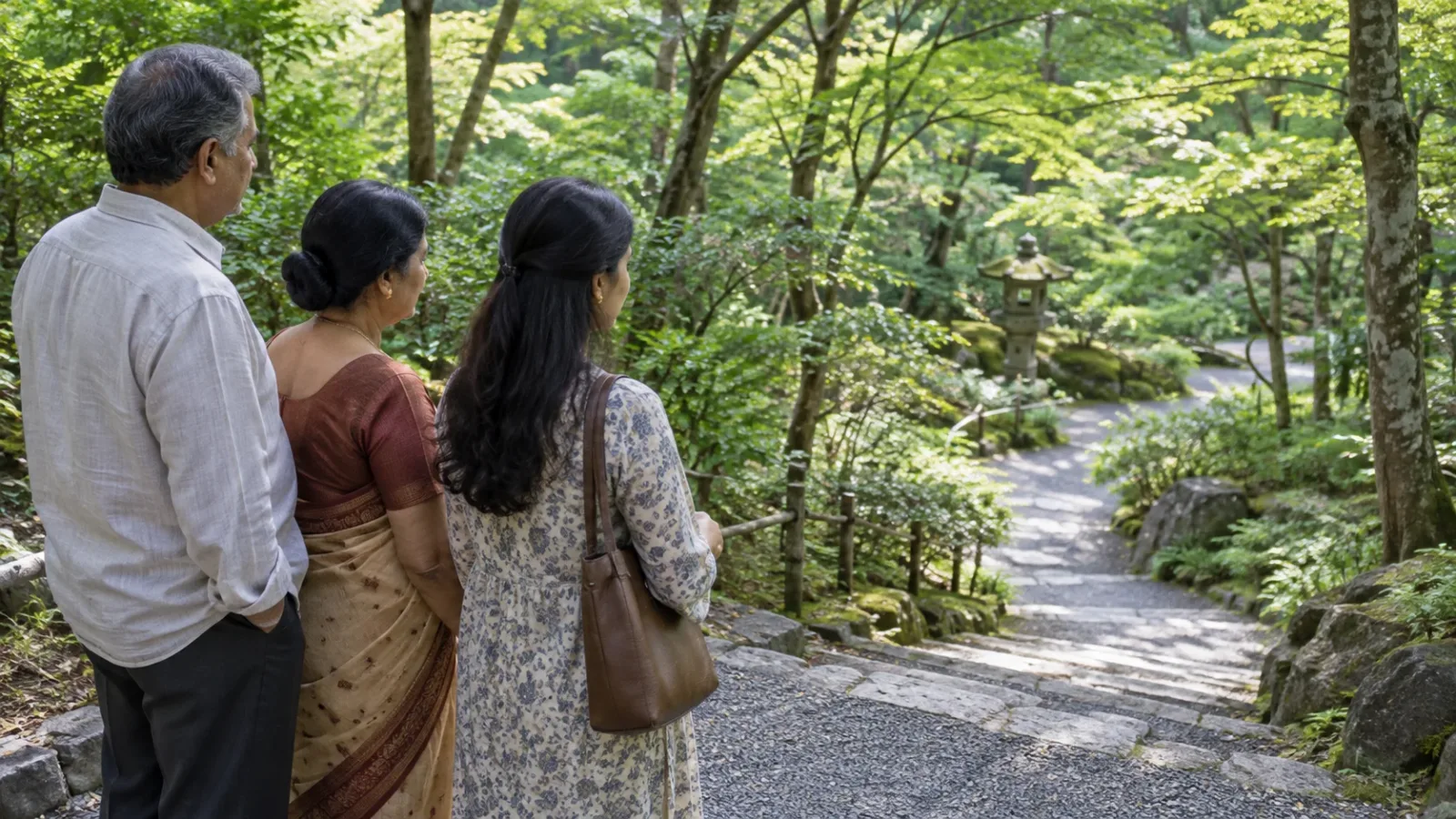
Gotoh Museum offers a useful choice for a family in Tokyo: an art visit, a garden walk or both. Do not turn wheelchair use inside the museum into a promise of an easy garden circuit. The garden has substantial changes in level, and choosing only the galleries can be a complete visit for parents.
Indoor wheelchair use does not settle the garden
The museum FAQ says wheelchairs can be used inside the building, including the exhibition rooms, and lists two loan wheelchairs. It also identifies one multi-purpose toilet in the main building, with wheelchair and ostomate facilities. That is specific support for an indoor visit, not a survey of every outdoor path.
The same FAQ warns of steep slopes, uneven ground, steps and ponds in the garden, with a maximum height difference of 35 metres. That is a difference in level across the grounds, not a statement that every visitor must climb that amount or that one specific route has been measured for this family.
Ask staff which route, if any, suits the parent's walking or wheelchair needs, where it turns back and how to avoid committing to a descent that is difficult to reverse. Confirm current loan availability and the entrance-to-gallery and toilet route. Neither a wheelchair icon nor two listed chairs guarantees stock, personal assistance or an outdoor circuit for a particular chair.
Decide on the garden before following it downhill
The official building and garden description places the wooded garden on land sloping towards the Tama River, with stone figures and teahouses along the paths. The October 2026 Tokyo Pass feature also describes a garden on a natural slope. The setting is part of its appeal; it is not a flat city park disguised by the word "stroll".
For parents who want trees but not a long circuit, ask about a short suitable section before starting. No particular step-free upper loop, guaranteed bench, handrail coverage or exact short walking distance was established here. Stop at the point where the route no longer suits the family, rather than treating every marked feature as compulsory.
A Tripadvisor review from June 2017 praised the quiet garden but also cautioned that its slope could be difficult for disabled visitors. That old personal account is not a current access inspection. It is consistent with the museum's own terrain warning and should not be converted into a universal "easy walk" recommendation.
Garden-only admission is a separate choice, not a second compulsory ticket
The FAQ says museum admission includes the garden. Garden-only admission, without the exhibition, is listed at 300 yen per person, with junior-high-school age and younger free. Do not add a second garden charge to museum admission just because a separate garden-only option exists.
Gallery prices depend on the exhibition. The FAQ and GO TOKYO listing updated in September 2025 describe a general rate, but the museum homepage can show a different current exhibition rate with a defined end date. Check the exhibition page for the family's date instead of carrying either a base price or a temporary price into another season. The FAQ says there is no senior discount.
The museum visitor rules say admission and garden tickets cannot be changed or refunded. Settle the intended choice, access questions and current total before buying. A garden-only ticket should not be treated as a refundable experiment if the path turns out unsuitable.
The garden is not open independently of the museum
The FAQ says the garden follows the museum's opening days and hours, with possible restrictions for bad weather or sunset. Ordinary hours are 10:00 to 17:00, with admission ending at 16:30. Usual closures include Mondays, the next weekday when Monday is a holiday, exhibition changes, summer maintenance and year-end periods.
Check the actual calendar and garden status for the date. Do not assume an outdoor garden remains open when galleries are changing exhibitions, or that entering just before 16:30 guarantees a full walk until 17:00 regardless of light and conditions. Weather can change the garden option without making the indoor visit unsuitable.
A collection famous for Genji is not a permanent Genji display
The homepage and FAQ state that there is no permanent exhibition. The museum activities page explains the changing programme; the FAQ says the Tale of Genji scrolls are usually shown for about a week in spring, but that timing can vary. The Murasaki Shikibu Diary scrolls have their own usual brief autumn display, also subject to change.
If a particular scroll is the reason parents want to go, verify the work and its actual display dates, including any rotation within the exhibition. A collection page or an old spring review does not establish that it will be on view. The visitor rules also warn that some displays may change without notice.
The local Kaminoge shopping-street introduction is useful for the museum's architecture and garden setting, but its mention of a famous magnolia should not become a current bloom promise. The museum FAQ says that tree was confirmed dead in May2019 and its natural-monument designation was subsequently removed. Current operator information takes priority over an older local description.
English titles are not full English interpretation
The FAQ says work titles and production dates have English text, while the explanatory captions are Japanese only. It says there is no audio guide and no individual curatorial explanation inside the galleries. Scheduled gallery talks are a separate arrangement, not a guide automatically assigned to each family.
Parents may still enjoy the objects, forms and garden without reading every explanation. If interpretation matters, arrange suitable help before the visit and confirm what the museum permits. Hindi narration, a personal English guide and translated full captions were not established. Do not infer them from an English tourism listing.
Teahouses are not an attached cafe
The museum FAQ says there is no cafe or restaurant. It also says teahouse interiors are normally not public; paid use for hosting a tea gathering is a separate enquiry. The building and garden page likewise marks the historic teahouses as closed to ordinary visitors.
Plan food and a seated break elsewhere rather than promising tea in a garden building. No included matcha, walk-in tea service, Indian meal or dietary arrangement was established. If a parent needs a definite rest seat before continuing, ask what is available instead of relying on a teahouse photograph.
Photography and a drink have different indoor rules
The FAQ prohibits photography inside the building but permits garden photography when it does not disturb others. The visitor rules also say not to touch exhibits or cases and to keep to walking paths and rest areas in the garden. Buying admission does not grant access to a closed teahouse or every patch of greenery.
The FAQ broadly asks visitors not to eat or drink indoors, including sweets and gum. The detailed visitor rules specify no eating or drinking in exhibition rooms and allow drinks in the lobby or garden. Follow staff direction for the actual place rather than treating either line as permission for a picnic or food in the galleries.
For the wider itinerary, The Trip Keeper's Japan trip page can start a conversation about pace and interests. Museum admission, garden access on the day, wheelchair loan, interpretation, a meal and transport are not implied inclusions. Last checked 9 November2026. Hero: AI-generated fictional family beside a generic sloping Japanese garden, not the actual Gotoh route or an access assessment.

A Miranda House graduate and lawyer who traded courtrooms for slow travel. Cheshta travels with the batches we host ourselves, with a soft spot for travelling alongside elders.
Planning your next trip?
We'll handle insurance, hotels, airport assistance and the itinerary — the same way we do it for every trip.
Questions on this article
asked by readers, answered by us
Was this helpful?
one tap, no sign-up