




At Havrå, the interesting thing is the relationship between houses, fields, tools and work. A family can use a guided visit to understand how a farm landscape supported daily life. But this is not a picturesque village to enter independently: the operator requires a guide and tickets bought in advance.
Checked 12 November 2026 against nine operator pages. The published 2026 summer programme has ended; a winter appointment and a route that fits the family must still be agreed.
Look beyond the roofs: the landscape is part of the collection
The operator's introduction describes Havrå on the south side of Osterøy, outside Bergen, as a traditional cluster settlement with eight farm holdings and a mix of public and private owners. Individual farms and their houses were built close together. The land parcels have not been consolidated into a single modern holding.
The collections page makes a useful point: the collection is the whole farm, including its cultural biological heritage and working methods. Buildings alone do not explain it. Fields, grazing areas, woodland, tools and the knowledge needed to use them belong to the story.
For children, a good question for the guide is how a household got food and winter fodder from this terrain. For adults, it can be how daily labour shaped the land. Those questions give the walk a purpose without promising a demonstration on arrival.
Hay on racks is a seasonal practice, not an activity ticket
The operator's Bødn page describes continued traditional management on a smaller scale: spring and autumn grazing, some oats and potatoes in a three-year rotation, and a summer hay cut with much of the grass dried on racks for winter fodder. It also distinguishes land below the road that is under restoration and now grazed rather than managed through the same field-and-hay system.
This is background to a working landscape, not a promise that a November visitor will see haymaking, handle tools, meet livestock or join farm work. The guided-tour description offers a story of food production, practical knowledge and the cultural landscape. Ask which parts the actual tour will cover, its language and whether any demonstration is planned for that date.
Advance ticket and guide first, even if you only want to look
The English visitor information says that the museum owns only some holdings and the rest are private. It explicitly says not to enter the farm without a guide. The Norwegian visit page adds that tickets must be bought in advance and cannot be bought in the farmyard.
A quiet-looking lane or an open gate is not an invitation. Stay with the agreed tour rather than treating the houses, doorways or land as free exploration space. Ordinary dogs are not allowed in the yard; the operator makes an exception for service dogs. This is not a general dog-walking stop.
The 2026 calendar has ended, and the summaries disagree
The detailed English and Norwegian visitor pages give a dated 2026 programme, with summer visits at 11:00–12:00 on specified opening days from 22 June through 21 August. July adds Sundays to weekdays. Those dates are past at this article's check.
The English homepage instead summarizes summer 2026 as 23 June–23 August, while the Norwegian homepage has an incomplete-looking compressed date label. Do not blend these into a longer season or use them to announce 2027 opening. The homepages say the rest of the year is by appointment. Send an enquiry and wait for an accepted date, time and product before building a day around it.
Prices are categories, not a family quote
The Norwegian visit page lists adult admission NOK 250, students NOK 200, children and young people aged 5–18 NOK 60, and children under 5 free. The English homepage uses the same adult, student and 5–18 figures. A free child's category does not waive the guide or advance-booking requirement.
Special forest or landscape tours are by enquiry for price and programme. The separate group description says up to 20 people, but that is not proof of places for a particular family or a confirmed winter group price. Ask about the selected tour, all family members and any companion arrangement; the access page lists free companion admission for a guided tour.
Plan the steep approach before committing the family
The accessibility page describes steep terrain, steps and height differences between the yard's slabs, and a very steep climb from the bus stop. It puts the parking-to-farm walk at about 250 metres. The visit page separately describes about 200 metres from parking to the meeting point at the bus shelter and asks people to arrive about 10–15 minutes before the tour. Different endpoints matter: reaching the meeting point is not the same as completing the climb.
Parking in the yard or driveway is private and prohibited. The access page says a vehicle can drop people at the farm after contacting staff first. That is a possible prior arrangement, not permission to park there or proof that the remaining route is step-free. The pages also disagree on where a group coach should turn. If using one, get the operator's exact instructions rather than choosing between them from this guide.
A guest toilet is on the slope, but the operator explicitly says there is no accessible toilet. Companion admission and service-dog welcome do not remove the physical barriers. Chair suitability, usable doorway widths, resting places and any shorter route are unconfirmed here. Discuss the actual person's needs with staff before paying or travelling.
A small visit with one clear purpose
Choose the farm for a guided explanation of working life and landscape, not for an assumed café, animal encounter or children's workshop. Current food service, changing facilities and indoor shelter are not established by these sources. Confirm the appointment, meeting point, route and weather plan together.
For wider trip planning or private-tour planning, explain the family's pace and interest in rural history. No guide, ticket, meal or transport is included or reserved by this article. Current public-transport services have not been verified here; old timetable text on a museum page is not a journey plan.
Sources and illustration
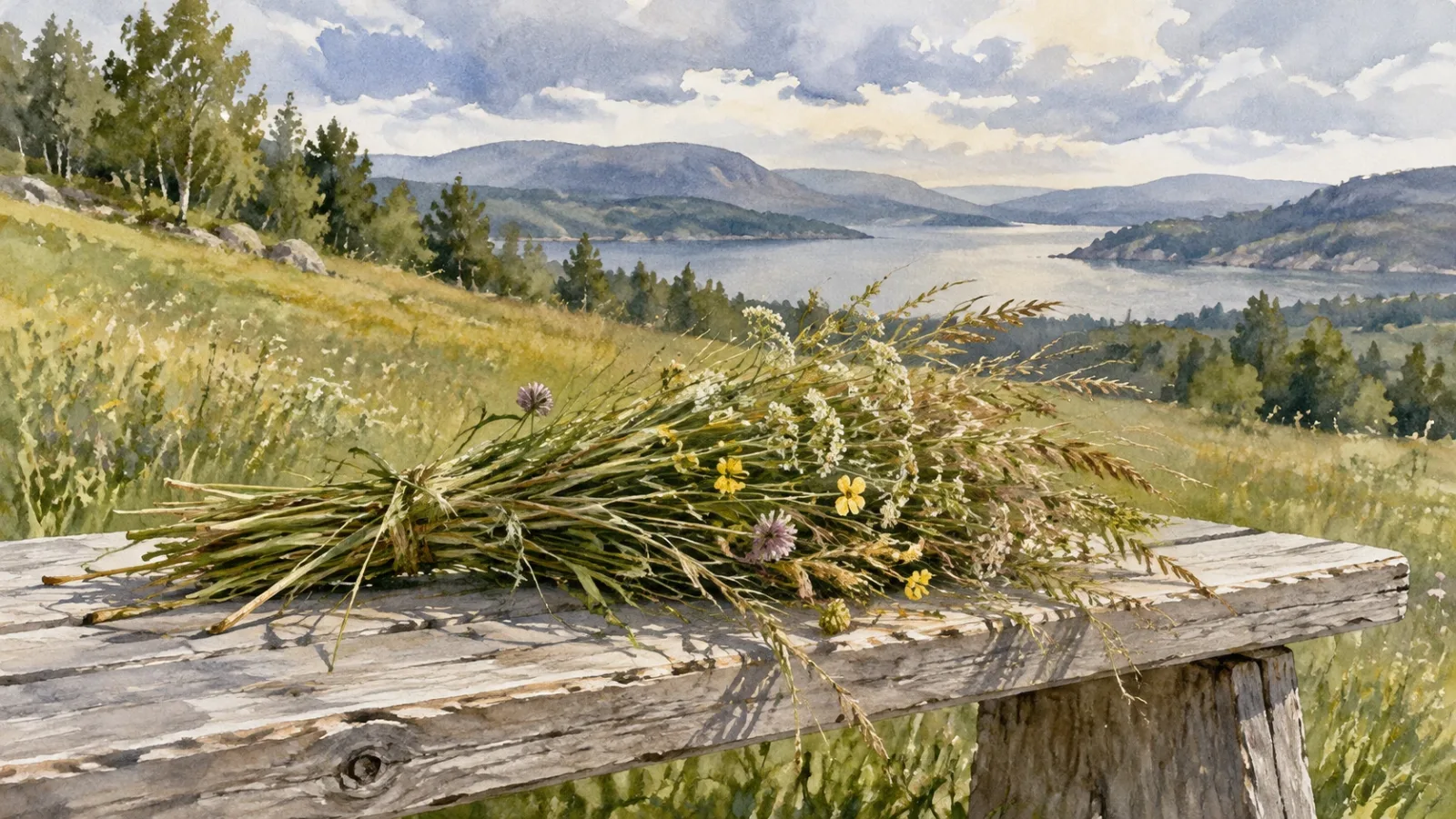
Checked 12 November 2026. The hero is a fictional AI watercolor of meadow hay on a bench, not a photograph or reconstruction of Havrå, an actual object or a scheduled farm activity. Winter arrangements and 2027 opening remain operator checks.
- Operator: eight holdings, mixed ownership and traditional land management
- Operator: the whole farm and working methods as the collection
- Operator: Bødn haymaking, grazing and crop rotation
- Operator: guided landscape tour and group description
- Operator: dated 2026 programme, guided-only access and parking
- Operator: advance tickets, age categories, meeting point and dated 2026 programme
- Operator: steep climb, uneven slabs, toilet and prior-contact drop-off
- Operator English homepage: different summer summary and rest-of-year appointments
- Operator Norwegian homepage: prices and appointments

A Miranda House graduate and lawyer who traded courtrooms for slow travel. Cheshta travels with the batches we host ourselves, with a soft spot for travelling alongside elders.
Planning your next trip?
We'll handle insurance, hotels, airport assistance and the itinerary — the same way we do it for every trip.
Questions on this article
asked by readers, answered by us
Was this helpful?
one tap, no sign-up