




- Subject
- Food-location communication
- Account
- NCBS research feature
- Message
- Direction and distance
- Decoding method
- Not supplied
- Reviewed
- 17 November 2026
Reviewed: 17 November 2026. Institutional research-feature introduction, not a decoding lesson or hive experiment.
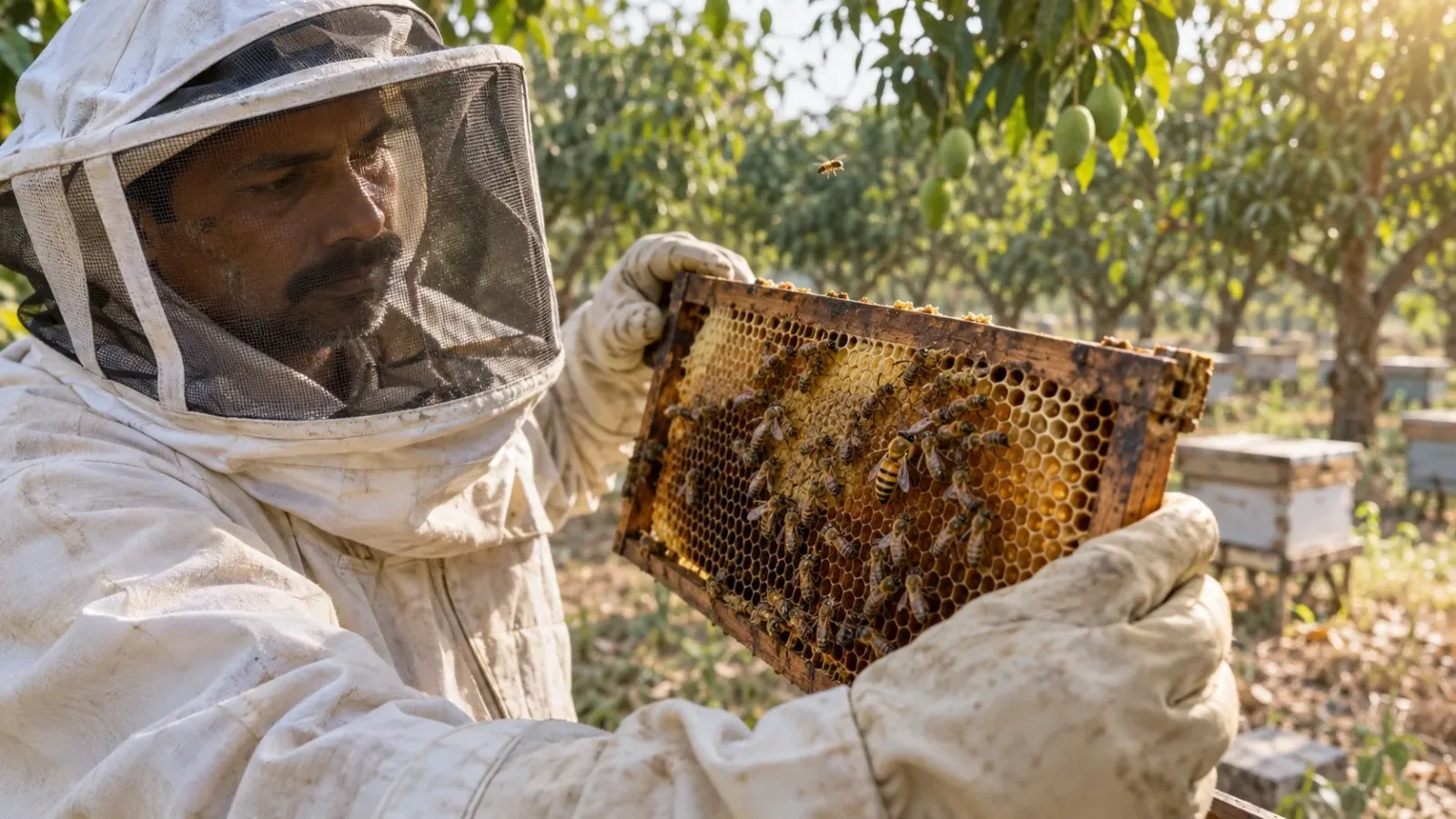
AI-generated fictional beekeeper scene; not a recorded waggle dance, NCBS research image, identified colony, hive-handling instruction or current visit record.
The National Centre for Biological Sciences describes the honey-bee waggle dance as a message about where to find food. Its research feature identifies two parts of that information: the food source's direction and its distance from the hive. Read the movement as communication, rather than only an eye-catching routine.
Distinguish movement from its message
The feature connects a returning bee's dance with information for its nest mates about a food source. Direction and distance describe that source in relation to the hive. They are the narrow point of this explanation.
Recognising that the dance carries a location message is different from learning to read it. This article supplies no angles, timing, measurements or rules for working out a direction or distance from a bee's movement.
Nor does the explanation mean that every conspicuous movement by any bee is the same message. The account concerns honey bees and the waggle dance it describes, not a rule for identifying every insect's behaviour.
Keep the message and its reception separate
NCBS's feature also discusses research on bees responding to the dance. That distinction matters: describing information in the dance and explaining how another bee receives it are related questions, not identical ones.
The feature presents some possible explanations for reception as suggestions. This introduction does not turn those suggestions into a settled mechanism for every honey-bee species.
Its limited takeaway remains the communication described by the institution: the waggle dance conveys information about a food source's direction and distance. It does not establish that every species uses identical signals or that every dance brings the same response.
Understand the account without turning it into an experiment
A research feature can explain the meaning of an observed behaviour without becoming instructions for reproducing the study.
No hive approach, opening, feeding, baiting, handling or observation method is supplied here. The account is not used to identify a present colony, arrange a campus visit or promise a wildlife encounter.
It also establishes no judgement about honey purity, colony health, crop yield or conservation results. The subject is the food-location message described in the NCBS feature, not a product test or a report of current field conditions.
Frequently asked questions
What information does the feature connect with the waggle dance?
The direction and distance of a food source from the hive.
Does understanding that message mean this article teaches how to decode it?
No. It gives no measurement, timing or direction-reading method.
Does it establish identical signals in every honey-bee species?
No. The explanation does not make that universal claim.
Does the research account confirm a hive visit or an experiment to try?
No. No visit, colony location, handling permission or experimental method is supplied.
Does this assess honey purity or colony health?
No. It gives no product test or colony-health assessment.
Are all proposed reception mechanisms treated as settled?
No. The institutional feature includes suggestions about reception; this introduction does not make them universal settled mechanisms.
Official sources and limits
This introduction relies on the NCBS institutional feature dated 28 October 2020, not an independently inspected journal paper. It supports the food-source direction/distance message and distinguishes reception questions. No decoding, universal mechanism, hive experiment, present colony, honey purity, health, yield, conservation result or visit entitlement is established.

A Miranda House graduate and lawyer who traded courtrooms for slow travel. Cheshta travels with the batches we host ourselves, with a soft spot for travelling alongside elders.
Planning your next trip?
We'll handle insurance, hotels, airport assistance and the itinerary — the same way we do it for every trip.
Questions on this article
asked by readers, answered by us
Was this helpful?
one tap, no sign-up