




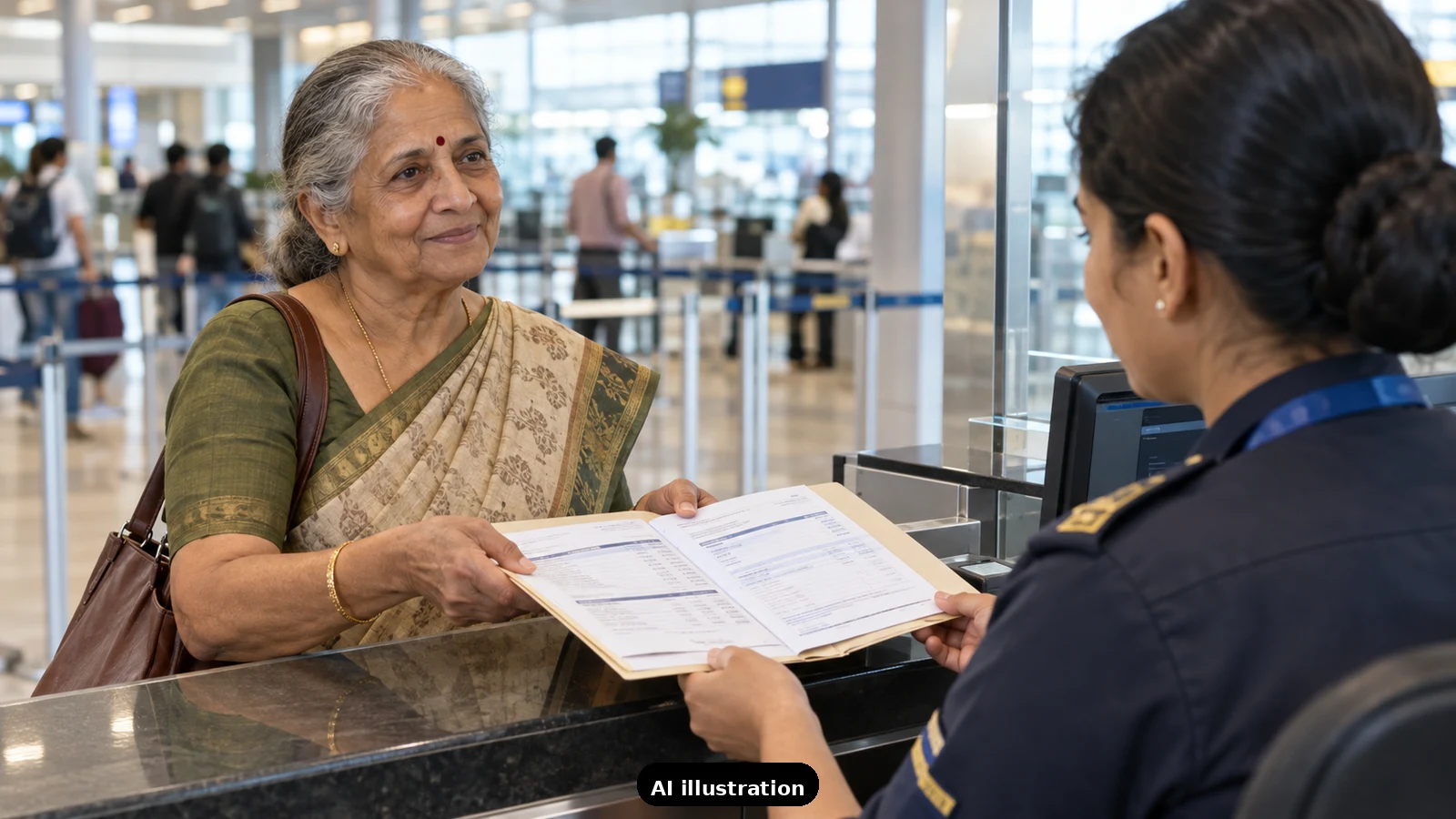
Short answer: there is no immigration counter in the world that insists on a phone. Officers ask to see funds, not an app - and paper evidence is the oldest, most widely accepted form of it. For a parent travelling without a smartphone, prepare a simple folder: a bank statement for the last three to six months printed and stamped by the branch, an updated passbook if they have one, a balance-confirmation letter from the bank, a sponsor letter with the sponsor's own statement if the children are paying for the trip, and some local-currency cash where the destination names a specific amount. Carried in hand luggage, that folder answers the question completely.
Why paper is not a downgrade. The proof-of-funds check exists so the officer can see the trip is genuinely financed. Embassies and immigration pages that describe acceptable evidence routinely list original bank statements - stamped and signed by the bank - as the standard form, with online printouts treated as the weaker cousin that sometimes needs a supporting bank letter. A stamped paper statement is not the backup option; in most rulebooks it is the reference option.
The folder, piece by piece. First, the bank statement: ask the home branch to print the last three to six months and stamp and sign it - a net-banking printout without the bank's mark carries less weight. Second, the passbook: many senior accounts still have one; get every entry updated at the branch before travel so the balance on the last line is current. Third, a one-page balance-confirmation letter from the branch manager helps when the statement is long - it states the account holder's name and current balance on bank letterhead. Fourth, if a fixed deposit backs the trip, carry the FD receipt copy. Keep everything in one transparent folder, in the cabin bag, never in checked luggage.
If the children are paying. Then the parent's own balance is not the story at all, and presenting it as such confuses the counter. The folder should carry a short sponsor letter - the child's name, relationship, a line taking responsibility for the trip's costs - plus a copy of the child's bank statement and passport. This matches how visa checklists treat sponsored travel, and it keeps the funding story consistent with what was said at the visa stage.
Where cash itself is the rule. A few destinations name an amount. Thailand is the standard example: its Tourism Authority reminds visitors that immigration can ask to see funds - commonly 10,000 baht per person or 20,000 per family, in baht or equivalent - and officers apply this at entry screening. For such countries, the folder should include that cash (or a forex card with its load slip), because no statement replaces a rule that asks for money in hand. Check the destination's current entry page before deciding how much cash to carry.
Coaching the moment itself. Tell your parent the likely question is simply 'how are you paying for this trip?' The answer is to open the folder, not to explain. Practice one sentence: 'My statements are here, and my son sponsors the flights - his letter and statement are in this folder.' Officers meet paper folders every day; a calm, organised one ends the conversation faster than a phone ever does.
Where TripKeeper fits in. For the parents' trips we plan, this exact folder - stamped statement, sponsor letter, country-specific cash amount - is assembled and checked with the family before departure, so nothing at the counter is a surprise. Send us a trip-planning inquiry if you would like that done for your parents' next journey.

A Miranda House graduate and lawyer who traded courtrooms for slow travel. Cheshta travels with the batches we host ourselves, with a soft spot for travelling alongside elders.
Planning your next trip?
We'll handle insurance, hotels, airport assistance and the itinerary — the same way we do it for every trip.
Questions on this article
asked by readers, answered by us
Was this helpful?
one tap, no sign-up