




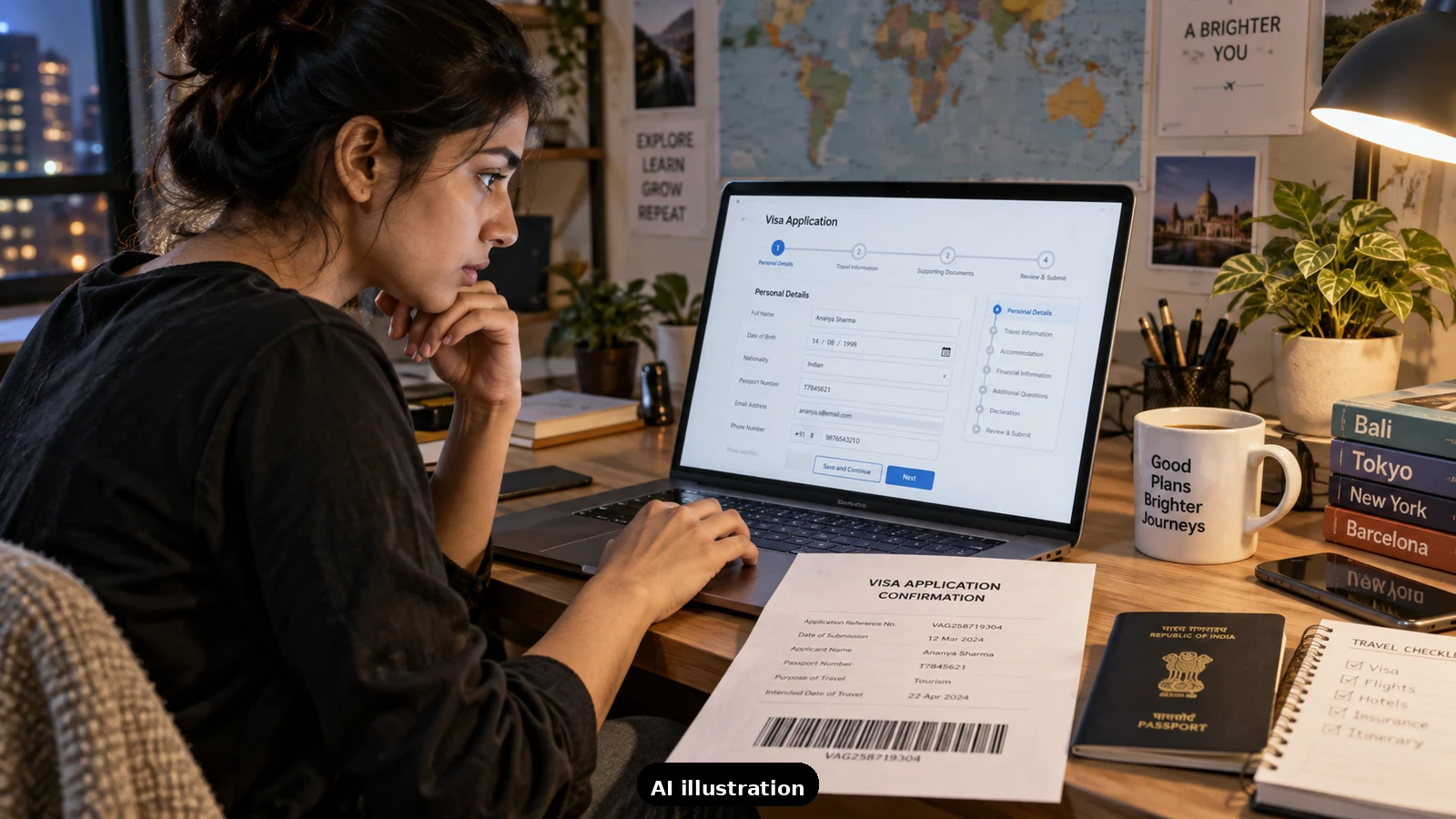
Short answer: submit a fresh DS-160 and make your appointment point to it. A DS-160 cannot be edited after submission - the form is locked the moment you sign it - but the US State Department's own FAQ describes the intended path: retrieve the submitted application on the CEAC site, create a new application from it, correct the answers, and submit again. Your interview follows the newest confirmation number, as long as your appointment record knows about it.
Step one: create the corrected DS-160. On the CEAC site, choose "Retrieve an Application", enter your old application ID and security answer, and use "Create a New Application" - your personal details pre-populate, which saves the retyping. Fix the fields that were wrong, review everything else (pre-filled data still needs checking), sign and submit. You get a new confirmation page with a new AA number. Print it and save the PDF.
Step two: update the number in your appointment profile. This is the step that actually matters in India, because your VAC biometrics and consulate interview are booked against the old DS-160 number. Log into your ustraveldocs account and update the DS-160 confirmation number in your profile to the new AA number. Do this as early as possible - US embassy notices in India require the DS-160 number on your appointment to match the form you will be interviewed on, and applicants have been turned away over mismatches. Do not leave it for the week of the interview.
Step three: carry the right paper. On appointment days, take the new confirmation page. Keeping the old one as a spare is harmless, but the barcode that must scan at the VAC and the consulate is the new one. If the officer asks about the change, a plain answer - "I noticed an error and submitted a corrected form" - is routine and expected; corrected forms are normal.
What if the interview is days away? If you cannot update the number online in time, contact the ustraveldocs support desk for India and, if needed, be ready to reschedule - the State Department itself warns that inaccurate forms can force a correction and rescheduling. A rescheduled interview with a consistent file beats an interview where the barcode and the form disagree.
Which mistakes are worth this trouble? Wrong passport number, wrong name spelling, wrong date of birth, a wrong answer on employment or travel history - fix these; they sit at the heart of the application. A typo in a travel plan date or an old address is lighter, but if you are already submitting a new form, clean those too. What you should never do is let an error stand because fixing felt tedious - the form is the interview.
And if you spot the error after the interview? Then the DS-160 is already the officer's record. Minor slips can be clarified at the window itself, which is why reviewing your answers before submission matters so much. The correction window is between submission and interview - use it.
How we look at it at TripKeeper. When we prepare a US application, the DS-160 is checked field by field against the passport and the itinerary before it is ever submitted - and if something still slips through, the corrected form and the appointment record are reconciled the same day. Send us a trip-planning inquiry if you want that discipline on your file.

A Miranda House graduate and lawyer who traded courtrooms for slow travel. Cheshta travels with the batches we host ourselves, with a soft spot for travelling alongside elders.
Planning your next trip?
We'll handle insurance, hotels, airport assistance and the itinerary — the same way we do it for every trip.
Questions on this article
asked by readers, answered by us
Was this helpful?
one tap, no sign-up