




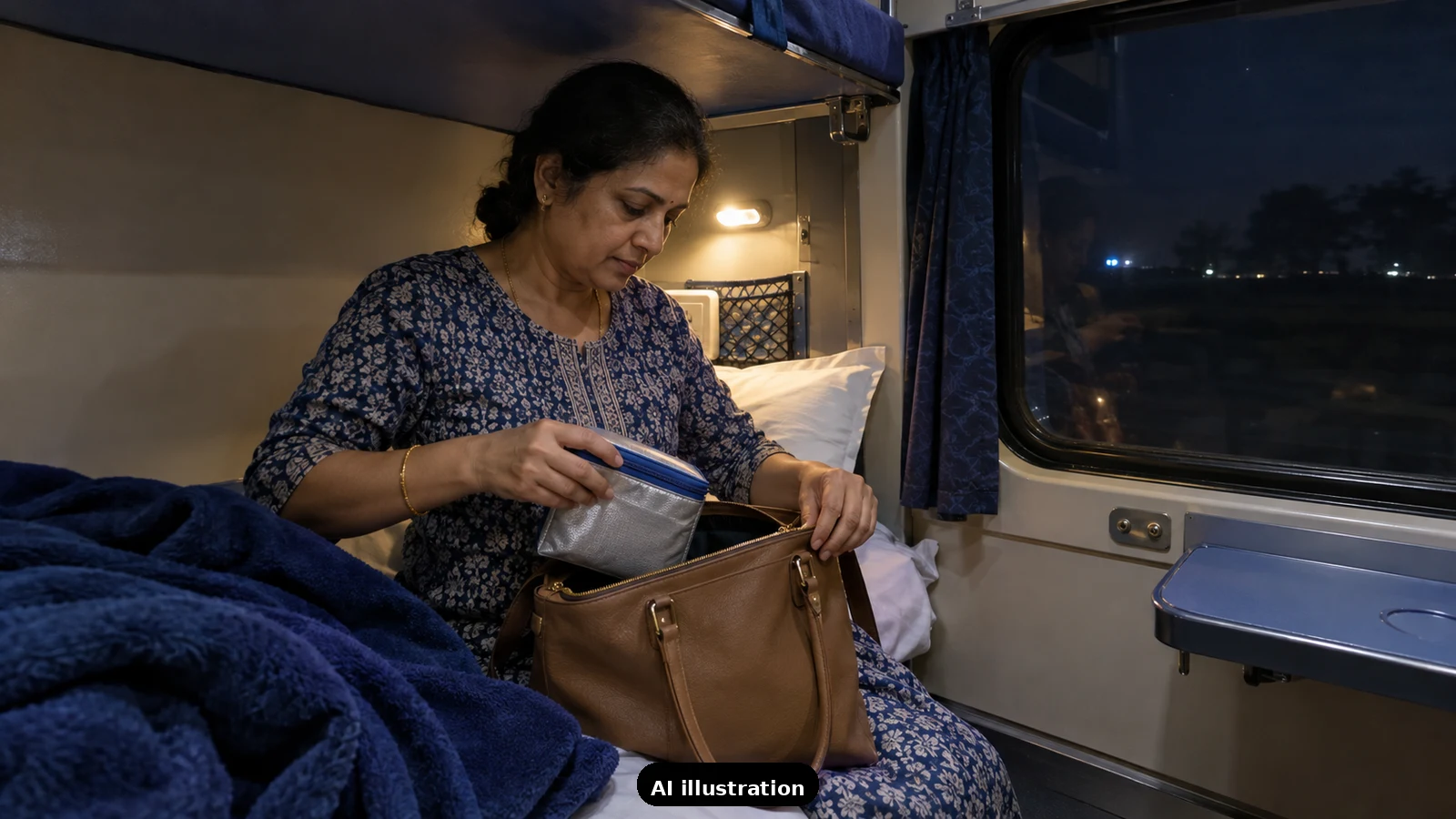
Short answer: in an AC coach, the pen or vial you are currently using usually needs no cooling at all - most insulins and similar injectables stay safe at room temperature below about 30C for around four weeks once in use, and AC coaches run well under that. Your cooling effort should go into the spare, unopened stock, which needs 2-8C storage. An insulated cooling pouch handles an overnight journey comfortably. (This is general information, not medical advice - your doctor's and the pack leaflet's instructions for your specific medicine always win.)
Know which stock actually needs cooling. This one distinction simplifies everything. The pen or vial in use: room temperature below roughly 30C is fine for the usage period on its leaflet (commonly about 28 days), and many people find room-temperature insulin stings less on injection. Spare, unopened pens and vials: these need refrigeration at 2-8C, so on a journey they travel in a cooling pouch. In an overnight AC coach, the cabin temperature is on your side - the danger points are the hot station, the taxi, and any wait in the sun before and after the train.
The cooling kit that works on a train. An evaporative cooling wallet (the kind you soak in water) or an insulated pouch with gel ice packs keeps spares cool through the night without electricity - do not count on the coach's charging points, and a mini-fridge is impractical on a berth. Two rules protect the medicine: never let it touch ice or gel packs directly (freezing destroys insulin as surely as heat), and keep it in its box or an inner sleeve inside the pouch. Wrap a layer of cloth between the pack and the medicine if needed.
Pack it where the heat cannot reach it. The cooling pouch goes in your hand baggage, not in a suitcase on the floor near the door or under a sunny window at a daytime halt. During station stops in the day, keep the bag with you, away from direct sun. If your journey includes a long hot wait on the platform, that wait - not the AC night - is what your gel packs are really for.
The overnight checklist. One: separate in-use from spare stock before packing. Two: spares into the cooling pouch, in their box, never against ice. Three: pouch into your personal bag, which stays at your berth. Four: prescription and doctor's note in the same bag - they answer every question at checks and help if you need a replacement en route. Five: a quick look in the morning - if the medicine was frozen or looks different from normal, do not use it; speak to a pharmacist or doctor about a replacement.
How TripKeeper plans journeys around medical needs. When we plan train travel for travellers who carry temperature-sensitive medication, we think about the whole chain - cab, platform, coach, hotel fridge at the other end - so nothing depends on luck. If you would like your family's journeys planned that way, send us a trip-planning inquiry.

A Miranda House graduate and lawyer who traded courtrooms for slow travel. Cheshta travels with the batches we host ourselves, with a soft spot for travelling alongside elders.
Planning your next trip?
We'll handle insurance, hotels, airport assistance and the itinerary — the same way we do it for every trip.
Questions on this article
asked by readers, answered by us
Was this helpful?
one tap, no sign-up