



- When cameras are lost
- Entries, exits, ladders and handoffs - not mid-swim
- Attachment
- Short lanyard to a solid point, routed per maker/crew guidance
- Flotation
- Floating grip/backdoor for surface drops
- Habit
- Tug-test before entry; never set it down on deck
Short answer first: cameras are almost never lost in the middle of a swim. RegMount's guide to not losing an action camera underwater (updated August 2026) is blunt about it: most cameras go missing at the edges - jumping in, climbing out, the boat ladder, and handoffs - and most mount failures come from loose thumb screws, worn buckles and unlocked quick-release clips. So security is three layers: a solid attachment, flotation for surface drops, and a few habits at exactly those edge moments.
Layer one: clip it to something solid
Use a wrist lanyard or clip-off tether every time, including with mounts that have never failed you - RegMount calls a tether cheap insurance. Attach and route it the way your camera or housing manufacturer and the boat crew advise for your setup: to a solid point on the housing or frame, never to the same buckle that might fail, never to the boat's fixed gear, and never around anyone's neck or body. Keep it short: a coiled lanyard stays tidy until needed, and a long, loose lanyard is itself an entanglement hazard. Shark Dives Oahu's boat-camera safety guide (April 2026) adds the hardware angle from dive boats: a brass bolt snap on a solid D-ring, plastic clips avoided because they go brittle in saltwater, and every connection tug-tested like a seatbelt before you step in.
Layer two: make it float
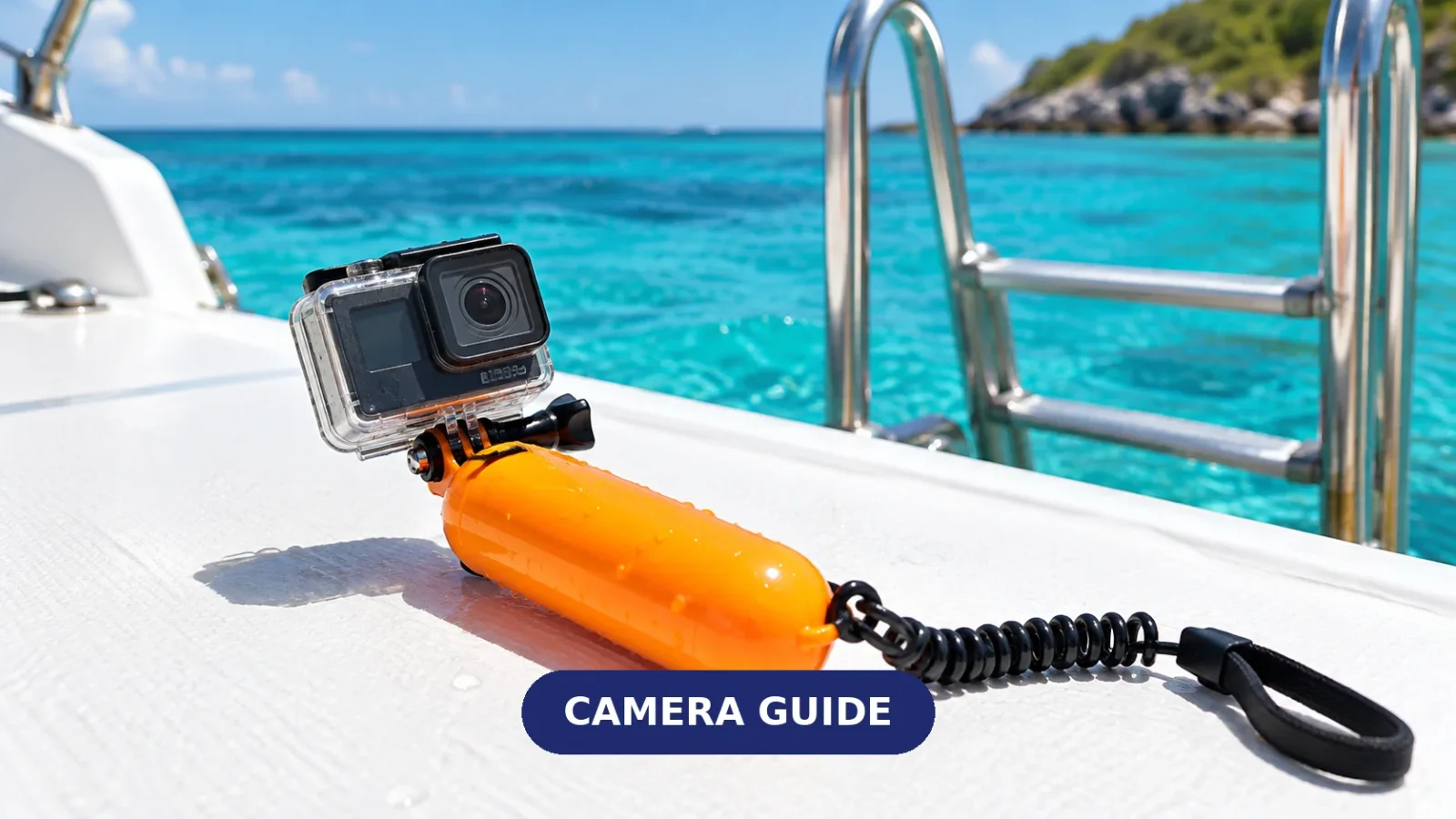
If the camera does come off at the surface, flotation turns a sinking loss into a bobbing recovery. GoPro's The Handler floating grip is the classic example - a floating hand grip whose bright orange cap pops to the surface if dropped, with a wrist strap lanyard included. Whatever float you choose must be rated - and ideally tested by you in shallow water first - for the complete weight of your camera, housing and accessories; an under-rated float simply sinks with the rig. RegMount notes floating backdoors and grips help for snorkelling and surface work, with one caveat for divers: at depth a camera that floats up can drift a long way, so flotation is a surface tool, not a substitute for the tether.
Layer three: the edge-moment habits
Since losses cluster at entries and exits, that is where habits pay. The entry itself is crew- and site-specific - follow the crew's instructions for how to go in, and keep your hands free for them; a tethered camera means no hand is committed to it. For the rest, RegMount's list: check the camera as soon as you surface, tighten thumb screws firmly before every swim and re-check buckles. Never set the camera down - not on the deck, not on the sand; clip it off or keep it mounted. At the ladder, secure the camera before you start climbing, and hand it up only to a crew member who has acknowledged taking it. Back on board, label your camera - crowded rinse tanks full of identical black action cameras are their own loss risk.
If you need both hands
A tether means a surprise - a wave, a ladder slip, helping a child - never becomes a choice between the camera and your hands. Let the lanyard take the camera and deal with yourself first; the camera hangs where it is. Keep the lanyard short enough that the camera cannot swing into rocks or the ladder while doing so.
Quick questions
Is a wrist strap enough, or do I need a floating grip too? They do different jobs. The lanyard keeps the camera attached to you; a correctly rated float keeps a dropped camera at the surface where you can see it - check the rating covers your full camera, housing and accessory weight. Guides recommend using both for swimming and snorkelling - GoPro's floating Handler even ships with a wrist lanyard.
Where should I attach the tether? Follow your camera or housing manufacturer's attachment points and the boat crew's guidance for your setup. The solid point is the housing or frame - not the same buckle or mount that might fail, per RegMount's loss analysis - and never the boat's fixed gear or anyone's neck or body.
Can I just hold the camera in my hand the whole time? Hand-holding is how many losses happen at exits and handoffs: a grab for the ladder or helping a child takes your hands. Keep the camera tethered, follow the crew's instructions for the entry itself with your hands available for them, and secure the camera before climbing out.
Does a floaty case work at any depth? It is a surface tool, and only when it is rated for the complete weight of your camera, housing and accessories - test it in shallow water before trusting it. RegMount notes that at depth a camera that floats upward can drift far before you notice - flotation helps for snorkelling and surface drops, while the tether does the real work everywhere else.
What should I do the moment a camera comes off? Only if the float is safely within reach: grab it without swimming off into current, boat traffic or away from your group, and if it is drifting out of reach, alert the crew instead of chasing it. If it sinks, note the spot against the boat or a landmark and tell the crew immediately; a delayed, tired, breath-hold search is a bigger risk than a lost camera.

A Miranda House graduate and lawyer who traded courtrooms for slow travel. Cheshta travels with the batches we host ourselves, with a soft spot for travelling alongside elders.
Planning your next trip?
We'll handle insurance, hotels, airport assistance and the itinerary — the same way we do it for every trip.