




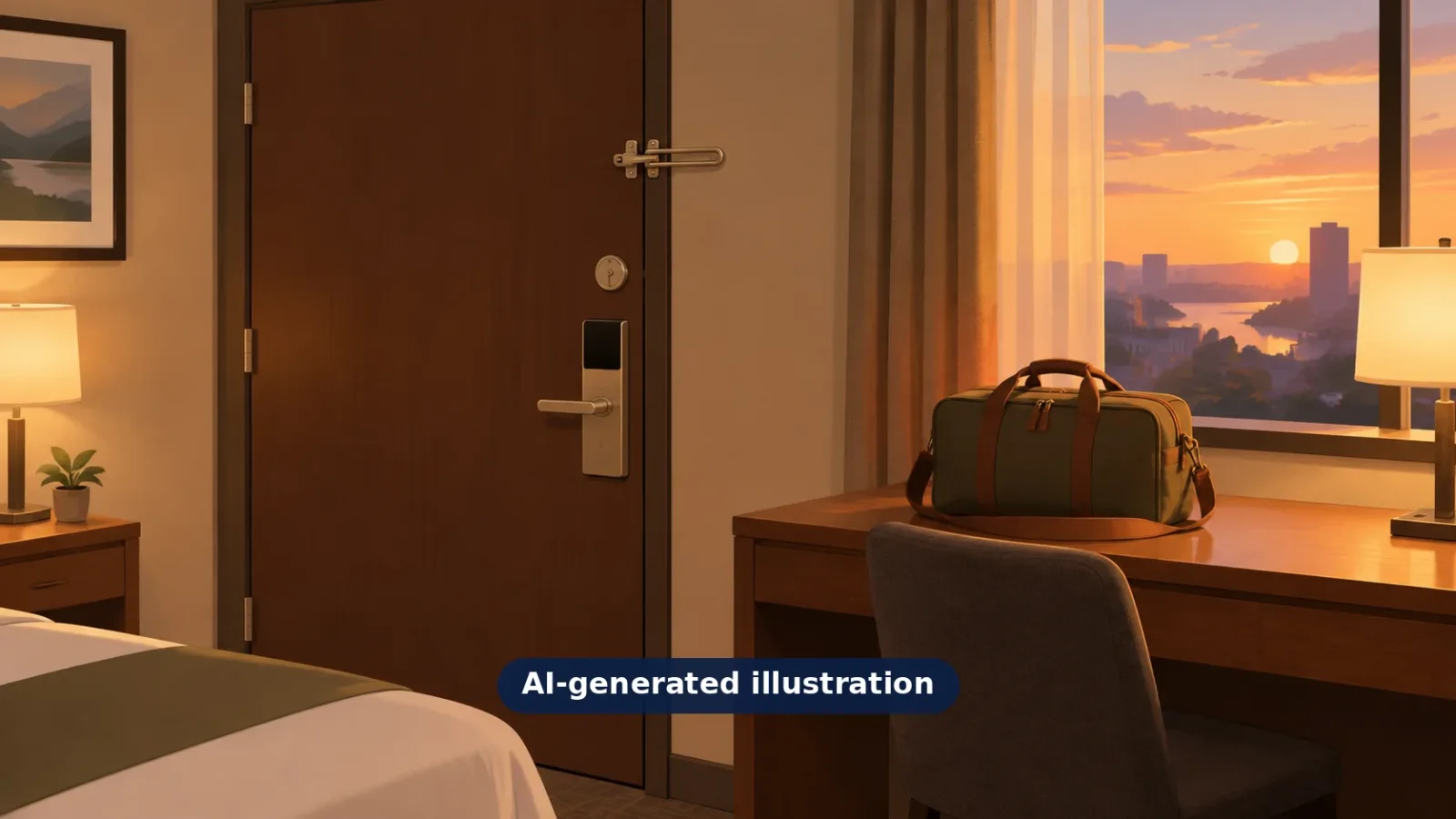
- First minute
- locks + exits
- Valuables
- safe + policy
- Door rule
- peephole first
- Before sleep
- recheck lock
A new room feels fine in the first minute, which is exactly when to run the checks - before the bag is open and the tiredness sets in. This is a two-minute routine, not a paranoia exercise: locks, exits, the safe, and one habit at the door. Run it once and the room is settled for the whole stay.
Minute one: locks and exits
Check the door before anything else: it closes fully on its own, the latch catches, and the deadbolt and security latch both work. Then look at the emergency plan posted in your room - often on the back of the door. The US State Department's lodging-safety guidance is to find the closest emergency exit and learn the route as soon as you arrive, and to remember that exiting through windows may not always be possible. The US Fire Administration adds two habits worth copying: find the two closest exits from your room, and count the doors between your room and those exits - the count is what helps you find the way in the dark or in smoke. In an emergency, follow the building's posted instructions; the posted plan is the authority for your floor. If the door does not lock properly or the balcony door does not close, ask for another room now, not at midnight.
Valuables: the safe, with limits
If the room has a safe, test it empty first - set a code, open it, then decide. Treat a room safe as one layer, not a guarantee: for anything expensive, check what your travel insurance requires for valuables cover and ask reception about the hotel's secure deposit service. Passport, spare cards and cash go in the safe or stay on you; what stays out is only what you are using that day. Keep a mental list of what went in, so everything comes back out at checkout.
One habit: peephole first
For the whole stay: check the peephole or door viewer before opening, and use the security latch when you are inside. If someone knocks claiming to be staff and you were not expecting anyone, call reception to confirm before opening - genuine staff will not mind. The State Department's checklist also suggests carrying your room key separately from the packet that shows your room number, and meeting new visitors in the public lobby rather than in your room.
The quick room sweep
Two more checks while the bag is still closed. First, the practical ones the State Department's room checklist names: all doors and windows lock properly, the room phone works, and fire alarms - and carbon monoxide detectors where fitted - are in place. Add balcony and connecting-door locks to that list, and save the reception number in your mobile. Second, your own comfort scan: you are looking for anything that seems off to you, like a smoke detector hanging loose, a door that looks forced, or unfamiliar electronics - the checklist says to report anything unusual to the front desk straight away. Trust the instinct: if the room feels wrong, ask to move. Hotels handle room-change requests routinely.
Quick questions
Is a hotel door chain enough on its own? Treat the chain or security latch as one layer, not the system: deadbolt plus latch plus the peephole habit is the routine. A door that does not close and lock properly is a room-change request, not something to work around.
Should I leave valuables in the room safe when out all day? A room safe is a reasonable layer for everyday items, but treat it as a layer rather than a guarantee - check your insurance conditions and use the hotel's secure deposit service for expensive items. Whatever you use, keep a mental list so nothing is left behind at checkout.
What should I check first when I walk in? The State Department's room checklist: doors and windows lock, the phone works, fire alarms are present, and nothing looks out of place - then read the posted emergency plan and find the nearest exit. It takes about two minutes, which is why it works best before the bags are open.
What if something seems wrong with the room? Tell reception straight away - a broken lock, a damaged door frame, or anything that feels off is their problem to fix or to move you from. You are not being difficult; this is routine for them.

A Miranda House graduate and lawyer who traded courtrooms for slow travel. Cheshta travels with the batches we host ourselves, with a soft spot for travelling alongside elders.
Planning your next trip?
We'll handle insurance, hotels, airport assistance and the itinerary — the same way we do it for every trip.
Was this helpful?
one tap, no sign-up