



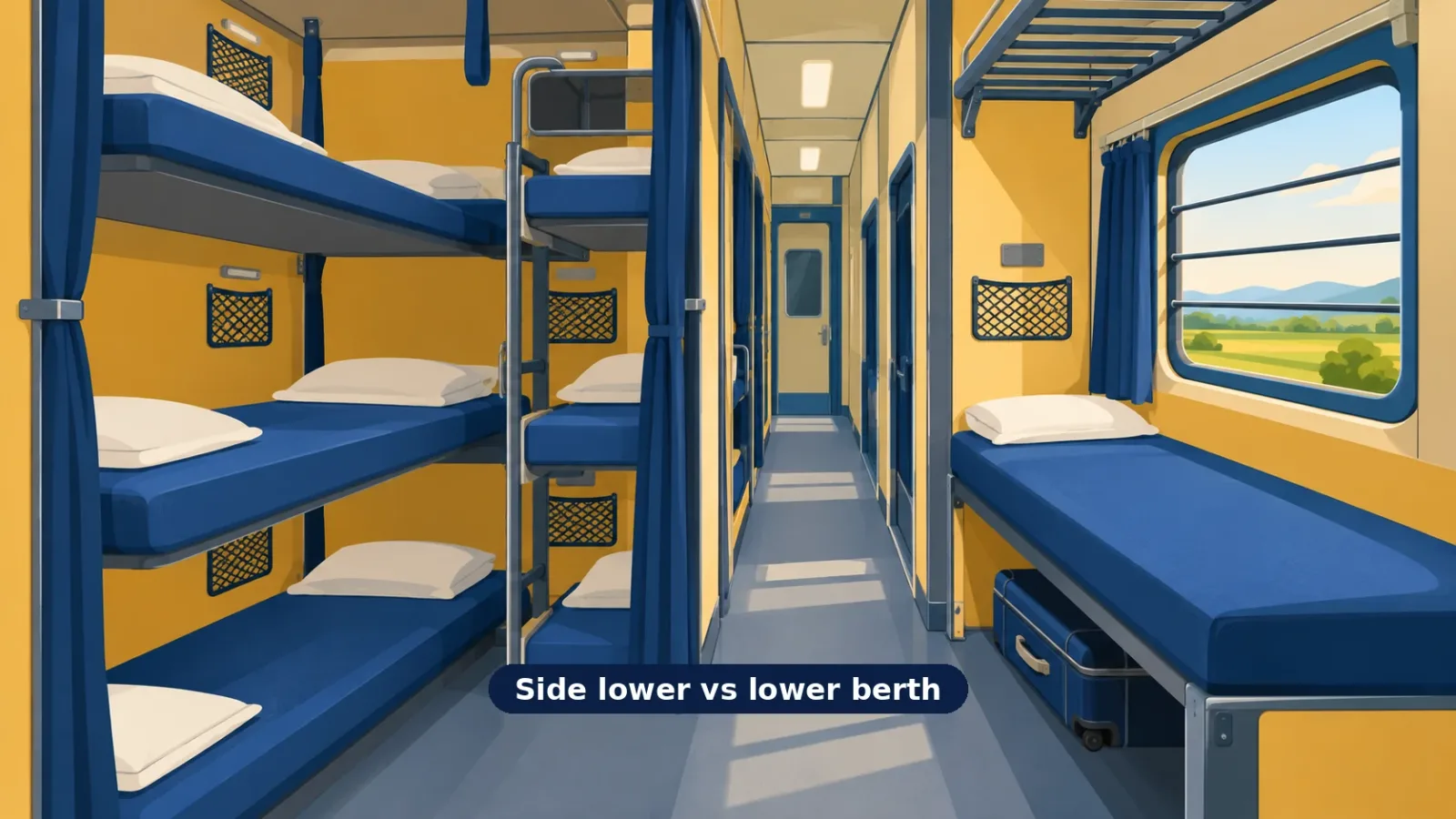
- Side lower
- along the aisle
- Lower
- inside the bay
- RAC link
- 2 share a side lower
- At booking
- preference, not guarantee
The short answer: both are bottom berths, but a lower berth sits inside the coach's open bay while a side lower runs along the aisle. That one difference shapes your privacy, how the berth is used during the day, and whether you might share it.
The layout, in brief
In Sleeper and AC 3-tier coaches, berths are grouped in open bays. Each bay holds six berths - a lower, a middle and an upper on each side, facing one another. Across the aisle runs a row of side berths: a side lower with a side upper above it. So the lower berth is the bottom berth inside the bay; the side lower is the bottom berth on the aisle side.
Day and night use
During the day, berths double as seating. In the bay, the middle berth folds away and passengers sit on the lower berth. On the aisle side, the side lower serves as the seat for the side-berth passengers. At night, everything converts back and each confirmed berth is used by its own passenger for sleeping.
Why RAC passengers end up on the side lower
Indian Railways uses side lower berths for RAC (Reservation Against Cancellation) accommodation. A 2016 Press Information Bureau release from the Ministry of Railways describes the arrangement as configured then: side lower berths earmarked for RAC, with two RAC passengers sharing one side lower berth as sitting accommodation. So if your ticket says RAC with a side lower, expect to share the berth as seating. If a full berth falls vacant during the journey, railway staff may allot it - do not move to a vacant berth on your own.
Which one should you ask for?
IRCTC lets you enter a berth preference while booking, and its terms and conditions list a Lower Berth / Senior Citizen quota. Two cautions straight from those terms: allotment follows the reservation system's logic, and a berth of your choice is not guaranteed. With that said:
- Anyone who cannot or should not climb: either lower berth saves the climb to a middle or upper. Ask for a lower at booking, and use the senior citizen quota where eligible.
- If aisle traffic would bother you - light sleepers, small children: the lower inside the bay sits away from the passing stream; the side lower is right on it.
- Travelling solo and boarding or leaving at odd hours: the side lower lets you get in and out without stepping around bay-mates.
- On an RAC ticket: expect a side lower shared with one other RAC passenger, per the Railways arrangement above.
Quick questions
Will I have to share my side lower berth with a stranger? Only if your ticket is RAC - under the arrangement described above, two RAC passengers share one side lower berth as sitting accommodation. On a confirmed ticket the side lower is your own berth for sleeping; during the day it doubles as seating shared with the side-upper passenger, which is a different thing from RAC sharing.
Is the side lower open to everyone walking past? It runs along the aisle, so other passengers pass by it, and by day it works as seating. The bay's lower berth sits inside the six-berth group, away from the aisle.
Can I choose a lower berth when booking? You can record a berth preference, and senior citizens have a Lower Berth quota listed in IRCTC's terms. But IRCTC says allotment follows the system's allocation logic and your choice is not guaranteed.
Does the difference apply in every class? The bay-plus-side-berth layout described here is the Sleeper and AC 3-tier pattern. Classes like AC 2-tier and First AC have their own layouts, so check your class before picturing the coach.

A Miranda House graduate and lawyer who traded courtrooms for slow travel. Cheshta travels with the batches we host ourselves, with a soft spot for travelling alongside elders.
Planning your next trip?
We'll handle insurance, hotels, airport assistance and the itinerary — the same way we do it for every trip.
Was this helpful?
one tap, no sign-up