



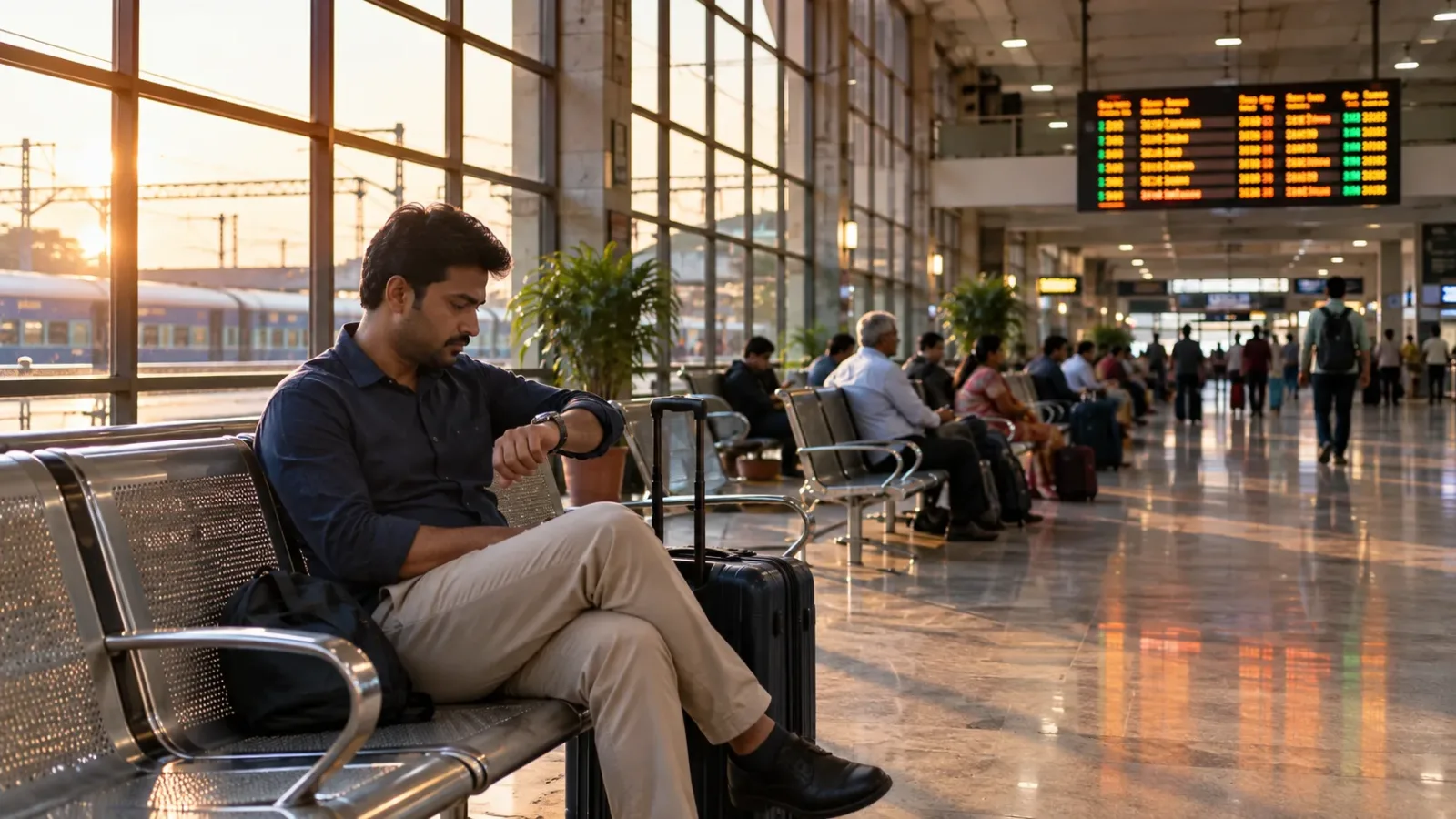
- Same station
- 2 to 3 hours (advice)
- Station change in city
- 4 to 6 hours (advice)
- Must-not-miss second leg
- Arrive the previous evening
- If first train delay causes missed connection
- Linked PNRs: claim within 3h of actual arrival; fare-refund rules apply
- If missed
- Linked-PNR route above; otherwise normal refund rules and deadlines
Between two separate Indian train bookings, keep a buffer measured in hours, not minutes: about 2 to 3 hours if both trains use the same station, 4 to 6 hours if you have to change stations in the same city, and an overnight cushion when the second journey is one you cannot afford to lose, like a long-distance train or a flight connection. This is advice, not a railway rule. The rule that makes this buffer necessary is simpler: two tickets are two separate journeys, and a late first train does not protect the second one - unless you link the two PNRs, which unlocks a specific refund rule explained below.
Indian Railways says this in its own reservation FAQ: it is not liable to compensate a passenger for any losses suffered due to late running of trains. Compensation is off the table. A fare refund is not, if you plan one step ahead.
The one exception: linked PNRs. Indian Railways lets you link two PNRs as a connecting journey at booking - it works for e-tickets, counter (PRS) tickets, or a mix of both. If the PNRs are linked and a late first train makes you miss the second at the junction, rule 13(3) of the Railway Passengers (Cancellation of Ticket and Refund of Fare) Rules, 2015 refunds the fare for the untravelled part with no cancellation or clerkage charge, as long as you claim within three hours of the first train's actual arrival. IRCTC's refund rules list exactly this as a standard TDR reason: missing the connecting train due to late running of the first train, for linked PNRs.
Without linked PNRs, if train one crawls in four hours late, train two leaves on time without you, and the only thing left is the normal refund maths. Here is how to set the buffer and what the maths looks like.
Why the buffer has to be big
Trains in India can run late by minutes or by hours, and there is no connection guarantee between separate tickets - linked PNRs improve the refund, they do not hold the train. The Railway Board's FAQ is blunt about compensation for late running. Your second ticket behaves exactly as if the first train never existed: its own cancellation charges, its own chart, its own deadlines. Plan for the bad day, not the average day.
How much time, by situation
Advice, not rules:
- Same station, ordinary day: 2 to 3 hours between scheduled arrival and the next departure.
- Changing stations in the same city (say New Delhi to Hazrat Nizamuddin, or Mumbai Central to CSMT): 4 to 6 hours, because city traffic gets a vote.
- The second leg really matters (a once-a-day train, a flight, an exam, a wedding): arrive the previous evening. A hotel room is cheaper than a missed purpose.
- Last train of the day out: treat it like the previous point. Missing it means tomorrow, not tonight.
If you miss the second train anyway
If you linked the two PNRs, the misconnection rule above applies first: the untravelled fare comes back without cancellation or clerkage charges, claimed within three hours of the first train's actual arrival. Otherwise, your second ticket follows the normal refund rules. Per Indian Railways' refund rules (revised with effect from 12 November 2015): a confirmed ticket cancelled between 48 and 12 hours before departure loses 25 percent, between 12 and 4 hours it loses 50 percent, subject to minimum charges, and after that there is no refund. Unused RAC or waitlisted tickets get a refund minus clerkage only up to half an hour before scheduled departure. For e-tickets, online self-cancellation is possible only before chart preparation; after that, claims go by email to etickets@irctc.co.in. In short: the earlier you act on the bad news, the more money survives.
How to shrink the risk, not just the buffer
- Link the two PNRs when you book - the connecting journey option works for e-tickets and counter tickets. It turns a missed connection into a full fare refund instead of a cancellation-charge argument.
- Prefer the same station for both trains when the timetable allows it.
- Check the first train's running status on the Indian Railways passenger information services or on 139 before leaving home, and again on travel day.
- Keep the second ticket's PNR handy. If the first train is clearly dying on the way, cancel or file before the refund deadlines pass, not after you reach the platform.
- Book the second leg on a later departure than the optimistic reading of the timetable suggests. The timetable is a hope with column headings.
Common questions
Is one hour enough between two trains at the same station?
It works only when everything goes right, which is not a plan. For separate tickets, 2 to 3 hours at the same station is the sensible minimum, and more if the first train has a history of running late.
Will the railway hold my second train or compensate me if the first is late?
No. The Railway Board's reservation FAQ says Indian Railways is not liable to compensate for losses due to late running. Two unlinked tickets are two separate journeys. But if you linked the PNRs as a connecting journey, the misconnection rule refunds the untravelled fare without cancellation or clerkage charges when a late first train makes you miss the second - claim within three hours of the first train's actual arrival.
I missed the second train. Do I get any refund?
If the two PNRs were linked, yes: the untravelled fare comes back with no cancellation or clerkage charge under rule 13(3), claimed within three hours of the first train's actual arrival. If they were not linked, only within the normal rules: confirmed tickets cancelled between 48 and 12 hours before departure lose 25 percent, 12 to 4 hours lose 50 percent, and later cancellations get nothing. Unused RAC or waitlisted tickets refund minus clerkage up to half an hour before departure.
What if I realise mid-journey that I will miss the connection?
Act immediately, not at the station. Cancel the second e-ticket online if its chart is not prepared yet, or email etickets@irctc.co.in after charting with the full ticket details. Every hour you wait shrinks the refund.
Is it safer to change stations or wait longer at one?
Waiting at one station is almost always safer. A station change adds city traffic to your risk list, which is why the advice jumps to 4 to 6 hours when stations change.
Sources checked on 24 October 2026: Railway Board advance reservation FAQ, Indian Railways refund rules, IRCTC waitlisted e-ticket rules, Railway Board circular on linking PNRs for connecting journeys, IRCTC refund and cancellation rules. The buffer times are advice, not railway rules.

A Miranda House graduate and lawyer who traded courtrooms for slow travel. Cheshta travels with the batches we host ourselves, with a soft spot for travelling alongside elders.
Planning your next trip?
We'll handle insurance, hotels, airport assistance and the itinerary — the same way we do it for every trip.