




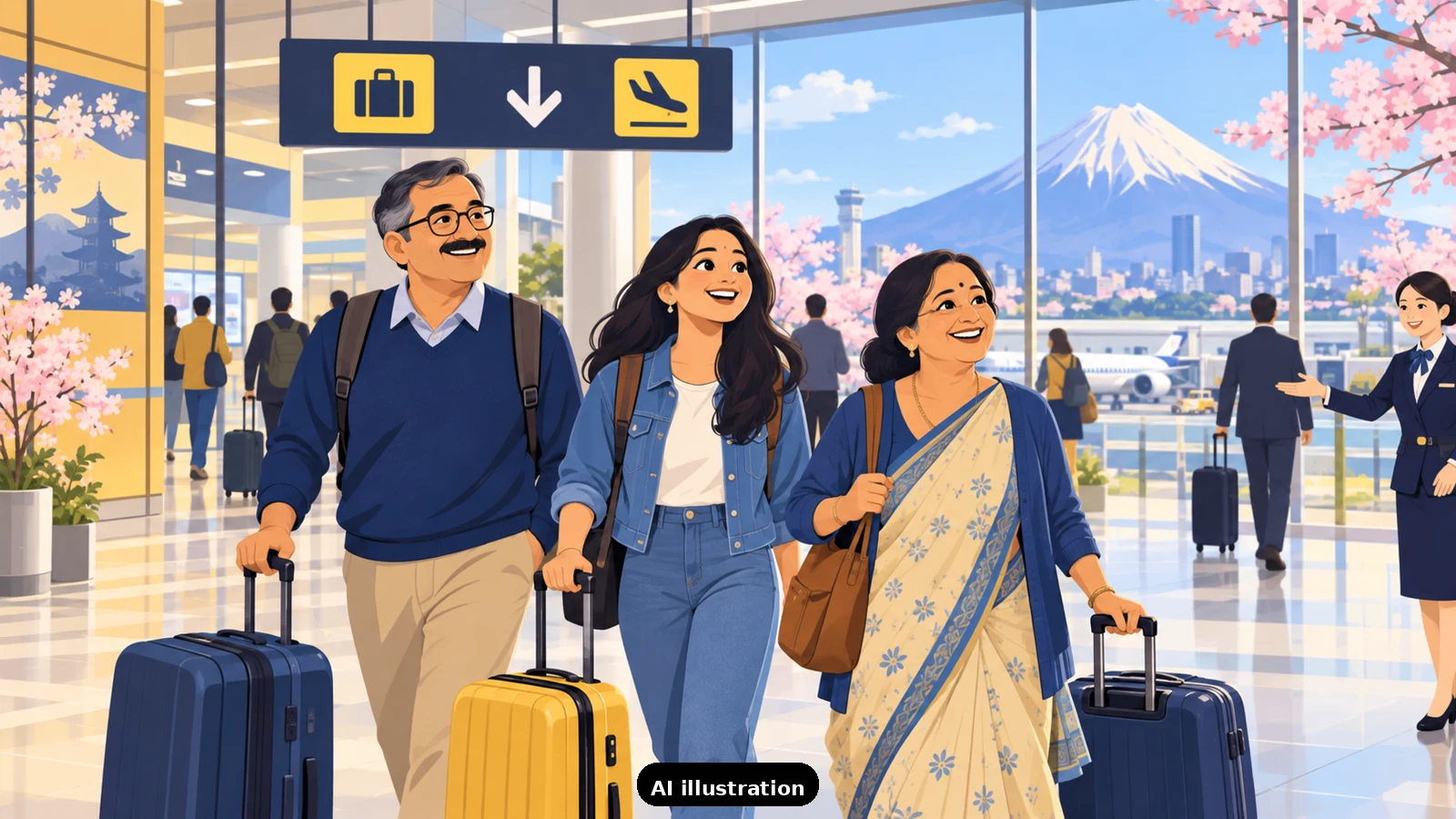
Yes, and it is not a close call. Japan pairs the two things a first international trip needs most: systems that work exactly as signposted, and people who treat a confused visitor kindly. Signs appear where you need them, trains run to the minute, and asking for help actually gets you help. The one real hurdle comes before any of that - the visa.
Start with the visa, because everything else waits on it. Indian passport holders need one, and since April 2024 the short-term tourism visa is an eVisa applied through VFS in India: single entry, up to 90 days, no embassy appointment, applied within a three-month window before travel. The embassy lists the visa fee for Indian nationals at INR 500 from 1 July 2026, plus the VFS service charge. It is a paperwork exercise, not an interview - a clean, consistent application with matching names, dates and documents does the job. Apply about four to six weeks before you fly.
The airports are where Japan starts making life easy. Haneda, Narita and Kansai are built for first-timers: English signage on every corridor, immigration queues that move, and train and bus counters sitting right in the arrivals hall. You land, follow the signs, and you are on a train into the city without needing a word of Japanese.
English gets you further than you might fear. Japan's national tourism organisation notes that English is generally understood in major cities and designated tourist sites, and that matches what you see on the ground: ticket machines switch to English, restaurant menus carry pictures and often translations, and station staff are practised at pointing visitors the right way. You will not manage in Hindi, but basic English, a translation app and a smile cover almost everything.
Trains sound intimidating on a map and feel obvious on the ground. Pick up an IC card - a Suica or Pasmo - at the airport, tap in and tap out, and the fare maths handles itself. Stations are signed in English, platforms are numbered, and the shinkansen turns long distances into day trips. The trick is to follow your line name and platform number, not the whole map.
Money is simpler than its reputation. Japan runs on yen, and you can exchange currency at airports and most major banks. Cards work across the cities, but small eateries, shrines and market stalls still prefer cash, so carry both. Convenience-store ATMs accept international cards, which makes topping up cash painless.
Two small mercies worth knowing: tipping is not practiced in Japan - it can even cause confusion, and restaurants generally add a service charge instead - and Japan is one of the safest countries a visitor can pick. Late-night trains, solo walks back to the hotel, elderly parents managing a station: all normal, with ordinary city precautions.
On budget, be honest with yourself rather than scared. Japan is not cheap, but it is no longer the wallet-buster of legend: business hotels, lunch sets and convenience-store meals keep daily costs sane, and the big spends - flights and hotels - reward booking early. Plan those two well and the rest flexes to your style.
This is also exactly the gap we built TripKeeper around. On our hosted Japan departures, our own team travels with the batch: airport assistance at both ends, transfers handled, hotels and insurance sorted before you fly, and a pace that leaves room for elders to rest. First-timers get Japan without having to decode it alone. And if you would rather travel privately with your own people, tell us your dates and who is going - we plan it the same careful way we run our own trips.

A Miranda House graduate and lawyer who traded courtrooms for slow travel. Cheshta travels with the batches we host ourselves, with a soft spot for travelling alongside elders.
Planning your next trip?
We'll handle insurance, hotels, airport assistance and the itinerary — the same way we do it for every trip.
Questions on this article
asked by readers, answered by us
Was this helpful?
one tap, no sign-up