




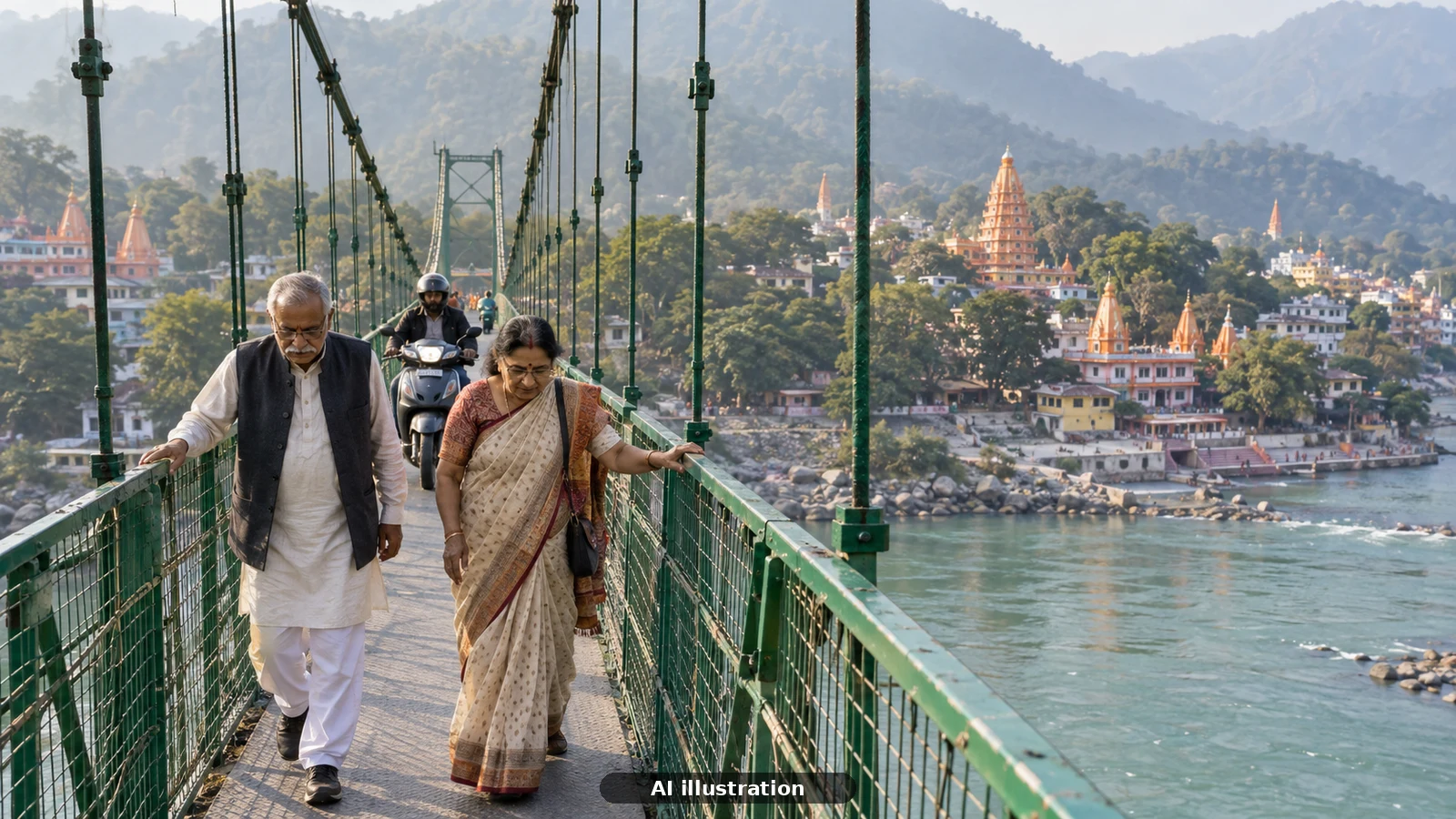
The short answer is yes, the Ram Jhula area is manageable for senior travellers - as long as you treat the bridge crossing itself as optional. The surrounding lanes, ghats and ashram fronts on both banks are the real experience, and most of them are flat, shaded and easy to do at a slow pace. The bridge is the one stretch that demands steady legs and a little nerve.
What the bridge is actually like to walk
Ram Jhula is an iron suspension bridge about 450 feet long, a little downstream from the older Lakshman Jhula. Only pedestrians, cycles and two-wheelers use it - no cars - which sounds gentle until you are standing mid-span. The walkway is narrow, scooters pass close behind you with a polite (or impatient) horn, the bridge sways gently underfoot, and at busy hours the flow of people is constant. There are railings along both sides, and holding one is normal and sensible.
There are ramps rather than pure staircases at both ends, but some stretches are steep, and the approach lanes funnel through shops and stalls that narrow the path further. A wheelchair or stroller can technically get across with a helper, but in crowds it is slow and stressful. If anyone in the group uses a stick or has unsteady balance, plan on one arm offered for the full crossing.
The approaches: where the walking actually happens
On the Muni Ki Reti side (the town side, where most hotels and taxis are), vehicles can get reasonably close to the bridge head, so the walking distance from drop-off to bridge is short. The Swarg Ashram side is a pedestrian lane - mostly level, partly shaded, but long, and lined with stalls selling everything from rudraksha to juice. It is a pleasant slow walk with plenty of excuses to stop, but it is a walk, and there is no vehicle shortcut inside the lane.
E-rickshaws are the senior traveller's best friend in Rishikesh. They run short hops around both approach areas and are the standard way locals move elderly family members between the main road, the bridge approaches and the ashram gates. Fares are small; agree the price before sitting down.
Steps, ghats and restrooms
The river ghats are the one place where steps are unavoidable - long stone staircases down to the water. Nobody needs to go down them: the classic view of Ram Jhula strung across the Ganga, with temples and wooded hills behind, is from the top of the ghats and the riverside edges, not from the waterline. Public restrooms are available at Parmarth Niketan and other large ashrams nearby; standalone facilities along the lanes are limited, so plan restroom stops around ashram visits.
Timing: the one choice that changes everything
Go early. Between about 7 and 9 in the morning the air is cool, the bridge carries a fraction of its evening crowd, and the two-wheelers are fewer and slower. The area packs in from late afternoon, especially around the evening Ganga aarti at Parmarth Niketan, when the lanes and the bridge become a slow-moving crowd - the hardest possible conditions for anyone unsteady on their feet. Weekends and festival days multiply this.
Practical alternatives to crossing
- See the bridge, skip the crossing. The best photographs and the best river breeze are from the ghats and riverside spots on the Muni Ki Reti side, looking across at the bridge. Many families settle grandparents here with chai while others cross.
- Cross by road instead. Taxis and e-rickshaws connect the two banks by the road bridge, so seniors can be driven to the Swarg Ashram side entrance without the footbridge at all.
- Split the group. Steady walkers cross on foot; seniors ride around by road and meet the group at the Parmarth Niketan end. Everyone gets the same evening aarti with no one forced onto the bridge.
Small things that matter
Carry nothing edible in your hand on or near the bridge - the resident monkeys are quick and confident. Wear shoes with grip; the walkway can be dusty and the ramps smooth. And build in rest stops: there are plenty of stalls and ashram fronts to pause at, but no seating mid-bridge.

A Miranda House graduate and lawyer who traded courtrooms for slow travel. Cheshta travels with the batches we host ourselves, with a soft spot for travelling alongside elders.
Planning your next trip?
We'll handle insurance, hotels, airport assistance and the itinerary — the same way we do it for every trip.
Questions on this article
asked by readers, answered by us
Was this helpful?
one tap, no sign-up