




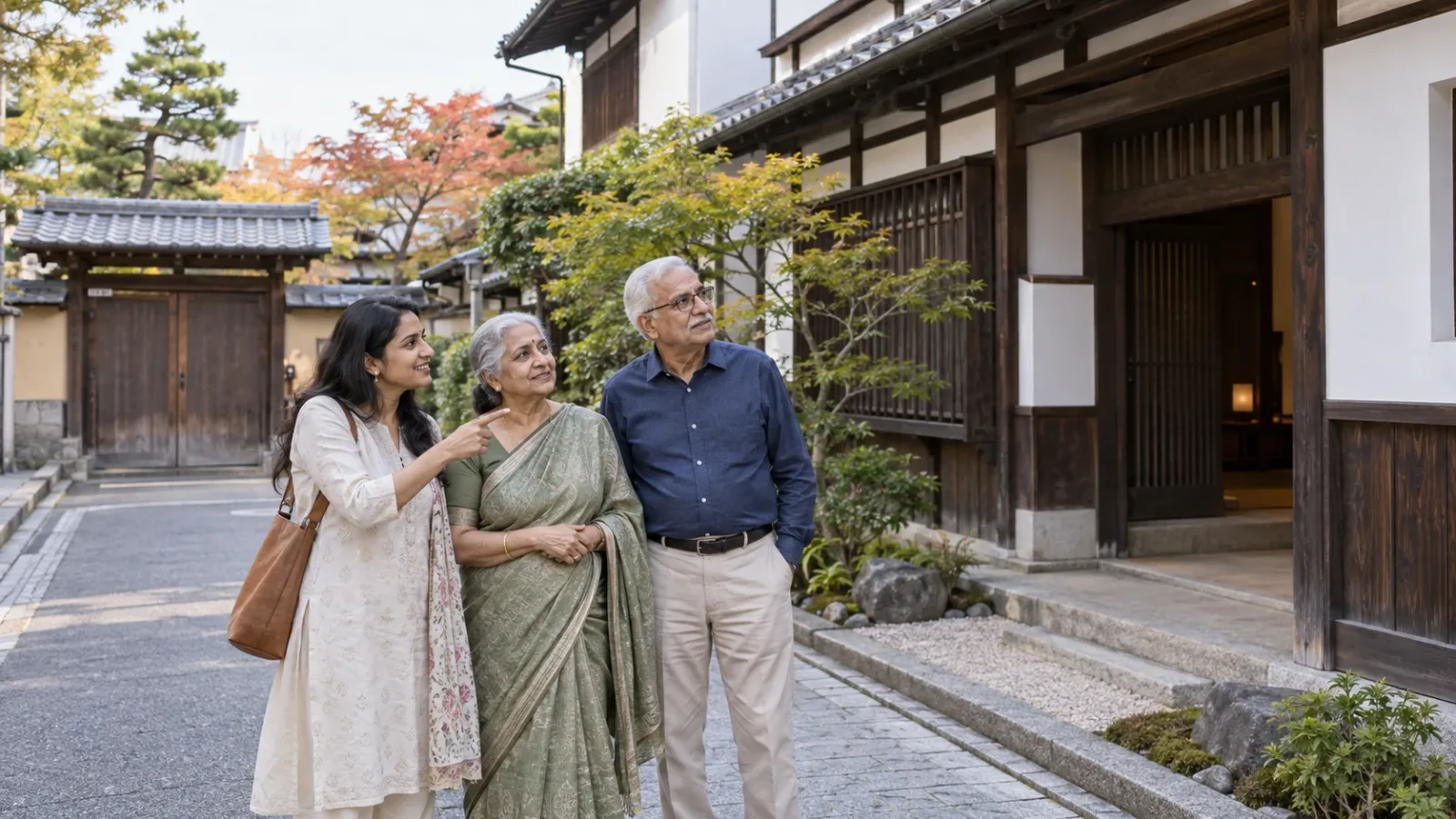
The Japan Folk Crafts Museum can be a lovely choice for parents who enjoy pottery, textiles and traditional buildings. The avoidable disappointment is promising two interiors on a day when only one is open. The main museum and the former Yanagi residence across the road do not share an everyday opening schedule, and an elevator in one building is not a promise about the other.
Choose the day around the West Hall only if it really matters
As checked on 9 November 2026, the museum’s visitor information lists the Main Building from 10:00 to 17:00, last entry 16:30. The West Hall, the former Yanagi Soetsu residence, has a much narrower pattern: the second and third Wednesdays and Saturdays,10:00-16:30, last entry 16:00. New Year, exhibition changes and temporary closures can still affect the visit.
The operator’s West Hall page places the former residence across the road from the Main Building. It is not another gallery you automatically reach by following the main staircase. If parents mainly want to see that house, confirm its opening on the official calendar before arranging the rest of the day. Do not calculate a recurring weekday and treat it as a confirmed opening.
If the West Hall is closed, decide whether the main museum alone interests the family. Going for everyday craft objects and architecture is a different plan from travelling specifically to see the founder’s home. Make the choice before the taxi ride, not at the closed gate.
The main-building elevator does not make both buildings step-free
The operator explicitly says the historic museum has many changes in level and is not fully barrier-free. It lists an elevator for movement between floors in the Main Building only, a wheelchair-accessible toilet on its first floor, and one loan wheelchair and one wheelchair ramp there.
Those are useful supports, not a whole-site access guarantee. Ask about the entrance, thresholds, wheelchair or ramp availability and the rooms your parent actually wants to reach. West Hall step-free access and a suitable route through that former house were not confirmed here. Do not transfer the Main Building’s elevator information across the road.
The prominent stairs in published interior photographs are also not proof that every parent must climb them in the Main Building. Use the operator’s access information and speak to staff about the route, rather than planning only from a beautiful staircase image.
Plan the shoe change before entering
The visitor rules ask guests to use slippers to protect the building. Choose footwear parents can remove and put back on without a long struggle. If using the provided slippers would be difficult, ask the museum what arrangement is possible before arriving; an exception was not established here.
A personal account published 11 December 2025 describes regretting a choice of mountain boots and appreciating a stool at the entrance. That is a useful reminder about the change of footwear, not a current promise of a stool, a particular slipper size or staff assistance for every visitor.
A craft collection is not a hands-on craft class
The Musubi Kiln account dated 14 July 2023 describes ceramics, tableware, textiles and other everyday crafts in a house-like museum setting. It also notes minimal object descriptions. Plan this as looking and discussing shapes, patterns and uses, not as a booked making activity or a fully narrated family tour.
The operator asks visitors not to touch exhibits, to keep quiet and not to use ink-writing tools such as ballpoint or fountain pens. Eating and drinking in exhibition rooms is not allowed. Put a snack or tea stop outside the gallery visit rather than using a display room as the family’s break table.
A 23 December 2024 personal essay describes loving the textiles but wanting more English explanation. Treat that as one person’s visit, not a current all-labels language audit. Hindi interpretation, an English guide for your date and a full set of translated explanations were not confirmed here. Prepare a little background and let parents choose a few objects to discuss rather than promising constant translation.
Interior photographs do not give you the same permission
The current operator rules prohibit camera and phone photography outside designated places. Ask staff which areas are designated for your visit. Do not turn a past exhibition’s photo corner into permanent permission for every room.
Musubi Kiln explicitly says it received special permission for its interior photographs. Its photographs show what that team was allowed to record, not what your family is allowed to film. Enjoy looking without planning a full interior photo shoot.
Old admission figures and locker advice can mislead
Current operator admission is ¥1,500 general, ¥800 for university/high-school students, with junior-high-school-age children and younger free. Group prices in brackets apply to 20 or more, and group visits need advance arrangements. The operator’s notice dated 28 February 2025 announced the tariff change from 30 March 2025.
The Art Agenda listing checked for this article still shows the older ¥1,200/¥700/¥200 figures. Use the current museum table rather than an old child-ticket amount or a search result copied into the family budget. No general age-based senior discount was listed on the operator page checked here.
The general rules say to use the umbrella stand or coin lockers rather than bring umbrellas and large baggage inside. That does not establish suitcase capacity or storage on every date. Exhibition-specific notices can override ordinary arrangements: the operator’s 1 November 2026 notice for 22-23 November 2026 is one dated example with special advance-entry and locker restrictions. Read the notice for your own visit rather than making either the ordinary rule or that special example universal.
Keep a shorter main-building visit as a valid outcome
Check the calendar for exhibition-change closures as well as the usual Monday rule and public-holiday adjustment. Do not assume that every Tuesday-Sunday between exhibitions is open. The best plan may be one building, a few objects and a relaxed exit, rather than completing every room because you came all this way.
For the wider route, The Trip Keeper’s Japan trip page can start a conversation about family interests and pace. This article does not imply museum admission, a guide, residence entry or transfers are included in a package. Last checked 9 November 2026. Hero: AI-generated fictional family and traditional buildings, not a photograph of the Japan Folk Crafts Museum or Yanagi residence.

A Miranda House graduate and lawyer who traded courtrooms for slow travel. Cheshta travels with the batches we host ourselves, with a soft spot for travelling alongside elders.
Planning your next trip?
We'll handle insurance, hotels, airport assistance and the itinerary — the same way we do it for every trip.
Questions on this article
asked by readers, answered by us
Was this helpful?
one tap, no sign-up