




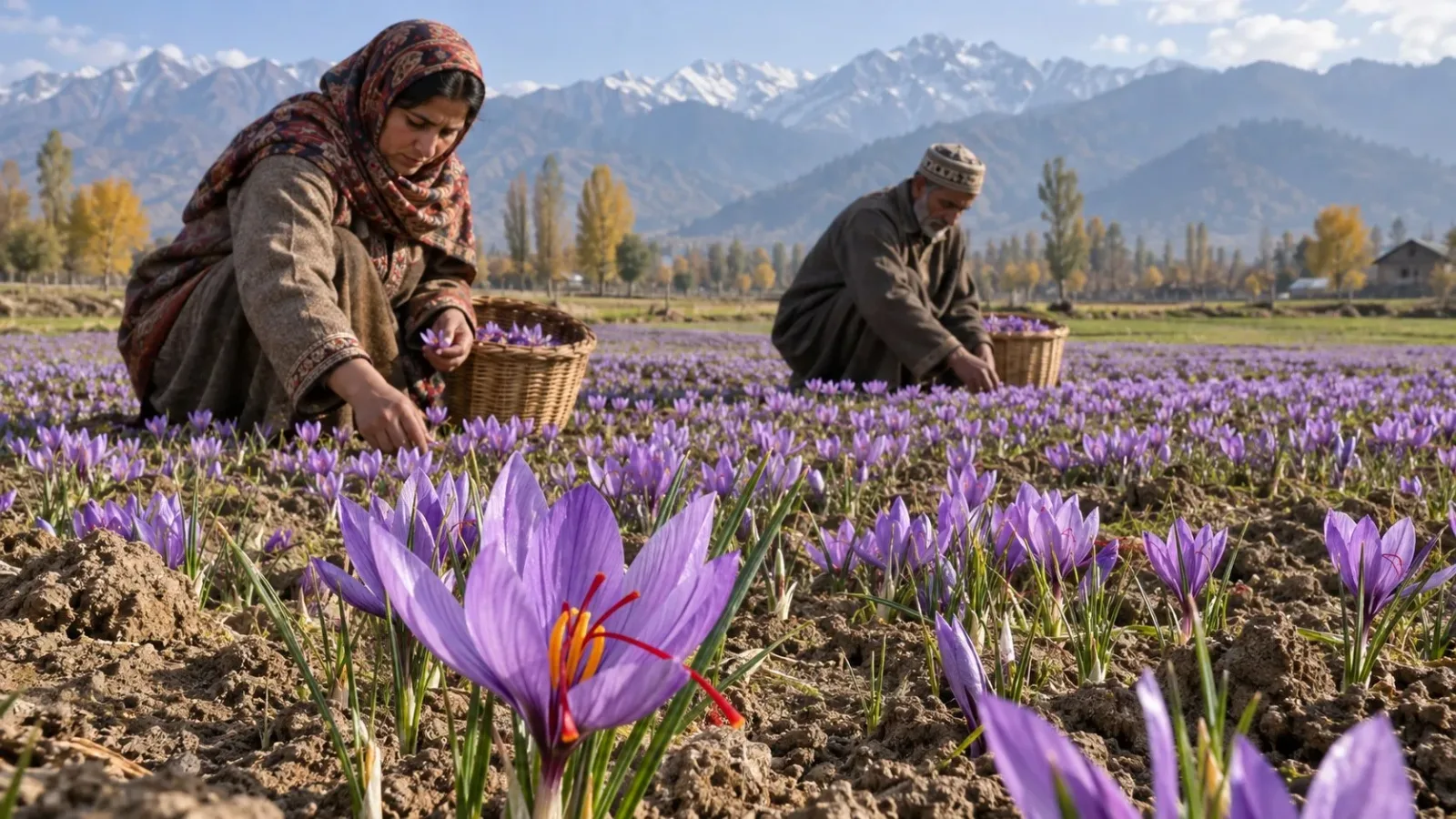
- Source
- SKUAST-Kashmir manual
- Part named
- Stigma
- Distinction
- Floral part, not whole flower
- Product quality
- Not tested
- Reviewed
- 17 November 2026
Reviewed: 17 November 2026. Selective heritage outline, not a ticket or access guarantee.
AI-generated fictional field scene, not a botanical identification, exact floral anatomy, verified harvesting technique, named farm, current bloom calendar or permission to enter fields.
A saffron strand should not be imagined as a whole flower dried into a thread. A manual published by the Advanced Research Station for Saffron & Seed Spices at SKUAST-Kashmir identifies the strand with the flower's stigma. It describes separating stigmas from flowers and then discusses drying them. The useful distinction is between a floral part and the flower that contains it.
Connect the strand with the named floral part
The university manual calls the saffron strand a stigma. In its description of the Shalimar Saffron-1 variety, it also identifies the stigmas as the final product. These statements help connect the familiar strand with the botanical part named in the source.
The manual concerns a named cultivated variety. Its detailed description should not become a claim that every saffron plant or commercial product has identical features. This account uses only the distinction between the stigma and the whole flower, not the variety's measurements or growing instructions.
Keep the whole flower separate
The manual treats flowers and separated stigmas as different things. Reading them as interchangeable would lose the very relationship it describes: the stigma is a part of the flower, rather than another name for the entire flower.
That relationship is the explanation here. It is not an instruction to pick flowers, separate their parts or dry them. Nor does it provide a way to identify an unknown plant or loose material from a photograph.
Do not turn the description into a product test
Knowing the plant part described by a source does not establish the contents, grade or origin of a packet for sale. This article does not test saffron, certify a seller or make a claim about flavour, health effects or suitability for use.
It also confirms no present crop condition, flowering display, harvest encounter, field visit, admission or accompanied visit. A botanical description is not a promise of what will be visible on a journey. Keep the narrow distinction intact: the source identifies the saffron strand with the stigma, not the whole dried flower.
Frequently asked questions
Does this account describe saffron as a whole dried flower?
No. The university manual identifies the strand with the stigma and distinguishes separated stigmas from flowers.
What does the named variety contribute to this explanation?
Its description identifies stigmas as the final product. Its detailed features are not extended to every saffron plant or product.
Can this identify a packet as genuine saffron?
No. A plant-part explanation is not an authenticity or quality test.
Does the description confirm a flowering field or harvest visit?
No. No current crop, display or visitor arrangement is verified here.
Does this give drying or harvesting instructions?
No picking, separation or drying method is supplied.
Does this identify loose material from a photograph?
No unknown plant or loose material is identified here.
Official sources and limits
University manual attributed stigma/flower distinction only. No all-variety generalisation, flower identification, picking/drying instructions, quality, grade, origin, authenticity, health, suitability, current crop or field visit claim.

A Miranda House graduate and lawyer who traded courtrooms for slow travel. Cheshta travels with the batches we host ourselves, with a soft spot for travelling alongside elders.
Planning your next trip?
We'll handle insurance, hotels, airport assistance and the itinerary — the same way we do it for every trip.
Questions on this article
asked by readers, answered by us
Was this helpful?
one tap, no sign-up