




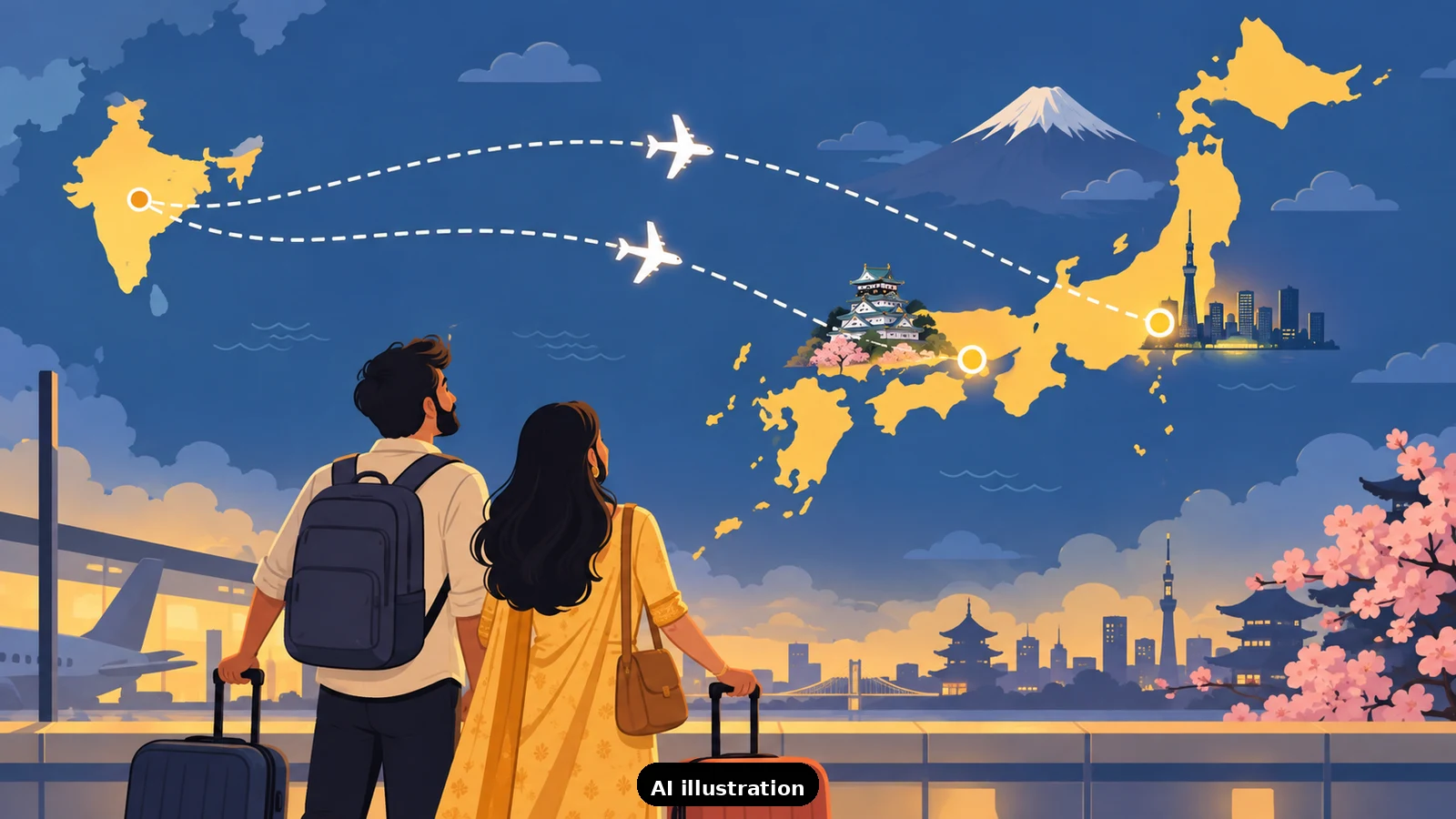
The right airport is the one your trip starts from, not the one with the cheapest fare on the day you search. If your first three nights are in Tokyo, land in Tokyo. If your plan is Kyoto, Osaka and the west, land at Kansai. Everything else on this page is detail in service of that one idea.
From Mumbai, Tokyo is the simpler arrival. ANA sells Mumbai-Tokyo round trips into both Narita and Haneda, including nonstop service - that is roughly a nine-hour overnight flight and you wake up in Japan. Mumbai to Osaka's Kansai airport generally means one stop on the way, so a Tokyo arrival is usually the faster door-to-door option even when Osaka is on your list.
Here is where hotel positioning beats airport price. Say you land in Tokyo because the fare was lower, but your trip is really Kyoto and Osaka. You now owe Japan a cross-country transfer: several hours and a meaningful sum on the shinkansen before your holiday actually begins, plus the same in reverse if you fly home from Tokyo too. The cheap fare quietly became the expensive one.
This is exactly what open-jaw tickets exist for. Fly into one city and home from the other - into Tokyo, home from Osaka, or the reverse - and you skip the backtracking entirely. Airlines price these as multi-city bookings, and they often cost little more than a plain return. Always check the multi-city price before booking a simple round trip; it takes two extra minutes and can save you a full travel day.
Sequencing matters as much as geography. A sensible first-timer's loop is land in Tokyo, do Tokyo and a day trip or two, take the shinkansen west to Kyoto and Osaka, and fly home from Kansai. You travel in one direction, your luggage moves once per city, and the last day is a holiday instead of a commute to a distant airport.
Keep the practicalities straight whichever way you book. Narita sits about 60 kilometres east of central Tokyo with direct trains into the city; Haneda is much closer in. Kansai is built on an island in Osaka Bay with its own train links into Osaka and Kyoto. None of them is difficult - all are English-signed and well organised - but the transfer time belongs in your plan, and in your first evening's expectations.
One caution that applies across all of this: book the whole journey on a single ticket. A connection inside one ticket is the airline's responsibility if a delay eats it; separate tickets make it yours. And compare like with like - same baggage allowance, same flexibility - before calling one fare cheaper than another.
This airport-first, itinerary-second thinking is how we plan every Japan trip at TripKeeper. We start from where you will actually stay and what you want to see, then pick the airports and the direction of travel around that, with transfers and airport assistance arranged at both ends. If you are weighing Tokyo against Osaka for a Mumbai departure, send us your dates and rough wishlist - we will map the loop for you.

A Miranda House graduate and lawyer who traded courtrooms for slow travel. Cheshta travels with the batches we host ourselves, with a soft spot for travelling alongside elders.
Planning your next trip?
We'll handle insurance, hotels, airport assistance and the itinerary — the same way we do it for every trip.
Questions on this article
asked by readers, answered by us
Was this helpful?
one tap, no sign-up