




- Place
- Nalanda Mahavihara
- Focus
- Residential-learning layout
- Look for
- Courtyards, cells and shared spaces
- Museum and campus
- Separate access checks
- Reviewed
- 17 November 2026
Reviewed: 17 November 2026. Selective heritage outline, not a ticket or access guarantee.
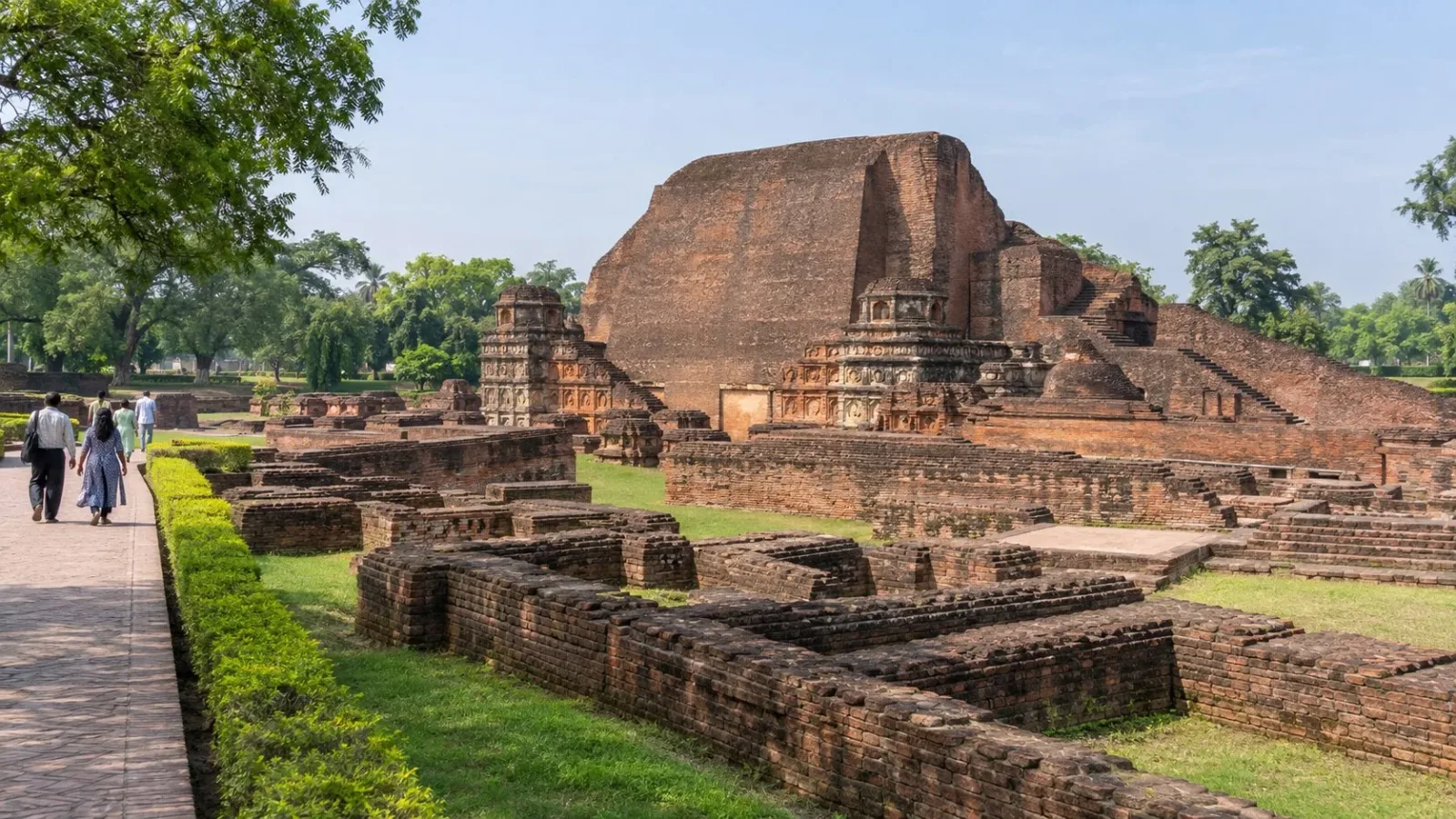
AI-generated fictional Nalanda Mahavihara-inspired scene, not an exact monument layout, current visitor route or access record.
Nalanda Mahavihara offers a different question from a single monument: how did a place bring residence, learning and religious life together? UNESCO describes the archaeological remains of a monastic and scholastic institution, including viharas, stupas and shrines. ASI's account adds the courtyards, cells and shared spaces that make the layout easier to read. Our recommendation is to focus on those relationships rather than collect a fixed number of ruins.
Look at the layout before the details
UNESCO describes a formal linear arrangement along a north-south axis. ASI describes a north-south passage with temples to the west and monasteries to the east. These accounts help explain the archaeological layout; they are not a certified present visitor route or an instruction to cross every structure.
Start by asking how the buildings relate to one another, then choose a few visible features. The sources give different counts and areas without a reconciled counting scope. This guide therefore gives no definitive building tally, area or completion checklist. A smaller selection is a choice about attention, not proof that the rest is unimportant.
Read a courtyard and its surrounding cells
ASI describes monasteries with a central courtyard, surrounding cells and a common verandah, alongside features for collective and daily use. UNESCO identifies viharas as residential and educational buildings. Together these descriptions make the remains more than isolated walls: they show how living and learning shared a planned setting.
Ask an interpreter to distinguish what survives, what has been conserved and what they are reconstructing in words. This article does not assign an exact activity to every visible cell, identify every sculpture or promise that every former upper level can be reached. Stay within the route currently allowed.
Keep the museum and modern campus separate
ASI says excavated antiquities have been exhibited in its site museum. That is not verification of today's museum opening, displays, ticket or access arrangements. If the collection matters to you, check those separately rather than assume the ruins' admission includes everything.
UNESCO's discussion also mentions later institutions inspired by Nalanda. This archaeological visit does not establish admission to a modern university or campus. Nor does it validate a same-day Rajgir or Bodh Gaya circuit, transfers or a completion time. Give each proposed addition its own reason and practical check.
Plan around the open route
An undated heritage listing does not certify current last entry, exceptional closures, visitor category or a final total. Verify opening, actual entrance, ticket scope and open sections for your date.
For your group, ask about the approach, walking surfaces, steps, rest points, shade, toilets, assistance and return. No continuous step-free route, guide availability or fixed duration is verified here. A description of stairs in a monastery is a building feature, not a promise that visitors can use those stairs now.
A good visit can stop with a clearer understanding of the residential-learning layout. It does not need to claim every ruin, museum and nearby destination in one day.
Frequently asked questions
What is the focus here?
The relationship between residential and educational viharas, courtyards, cells and religious structures.
How many buildings must I see?
No definitive tally is given. The sources' counts and areas have not been reconciled, and this is not a completion checklist.
Are the museum and modern university included?
Neither admission nor current access is established here. Check each separately.
Is there a verified accessible route or fixed visit length?
No. Confirm the actual open route and assistance for your party rather than infer them from a site description.
Does this article reserve a guide or transport?
No. Confirm the actual provider, language, meeting point, fee and return separately. A heritage description does not book a service.
Is there a fixed visit duration for every traveller?
No. This is a selective editorial outline. Check your group and actual route before adding further stops.
Official sources and limits
Official heritage descriptions support the named structures and architectural features, not current opening, final fees, combined ticket scope, services or continuous accessible routes. Verify the actual visit separately.

A Miranda House graduate and lawyer who traded courtrooms for slow travel. Cheshta travels with the batches we host ourselves, with a soft spot for travelling alongside elders.
Planning your next trip?
We'll handle insurance, hotels, airport assistance and the itinerary — the same way we do it for every trip.
Questions on this article
asked by readers, answered by us
Was this helpful?
one tap, no sign-up