



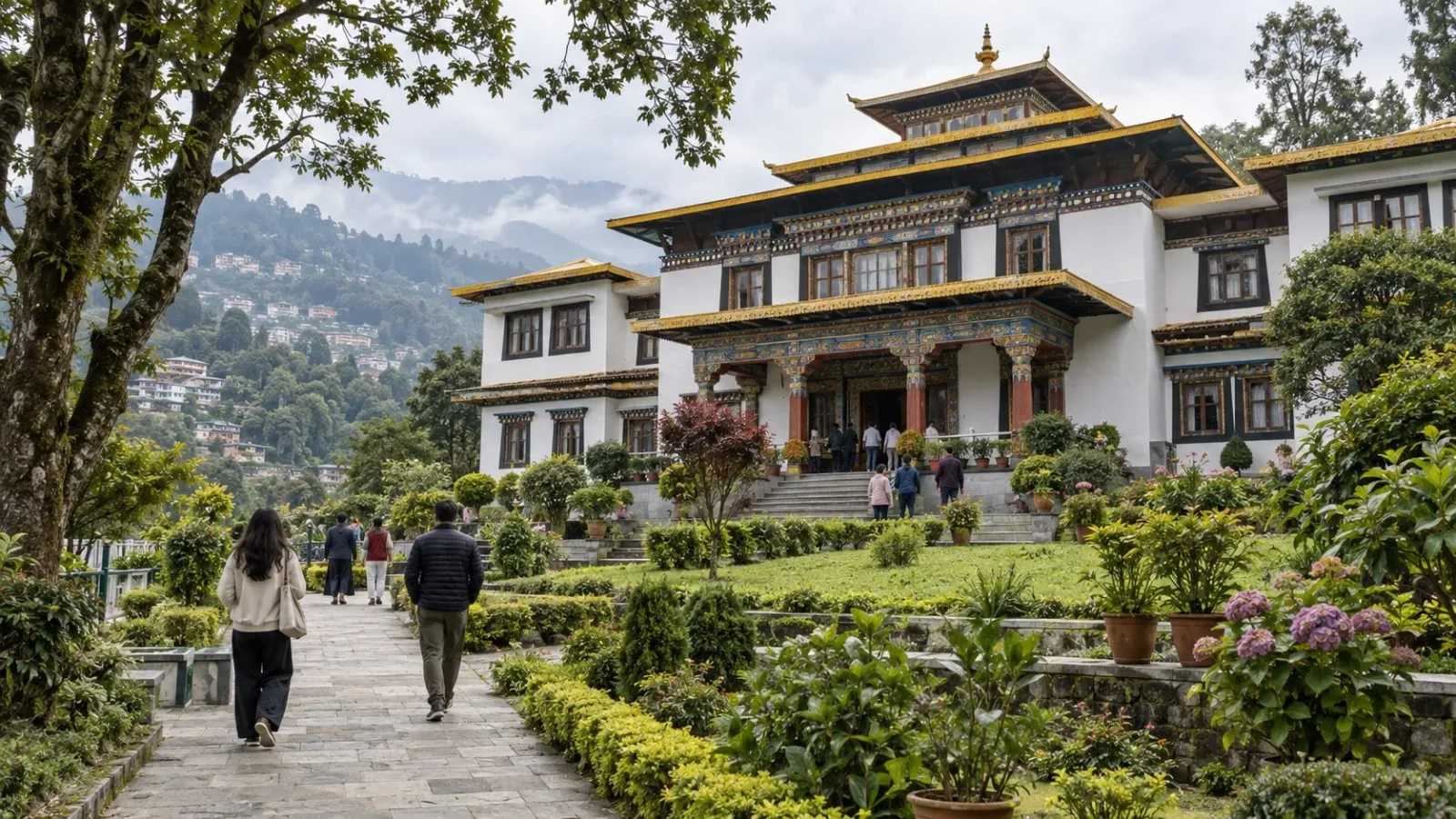

Reviewed 18 November 2026. An art-and-interpretation guide based on the Namgyal Institute of Tibetology's own museum and library descriptions. Check current official visitor information.
AI illustration: a fictional institute-and-garden scene inspired by Sikkim. Not an actual location, person, current gallery or service.
Start with a few objects
Namgyal Institute of Tibetology in Deorali, Gangtok describes a museum, libraries and a research centre. For an art-led outing, choose a few objects rather than treating the whole institution as a checklist.
The museum describes Himalayan Buddhist statues, ritual objects, thangkas and manuscripts. Pick a subject that interests the group and check current official visitor information.
Manjushri: begin with the explanation
The museum's account describes a silver image of Manjushri, the Bodhisattva of knowledge. That can be a starting point for asking how the institution explains an image and its significance.
Read the supplied interpretation instead of guessing a ritual meaning from appearance. Direct a particular collection question to the institution.
Thangkas: follow a story
The museum describes thangkas as painted and woven scrolls. Its account highlights five thangkas depicting the history of Sikkim and the Namgyal dynasty.
A useful approach is to follow what the explanation says about a scene, sequence or person. This is a collection theme, not a promise that a particular object will shape your own visit.
Hindi titles and English descriptions differ
The museum says its collection is titled in Tibetan, Hindi and English, with brief English descriptions. A Hindi name and a longer explanation do different jobs.
If relatives are more comfortable in Hindi, our suggestion is to choose a few objects together and discuss the supplied information. Keep uncertain details uncertain rather than inventing the meaning of a symbol.
Art looking and reading are different interests
The institute describes a Tibetan Library and a General Library, with works on Buddhism and the Himalayan region. A reading interest may ask for different preparation from looking at museum objects.
Decide which interest matters most instead of promising to finish both. Check current official visitor information and direct a specific research or collection question to the institute.
Keep the next stop optional
Give the chosen subject time and leave another Gangtok outing optional. A few objects understood well can be more satisfying than collecting many place names.
Keep a proper meal and sitting-down time, ask the actual food provider about ingredients when needed, and use the full institute name when arranging the journey. Check the real meeting point and return.
Sources
Questions people ask at the gate
What main interest does this guide suggest?
A few Himalayan Buddhist art objects and a way for the group to understand their context.
What does the museum describe about Manjushri?
A silver image of the Bodhisattva of knowledge.
What thangka theme does the museum highlight?
Five thangkas depicting the history of Sikkim and the Namgyal dynasty.
Are Hindi titles the same as full Hindi descriptions?
No. The museum describes Tibetan, Hindi and English titles with brief English descriptions.
Should reading and museum looking be one checklist?
No. Choose the main interest and treat a reading project as different preparation.
What belongs in the practical plan?
Current official visitor information, food, rest, the actual meeting point and the return.
Next walk starts at a new gate.
Was this helpful?
one tap, no sign-up

A Miranda House graduate and lawyer who traded courtrooms for slow travel. Cheshta travels with the batches we host ourselves, with a soft spot for travelling alongside elders.