




Checked: 17 November 2026. Dated travel-check update, not a live emergency feed.
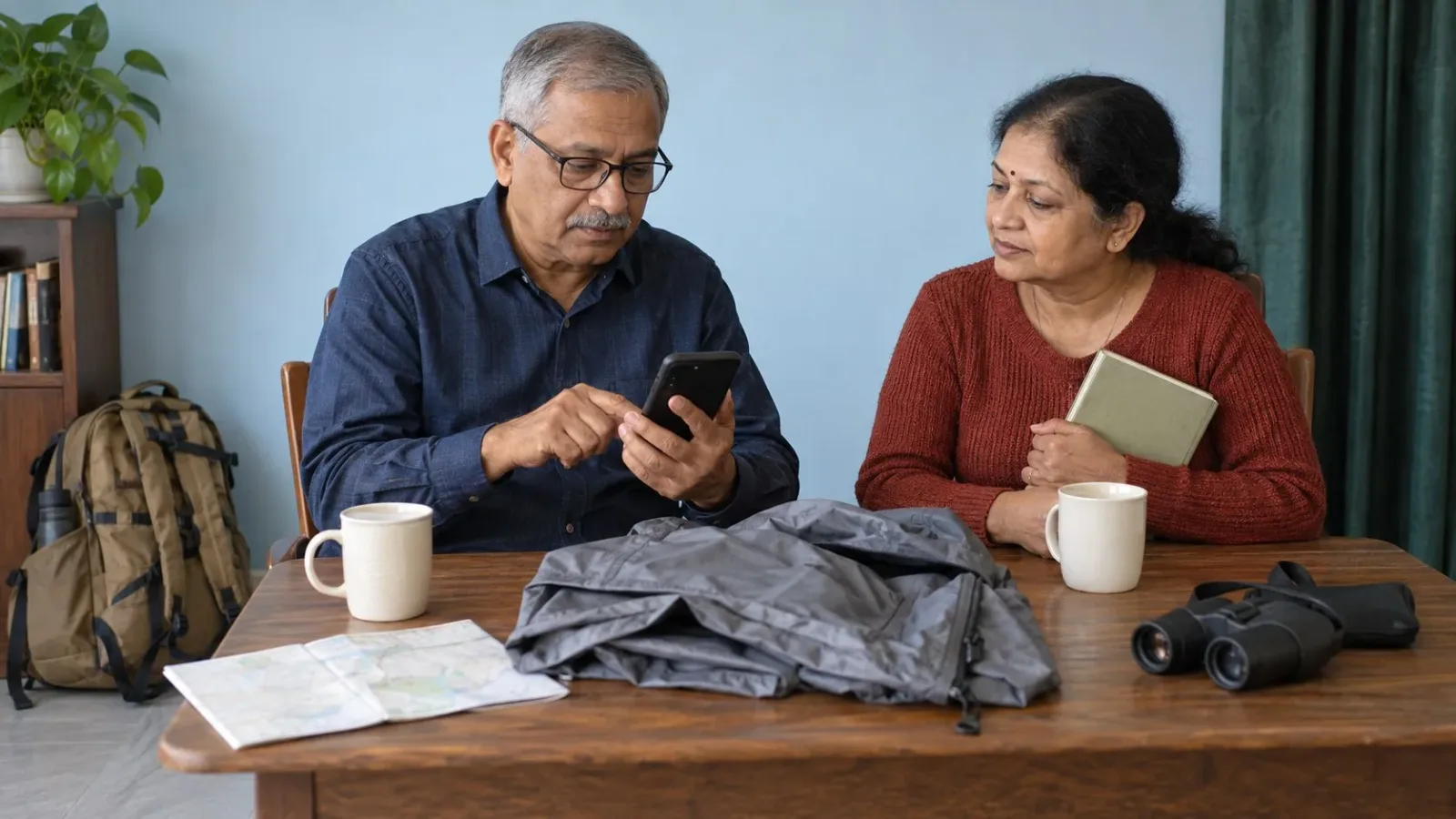
Hero image: AI-generated fictional planning scene, not a photograph of Nepal or flood conditions.
What does the Nepal flood news mean for a trip now?
Check the exact road or trekking route before travelling, rather than treating all of Nepal as either closed or cleared. Official material checked on 17 November 2026 shows continuing flood-response work and a road-closure listing, but it does not establish the condition of every itinerary. This is a dated travel-check update, not a live emergency feed or a declaration that a new nationwide flood began today.
Kathmandu Metropolitan City's 15 November report describes transport for people stranded after flooding in the Rasuwa and Nuwakot area. Its 16 November report describes further disaster-response support. Those are recent response reports, not a complete road reopening notice. Before keeping or changing a booking, separate the destination, approach road, river crossing, accommodation and return journey.
Which flood reports describe which places?
Nepal's foreign ministry's 6 September 2026 situation report concerns the Bhote Koshi floods of 26 August 2026 and names Rasuwa, Nuwakot, Dhading and other districts along the river. Its damage and rescue figures belong to that dated report. We are not presenting those figures as today's totals, and an account of restoration work is not proof that a road is now open.
Separately, the Nepal Tourism Board's latest-travel-updates page currently carries a precautionary warning about the Budhi Gandaki River in northern Gorkha. No issue date was visible in the page we checked. Do not merge that warning with the Rasuwa report or assume that either describes every district. Use the location and timestamp of the actual advisory when checking your own route.
What does the official road dashboard actually show?
At our 17 November check, the Department of Roads dashboard listed an NH42 flood closure on the corridor it labels Thori-Bhandara-Malekhu, Galchhi-Trishuli-Betrawati-Mailung-Syaphrubesi-Rasuwagadhi. The entry's closure time is 26 August 2026; its estimated reopening time is 31 August 2026, already past. The listing therefore needs fresh confirmation of the affected section. We do not treat its old estimate as a completed reopening, nor certify that every kilometre of the named corridor is closed.
Open the department's road-condition page and dashboard, then ask the responsible road office or local authority about the exact section and travel date. A dashboard summary count is not a list of all usable routes in Nepal. Similarly, a route being shown as open somewhere does not settle bridge access, local diversions or your last approach to a lodge. Keep a confirmed return option, not only an outward driver.
Does this confirm that airports or borders are closed?
No. The sources used here do not establish a current nationwide airport closure, the status of an individual flight, or entry permission at a specific border. Those points remain unconfirmed in this article. Do not turn a road-flood headline into a claim that all flights are grounded, and do not treat an operating flight as proof that an onward mountain transfer is usable.
Check the airport or border authority and your actual transport provider for your date, then check the onward ground journey separately. For any cancellation or rebooking, read the terms attached to your own booking. This article does not promise a flood waiver, a free change, a refund or insurance cover. Get a written answer before assuming a cost is recoverable.
What should trekkers and drivers do with the warning?
For the affected Budhi Gandaki area, the Tourism Board advises moving to safer higher ground if near swollen rivers, avoiding riverbanks, bridges and river crossings, and following local evacuation or relocation instructions. It specifically warns against crossing flooded rivers even when the water appears shallow. Follow the authorities on the ground; a photograph or old trail description cannot clear a crossing.
The same advisory tells visitors to check trail and route conditions with local authorities, guides and accommodation providers, avoid flood-affected trails and landslide-prone slopes particularly in rain or at night, and postpone travel through affected areas until reliable information confirms safe routes. If stranded, move to a safe location and seek help rather than attempting a risky river self-rescue. These are the Board's precautionary instructions, not a prediction about your departure day.
Is the municipal free transport a tourist shuttle?
Do not plan a sightseeing transfer around it. The city's 15 November report describes a targeted service between Bidur municipality in Nuwakot and Kathmandu. It is aimed at people stranded after the disaster who want to reach Kathmandu, and people needing to travel to affected areas to search for relatives. It is not evidence of a regular Kathmandu-Rasuwa tourist timetable or a through service across the border.
The report describes the service at that time, including planned journeys; this article does not confirm today's seats, eligibility, pickup or continuing operation. Anyone who needs disaster assistance should check with the local administration or police. Do not travel into an affected area expecting a rescue service to complete an optional holiday transfer.
Who can help, and what should you save before leaving?
The Tourism Board's Tourist Police page lists 1144 for Tourist Police, 100 for police assistance and 103 for traffic police assistance within Nepal. It also lists Tourist Police headquarters mobile +977-9851289445. Save the official page and your guide's and accommodation's contact details before setting off. Short codes may not work the same way from abroad or on every phone service; the international-format number is a separate contact, not a guaranteed rescue dispatch line.
Keep your route, accommodation address, vehicle details and agreed check-in plan available offline. The Board recommends government-registered tourism services and authorized tourist vehicles. A practical question is: which official update did the operator check, for which road section, at what time? Ask for a useful alternative if that section is not cleared. For immediate danger, follow local emergency instructions, not an itinerary timetable.
How should you decide whether to keep the trip?
If your trip crosses an affected corridor, pause that leg until the relevant authority and your operator can confirm a usable route and return plan. If it is elsewhere, check that itinerary on its own facts rather than cancelling or proceeding solely because a social-media headline says Nepal. This is planning advice, not a countrywide safety certification. Weather, roads and instructions can change after our check.
The Department of Hydrology and Meteorology publishes rainfall and weather information. The rainfall-watch page we retrieved showed no station readings in its table, so we cannot infer dry conditions or an all-clear from that empty display. Recheck the official bulletin before departure and again when your route depends on it. Keep flexibility in the booking until the uncertain leg is settled.
Frequently asked questions
Is all of Nepal closed because of floods?
The official material checked does not establish a nationwide closure or a countrywide all-clear. Check the exact destination, approach road, river crossing and return journey. Do not extend a localized advisory to every district.
Is the Rasuwa road confirmed open now?
Not by this article. On 17 November 2026 the DOR dashboard listed an NH 42 flood closure with a 26 August closure date and 31 August estimated reopening. That elapsed estimate does not prove reopening. Confirm the affected section with the responsible authority before departure.
Is the Budhi Gandaki warning the same as the Bhote Koshi report?
No. The Tourism Board page refers to northern Gorkha and shows no visible issue date. The foreign ministry report is dated 6 September 2026 and concerns the 26 August Bhote Koshi floods. Keep their geography and dates separate.
Does the flood news confirm my flight or border is closed?
No. Current individual flight, airport and border status is unconfirmed here. Check the relevant authority and actual transport provider for your date, then verify the onward ground route separately.
Can tourists use the municipal free bus as a regular transfer?
Do not assume that. The 15 November report describes targeted disaster assistance between Bidur and Kathmandu for stranded people and people searching for relatives. It is not a regular tourist timetable. Current operation, seats, pickup and eligibility need direct confirmation.
Which emergency numbers are listed for travellers in Nepal?
The Tourism Board lists 1144 for Tourist Police, 100 for police assistance and 103 for traffic police within Nepal, and headquarters mobile+977-9851289445. Save the official contact page. Short codes may differ when calling from abroad or using another phone service;no response time is guaranteed.
Official sources and verification limits
- Kathmandu Metropolitan City: targeted transport after floods, 15 November 2026
- Kathmandu Metropolitan City: flood-response support, 16 November 2026
- Ministry of Foreign Affairs: situation as of 6 September 2026, not today
- Nepal Tourism Board: Budhi Gandaki precautionary advisory, issue date not visible;checked 17 November 2026
- Department of Roads: road-condition update portal, checked 17 November 2026
- Department of Roads: dashboard, checked 17 November 2026;old estimated reopening is not confirmation
- Nepal Tourism Board: Tourist Police contacts, checked 17 November 2026
- Department of Hydrology and Meteorology: rainfall watch, checked 17 November 2026;no station readings retrieved

A Miranda House graduate and lawyer who traded courtrooms for slow travel. Cheshta travels with the batches we host ourselves, with a soft spot for travelling alongside elders.
Planning your next trip?
We'll handle insurance, hotels, airport assistance and the itinerary — the same way we do it for every trip.
Questions on this article
asked by readers, answered by us
Was this helpful?
one tap, no sign-up