




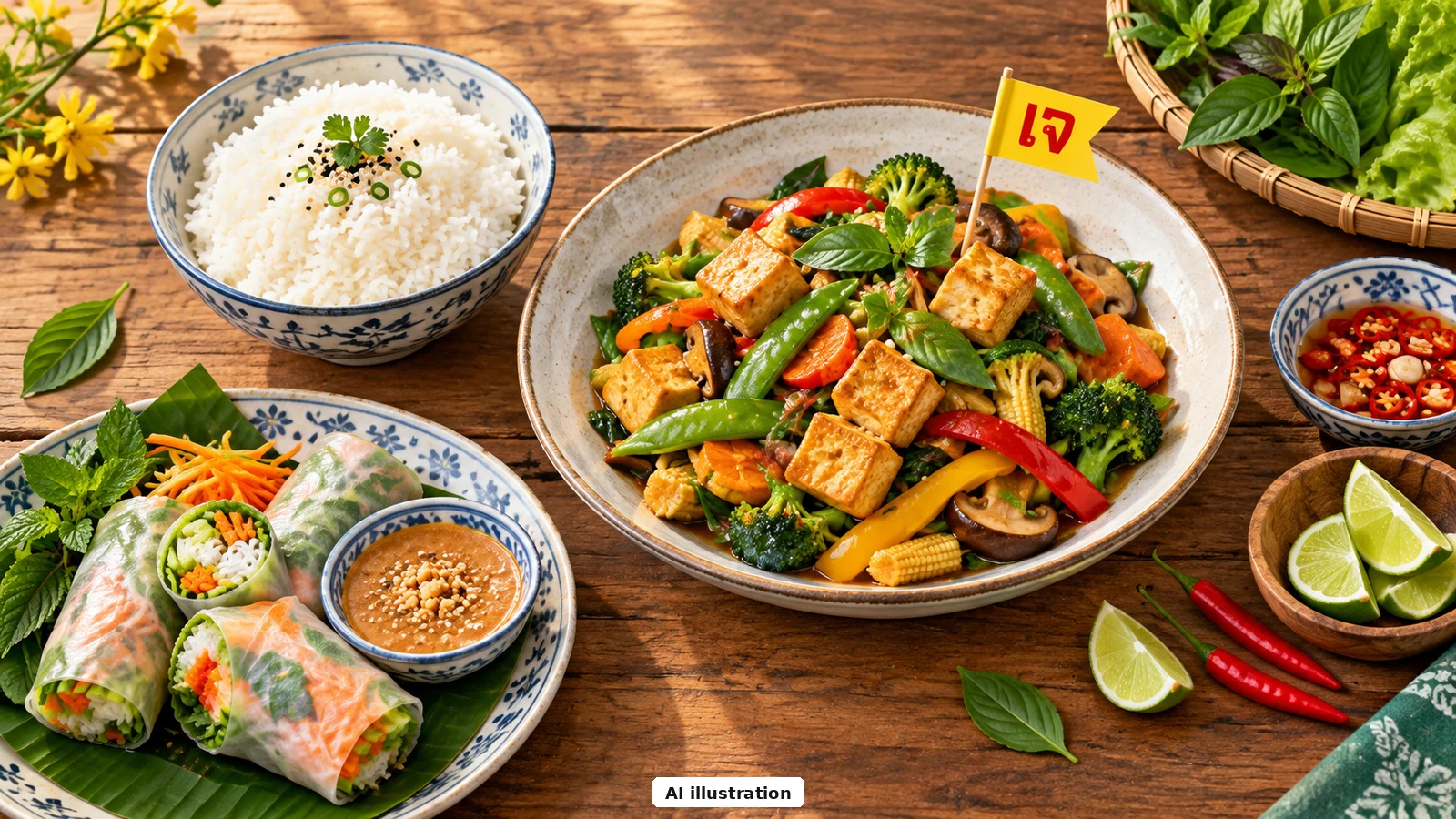
Phuket is one of the easier islands in Southeast Asia to eat vegetarian - if you know two things most menus will not tell you: which hidden seasonings to ask about, and the yellow flag that ends the asking altogether. Patong's menus are built for tourists, not vegetarians, so "vegetable fried rice" on the card is no guarantee of a vegetarian plate. This guide gives you the exact phrases, the dish-by-dish checks, and the local system that does the checking for you.
1. The short answer
You can eat well and safely vegetarian in Phuket every day of a trip. For restaurants, be specific instead of asking "is this vegetarian?" - say no fish sauce, no oyster sauce, no shrimp paste, no meat stock. For zero negotiation, look for the yellow jay flag: a yellow sign or banner with red Thai characters (เจ) marks a stall or restaurant where everything is meat-free by definition. Around Patong you also have pure-veg Indian restaurants for a fully familiar fallback, and supermarkets for self-catering.
2. The three hidden ingredients to ask about
Traditional Thai cooking leans on three umami seasonings, and they reach dishes that look vegetarian on the menu. Fish sauce (nam pla) seasons curries, stir-fries, soups and even salads. Oyster sauce finishes most stir-fried vegetable dishes. Shrimp paste (kapi) is pounded into curry pastes and some dipping sauces. None of these shows up in an English menu description. A dish labelled "vegetable" or "tofu" is usually cooked with them unless you say otherwise - so the check below matters more than the menu wording.
3. The exact phrases to use
Asking "is this vegetarian?" often gets a confident yes that means "no visible chunks of meat". Be explicit instead. The most useful spoken phrase is "mai sai nam pla, mai sai nuea sat" - no fish sauce, no meat. Add oyster sauce, shrimp paste and meat stock to the list and you have covered the hidden seasonings in one pass. The strongest version is a printed card in Thai listing your exclusions: no meat, no fish, no eggs, no fish sauce, no oyster sauce, no shrimp paste - and for Jain travellers, no onion, no garlic, no root vegetables. Showing a card avoids mistranslation entirely, and any India-focused travel group can point you to a printable version.
4. The yellow flag that ends the asking: jay food
Thailand's Thai-Chinese Buddhist communities run a centuries-old vegetarian tradition called jay. Jay food excludes all meat, fish and eggs - and also onion, garlic, shallots, leek and chives, which makes it almost identical to Jain food by default. Jay stalls and restaurants display a yellow flag or sign with red Thai characters (เจ), and when you see it you can order anything in sight without a single question. They operate year-round, including in Phuket's Old Town and along the Patong-Kata road, and they multiply dramatically during the annual nine-day Vegetarian Festival in the ninth lunar month, usually October, when yellow-flag stalls take over streets across the island with dishes typically priced at 30-80 baht. Timing a trip to that festival is the easiest vegetarian week you will ever spend in Thailand.
5. Dish-by-dish: what needs a check and what is safe
Pad thai normally contains egg, dried shrimp and fish sauce - ask for tofu pad thai, no egg, soy sauce instead of fish sauce; tourist-area restaurants do this routinely. Green, red and yellow curries start from pastes that usually include shrimp paste - ask for a paste without it, or order curries at an Indian or jay restaurant where it is already guaranteed. Som tam, the green papaya salad, almost always carries dried shrimp and fish sauce - skip it unless the kitchen clearly understands your requirements. Fresh spring rolls are often vegetarian-friendly, but verify the dipping sauce. The safest fallback anywhere is steamed jasmine rice with stir-fried vegetables, ordered with no fish sauce and a check on the oyster sauce.
6. Meal stops around Patong, and tour-day lunches
Dedicated vegetarian Thai restaurants are thin inside Patong itself; they cluster in Bang Tao, Rawai and Phuket Town, with year-round jay stalls in the Old Town and on the Patong-Kata road. Around Patong, pure-veg Indian restaurants catering to Indian travellers - several explicitly listing Jain options - are the most reliable sit-down choice; check current listings before you go since individual names change hands. For self-catering, Rimping Supermarket in Cherng Talay has the island's best range of plant milks, tofu and meat alternatives, with Villa Market and Tops at Central Festival as backups, and fresh produce is cheap at local markets. Finally, plan tour days: island trips to Phi Phi, James Bond Island or Coral Island include buffet lunches with limited vegetarian options, so eat before you set out, pack a snack, and tell your tour operator about dietary needs when you book - they can often arrange a separate vegetarian meal.
Sources: Vegetarian and vegan eating in Phuket, a 2026 practical guide (phuketexpatguide.com), and a vegetarian and Jain food guide for Indian travellers in Thailand (tripdust.com). Restaurant names and festival dates change year to year - confirm current listings and the festival calendar before your trip.

A Miranda House graduate and lawyer who traded courtrooms for slow travel. Cheshta travels with the batches we host ourselves, with a soft spot for travelling alongside elders.
Planning your next trip?
We'll handle insurance, hotels, airport assistance and the itinerary — the same way we do it for every trip.
Questions on this article
asked by readers, answered by us
Was this helpful?
one tap, no sign-up