




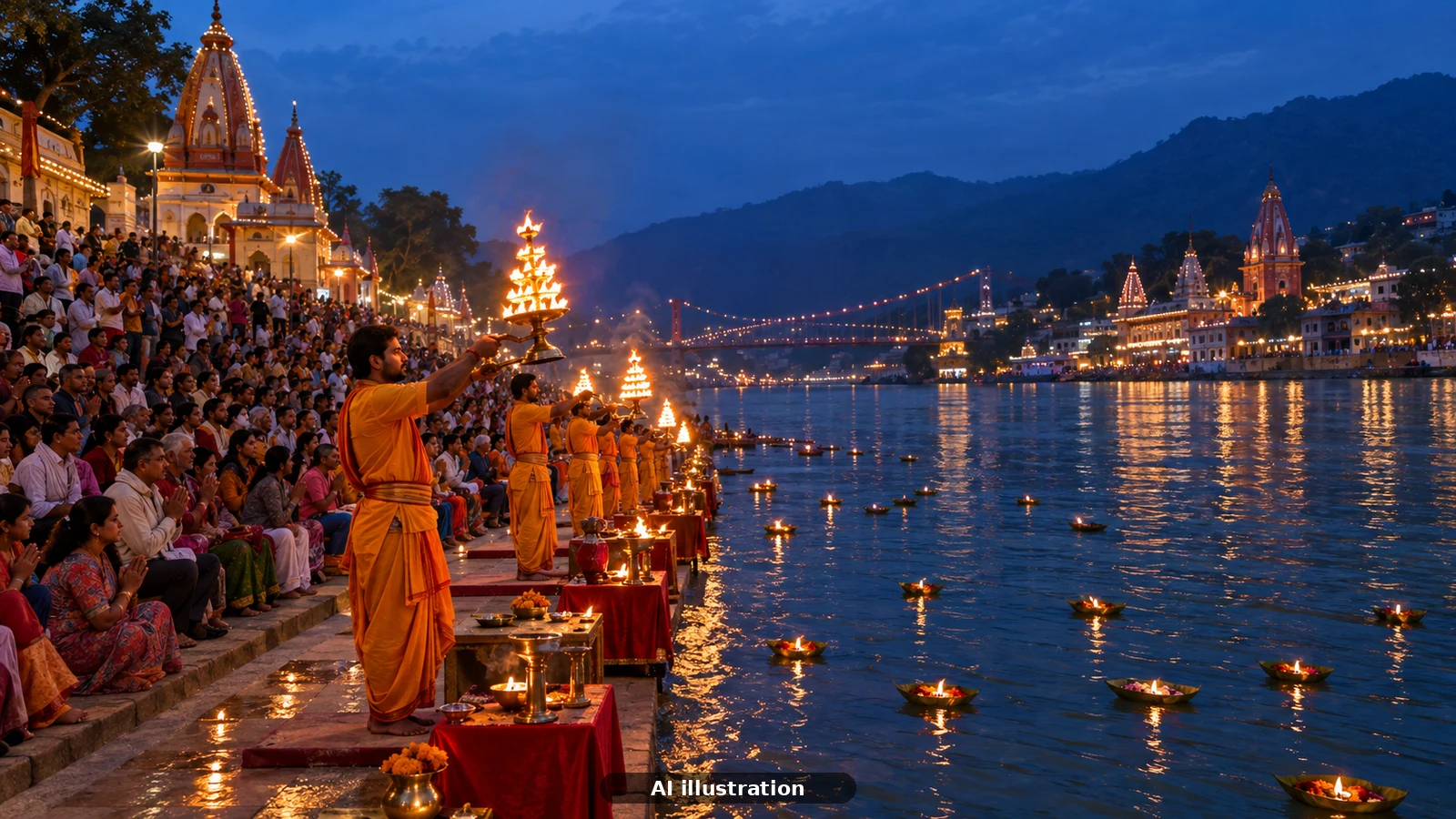
Triveni Ghat is where Rishikesh goes to bathe and pray; the Ram Jhula area is where it goes to walk, shop and visit ashrams. They sit about 2 km apart along the same bank of the Ganga, which makes them a natural one-day pair - but they run on opposite clocks. Get the order and the transport right and the day is effortless. Get them wrong and you spend the evening stuck in aarti crowds you did not plan for.
The honest ticket picture: almost everything is free
There is no entry ticket for Triveni Ghat, no ticket for the evening Ganga Aarti there, and no ticket to cross Ram Jhula or enter the Swarg Ashram lane. The costs that do exist are small and optional: a boat ride on the Ganga at Triveni (per-person, agree the price before boarding), e-rickshaw hops between the two areas, parking if you drive, and any puja or diya offerings you choose to buy from the ghat's priests and flower sellers. Anyone at either spot quoting a mandatory 'entry fee' or 'aarti ticket' is selling you something that does not exist.
Sequence one: ghats first, bridge area later (the calm day)
Start at Triveni Ghat early, around 7-9 am, when pilgrims come for the morning dip and the light is soft. The ghat marks the believed confluence of the Ganga, Yamuna and the unseen Saraswati, and a holy dip here is the ritual heart of Rishikesh - you will see families performing pujas on the steps. Late morning, ride an e-rickshaw or auto about 2 km north to the Ram Jhula area (10-15 minutes), walk the bridge if you like, lunch in the Swarg Ashram lane, and visit Parmarth Niketan or the other ashrams at a slow pace. Stay on that side for the Parmarth Niketan evening aarti, or ride back to Triveni for its aarti - but pick one, because both happen at dusk and you cannot do both well.
Sequence two: aarti at Triveni as the finale
If the Triveni aarti is your priority (it is the bigger, more local ceremony), flip the day: Ram Jhula area first thing, ashrams and the bridge before noon, then Triveni Ghat by about 5 pm to claim a spot on the steps. The aarti begins at dusk - the timing shifts with the season, roughly between 6 and 7 pm, so confirm the day's time at your hotel or the ghat itself - and the priests' flaming lamps and floating diyas against the dark river are worth the wait. Arriving at dusk without a buffer means watching from the back of a very dense crowd.
Getting between the two
E-rickshaws and autos are the default link: cheap, constant, and the ride takes 10-15 minutes depending on traffic in the market lanes. Walking the whole way is possible (about 25-30 minutes through town) but hot and dusty by midday, and the road is a working street, not a river promenade. If you are driving, know that parking near both ghats is limited and slow on weekends - park once near Triveni and use rickshaws for the rest.
The hidden complications
- Ghat steps and water levels. The bathing steps at Triveni are long and can be slippery, and the river runs fast and cold even in shoulder season. Non-swimmers should stay in the chained shallow sections, and anyone unsteady should watch the dip from the upper steps rather than attempt it.
- The aarti crowd is real. On weekends, festival days and during the Char Dham season, both aartis draw dense crowds. Keep your group agreed on a meeting point before the ceremony starts - phone signal degrades in the crush and finding people afterwards is slow.
- Monkeys and offerings. Around the bridge approaches, monkeys target anything edible carried openly. Around the ghats, expect gentle but persistent pressure to buy diyas, flowers and puja thalis - decide your budget beforehand and it stays friendly.
- Footwear rules. Shoes come off at the ghat's water edge and inside temples. Wear sandals you can slip off and carry, not laced shoes.
- Both aartis are at dusk. This is the single most common planning mistake: assuming you can attend Triveni's aarti and Parmarth Niketan's aarti on the same evening. You will catch the end of one at best.
What to book ahead (very little) and what to leave loose
Nothing at Triveni Ghat or Ram Jhula requires advance booking - this is a day to keep loose. The only things worth fixing in advance are your Rishikesh stay and, if you want one, a boat ride negotiated on the spot at Triveni. Everything else - rickshaws, food, the aarti - rewards simply showing up at the right hour.

A Miranda House graduate and lawyer who traded courtrooms for slow travel. Cheshta travels with the batches we host ourselves, with a soft spot for travelling alongside elders.
Planning your next trip?
We'll handle insurance, hotels, airport assistance and the itinerary — the same way we do it for every trip.
Questions on this article
asked by readers, answered by us
Was this helpful?
one tap, no sign-up