




- Subject
- Yarn pattern before weaving
- Preparation described
- Tying/wrapping and dyeing
- Exposed sections
- Receive dye in the account
- Individual authenticity
- Not established
- Reviewed
- 17 November 2026
Reviewed: 17 November 2026. Yarn-and-weaving explanation, not a dyeing lesson or individual-fabric certificate.
AI-generated fictional workshop scene with generic people; not an exact tying or dyeing arrangement, identified artisan, verified fabric, historical reconstruction or current visitor activity.
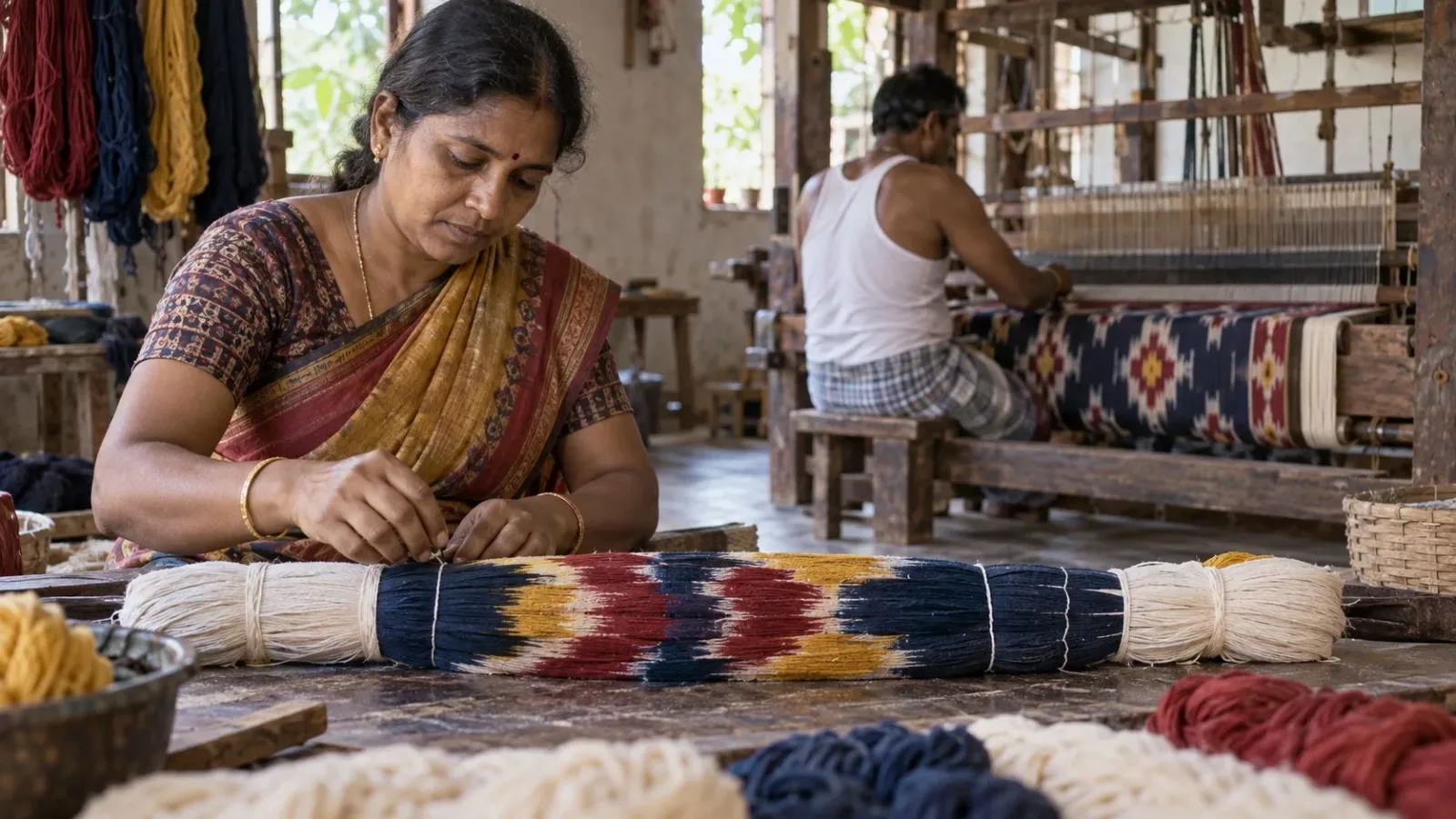
In the Ministry of Tourism's account of Pochampally ikat, the pattern begins in yarn before it is woven into fabric. The description identifies sections of bundled yarn being tied or wrapped and dyed to a planned colour pattern. It then connects that yarn pattern with the woven cloth. Keep that order clear.
Start with the yarn, not only the finished cloth
The defining point is the word before. The Ministry describes work on the yarn before weaving takes place. The pattern is not introduced in its account as something applied only after a finished fabric already exists.
This gives a useful way to understand the description: the cloth brings together yarn in which a colour pattern has already been prepared. The source's explanation concerns the relationship between preparation and weaving, not simply the appearance of a finished saree.
No particular motif, colour combination or finished product is identified here. This article does not classify all varieties of ikat or assign a technique to an object from a photograph.
Understand the exposed and wrapped sections
The Ministry explains that dye enters the exposed yarn sections while wrapped sections remain undyed in the described process. Those differently treated parts contribute to the pattern that is then woven into fabric.
Read the two stages together. Tying and dyeing describe preparation of the yarn pattern; weaving brings that prepared yarn into cloth. Keeping only the finished pattern in mind would leave out the pre-weave relationship that the account explains.
This is a qualitative explanation, not a dyeing lesson. No wrapping arrangement, colour formula, chemical handling, timing or loom instruction is given. The description does not authorize visitors to handle yarn, dyes or equipment.
Keep an explanation separate from a product assessment
A general account of the technique is not a certificate for a particular fabric. It does not establish a seller's item, fibre content, colourfastness or how that item was produced.
Do not use a blurred edge, a photograph or the name on a label as proof of authenticity. No burn test, rubbing test or other material test is proposed here. Nor does this explanation promise that every product sold in a place follows the described process.
The narrow takeaway is the order: a planned pattern is prepared in sections of yarn before weaving, and that yarn pattern becomes part of the woven fabric. Current loom operation, a demonstration, a class and any purchase remain outside this account.
Frequently asked questions
What happens before weaving in the Ministry's description?
Sections of bundled yarn are tied or wrapped and dyed to a planned colour pattern.
What is the distinction between exposed and wrapped yarn?
The description says exposed sections receive dye while wrapped sections remain undyed in that process.
Does the account identify an individual fabric as authentic?
No. It explains a technique, not a particular item or seller.
Is this a guide to dyeing or operating a loom?
No. Recipes, handling methods and loom instructions are not supplied.
Does this classify every kind of ikat?
No. No complete taxonomy or universal claim about all ikat is made.
Is current loom operation or a class confirmed?
No. No current demonstration, class, purchase or visitor handling permission is verified.
Official sources and limits
Ministry yarn-preparation explanation only: tied/wrapped sections, exposure difference and the prepared pattern woven into cloth. No technique taxonomy, material purity, colourfastness, authenticity, recipe, handling instruction, current production, seller or access claim.

A Miranda House graduate and lawyer who traded courtrooms for slow travel. Cheshta travels with the batches we host ourselves, with a soft spot for travelling alongside elders.
Planning your next trip?
We'll handle insurance, hotels, airport assistance and the itinerary — the same way we do it for every trip.
Questions on this article
asked by readers, answered by us
Was this helpful?
one tap, no sign-up