



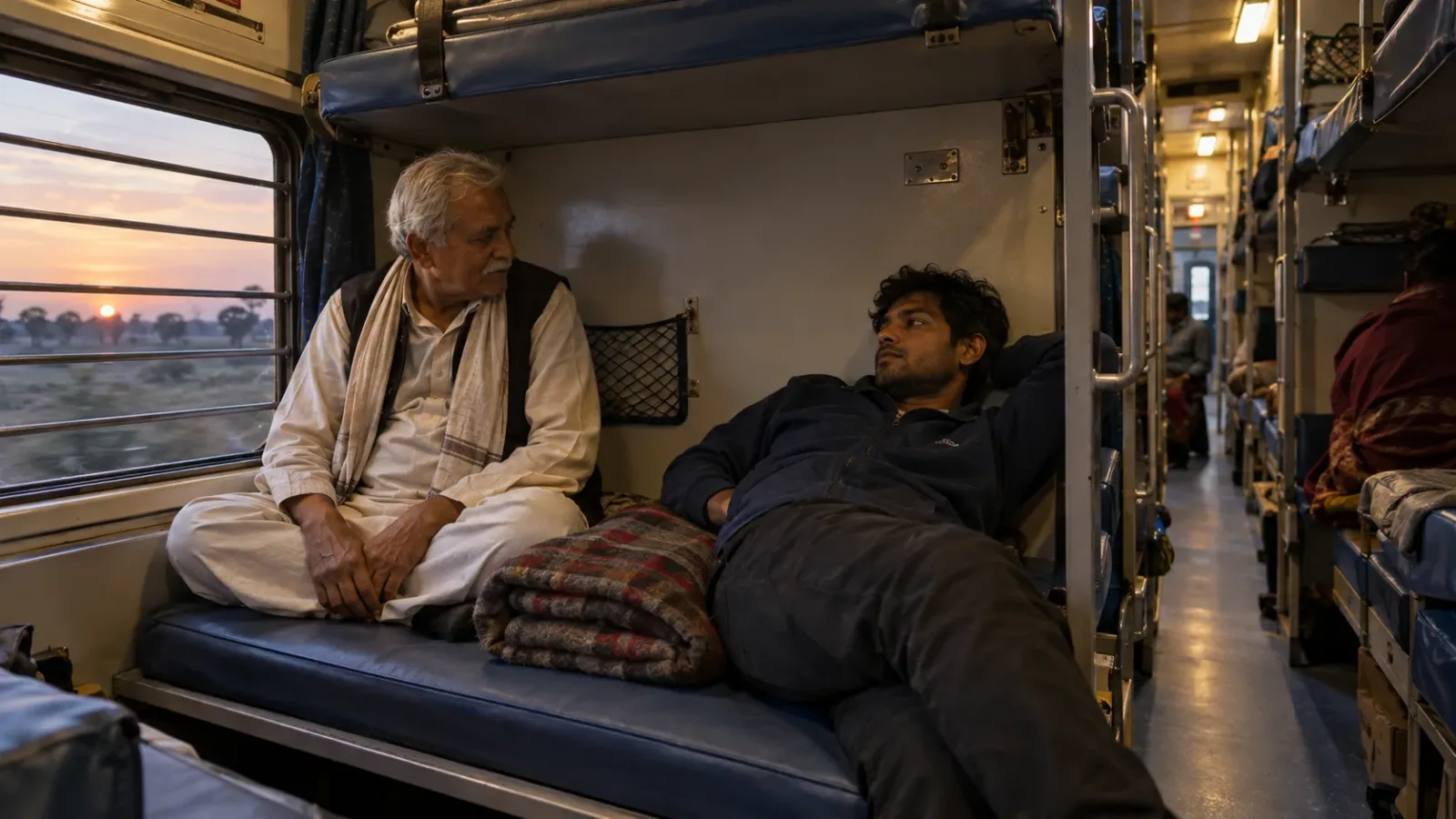

If you have ever travelled on an RAC ticket, sharing one side-lower berth with a stranger while both of you paid the full fare, that arrangement may be on its way out. A section of senior railway officials has argued that the 43-year-old Reservation Against Cancellation facility has outlived its utility, and the Railway Ministry is reported to be considering discontinuing it. No final decision has been announced yet.
Why RAC exists
RAC was introduced in 1983-84 to give the most senior wait-listed passengers a berth during the journey when confirmed passengers failed to show up, and to stop railway staff from allotting vacant berths arbitrarily. In 2016 the Railways expanded it: sleeper coaches went from five side-lower berths for RAC to seven (10 to 14 passengers), 3AC from two to four (four to eight passengers) and 2AC from two to three (four to six).
Why officials now call it outdated
The ticket examiner's hand-held terminal is now digitally linked to the entire reservation system. When a confirmed passenger does not board, the TTE marks the no-show and that berth becomes available for current booking from the very next station, which is exactly what RAC was designed to do manually. Officials also argue scrapping RAC would cut the discretionary power of TTEs and reduce unfair practices.
The money angle
Since the 2015 cancellation rules, passengers who do not turn up forfeit the entire fare, so Railways takes no loss on a no-show even if the berth is resold at full fare. Meanwhile, the Parliamentary Public Accounts Committee, in its report tabled in the Lok Sabha on 4 February 2026, said charging RAC passengers the full fare without allotting them a full berth "could not be justified" and recommended a partial refund mechanism. Officials say such a mechanism is complicated to build because tickets are sold both online and at physical counters.
What changes for you right now
Nothing, until a formal decision is announced. RAC tickets continue as usual, and RAC remains unavailable only on Vande Bharat Sleeper trains. If the facility is scrapped, wait-listed passengers would simply stay wait-listed until a berth frees up digitally, and berth-sharing would end. We will update when the ministry decides.
We track railway rule changes that affect how families book train travel. Last verified: 23 November 2026 against The Times of India (21 November, PTI) and Mint (19 November).
Questions people ask at the gate
Is Indian Railways scrapping RAC tickets?
Not yet. A section of senior railway officials has argued the 43-year-old RAC facility is outdated now that ticket examiners' hand-held terminals can reallocate no-show berths digitally, and the Railway Ministry is reportedly considering discontinuing it. No final decision has been announced, so RAC tickets continue as usual.
Why was the RAC system introduced?
RAC was introduced in 1983-84 to give the most senior wait-listed passengers a berth during the journey when confirmed passengers failed to turn up, and to prevent railway staff from allotting vacant berths arbitrarily. Under RAC, two passengers share one side-lower berth while each pays the full fare.
Will RAC passengers get a refund if the system stays?
The Parliamentary Public Accounts Committee, in its report tabled on 4 February 2026, said charging RAC passengers the full fare without allotting a full berth could not be justified and recommended a partial refund mechanism. Officials say building such a system is complex because tickets are sold online and at counters, and no refund mechanism has been announced.
Next walk starts at a new gate.
Was this helpful?
one tap, no sign-up

A Miranda House graduate and lawyer who traded courtrooms for slow travel. Cheshta travels with the batches we host ourselves, with a soft spot for travelling alongside elders.