



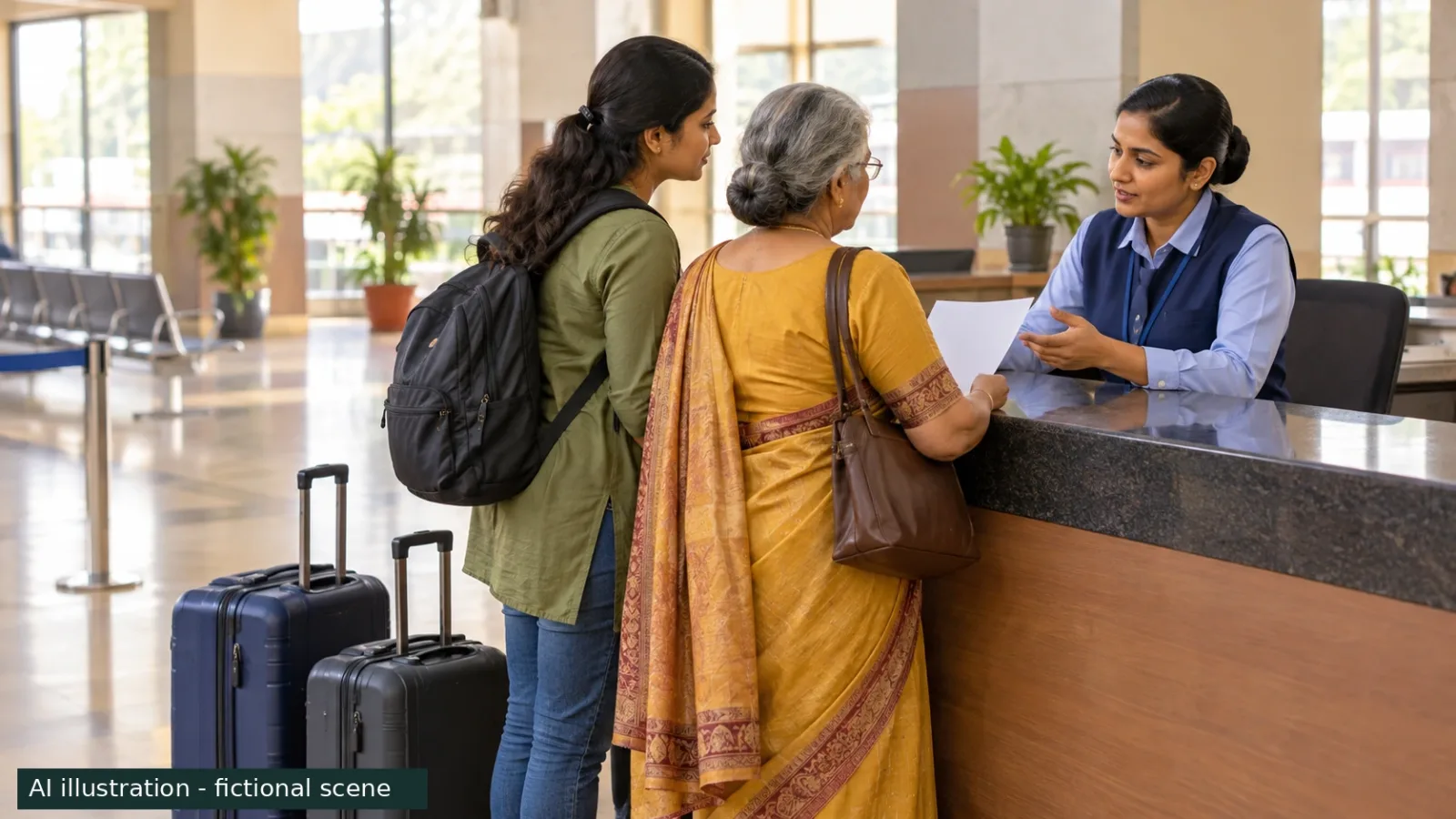
AI illustration: fictional travellers show a paper to a station staff member. This is not a real station desk or a ticket.
If you cannot read Hindi or English comfortably, plan the handoffs rather than trying to learn every station word at once. A short journey card in a language you understand can help you show railway staff what you need. It is an editorial aid, not a ticket, translation certificate or guarantee of help in a particular language.
Prepare the card with someone you trust
Our suggested card has separate lines for the travel date, train number, boarding station, destination, allotted coach and allotted seat or berth. Copy those details from the actual booking with a trusted person. Keep the original booking available privately; do not invent a coach or seat if it has not been allotted.
Add your preferred language in that language and a short request that a trusted speaker has checked: “Please help me confirm this train and my destination.” Ask that person to read the card back to you. A translation app can be a draft aid, but do not treat an unchecked translation of a station name or travel date as verified.
This is a blank editorial structure, not a sample ticket. Fill it only from your own current journey:
- My preferred language: ______
- Travel date and train number: ______
- Boarding station and destination: ______
- Allotted coach and seat/berth, if available: ______
- The help I need now: ______
Ask at the enquiry counter before moving
CRIS’s undated NTES project page lists face-to-face train enquiry at station enquiry counters and IVRS-based 139 call centres. Use the counter to confirm the journey rather than following a stranger who simply says they know the platform.
IRCTC’s undated 139 enquiry page describes interaction in Hindi, English and regional languages. It does not establish that your preferred language is available at every counter or on every call. Ask for it and follow the current prompts; this article promises no language count, keypad shortcut or immediate interpreter.
Our suggested sequence is one question at a time: confirm the train, then the boarding location, then the coach or seat. If a reply is unclear, show the same card again and ask staff to mark or point to the detail you need. Do not say you understood merely to end the conversation.
Separate names from the journey identifiers
A familiar place name is not the only detail on the card. Keep the full train number and the full station name or code from the booking together. Our editorial check is to ask staff to compare the whole set, including the date and direction of travel, rather than matching one familiar word.
Before boarding, ask for help matching the actual train and allotted coach. Keep the seat or berth on its own line, so it is not mistaken for a platform number. This article does not teach a universal display layout or claim all signs are available in your language.
Agree how to ask for the next stop
Before settling in, show the destination to the railway staff member assisting you and ask how to confirm it during the journey. A trusted companion can help with reading, but do not make a sleeping passenger or a stranger your only arrival plan.
Our planning suggestion is to keep the destination written clearly, recheck it with staff when uncertain and ask early about any mobility assistance. Do not cross tracks or take a staircase you cannot manage to follow an unclear direction. Remain in a staffed place while seeking a usable route.
Keep the card useful without exposing everything
A public-facing help card does not need your password, OTP, card number or a copy of your identity document. Keep booking and identity documents private and show them to the relevant railway staff when needed. If you want a companion’s contact on the card, ask them first and decide how widely the card may be shown.
If the journey changes, update the card from the current booking or staff guidance. Do not keep using yesterday’s platform note or an old train screenshot as if it were current. A card helps communication; it does not replace the actual ticket or guarantee a particular train, seat or assistance service.
Sources and scope
Checked 27 October 2026: CRIS NTES enquiry channels and IRCTC 139 enquiry and language description, both undated. The card and handoff routine are editorial suggestions. Ask staff about the actual journey and language support.

A Miranda House graduate and lawyer who traded courtrooms for slow travel. Cheshta travels with the batches we host ourselves, with a soft spot for travelling alongside elders.
Planning your next trip?
We'll handle insurance, hotels, airport assistance and the itinerary — the same way we do it for every trip.
Questions on this article
asked by readers, answered by us
Was this helpful?
one tap, no sign-up