




What the pass is
Checked 27 November 2026 against the Seoul Metropolitan Government's Climate Card page. Subject to change.
- The page calls it an integrated pass for unlimited subway and bus rides for a chosen period, paid once.
- Short-term passes come in 1, 2, 3, 5 and 7 days: 5,000, 8,000, 10,000, 15,000 and 20,000 won.
- There is also a 7-day youth pass at 13,000 won, with verification required.
- Visitors can buy it. A 17 March 2026 city announcement says foreign visitors can buy and recharge Climate Cards (short-term passes) with internationally issued credit and debit cards, and the Visit Seoul guide recommends the short-term pass for 1 to 7 day trips within Seoul.
The clock
- The page says use runs from the first train departure at 4:00 AM on the start date to the last train departure on the expiry date, typically 4:00 AM the next day.
- The charging date is the start date. Advance charging is not available.
- Its own example: a 1-day pass charged on a Monday is valid until the last train that day.
- So charge the pass when you are ready to start riding, not the evening before.
Where it works
- From 1 October 2026 the page lists subways within Seoul, plus getting off at Incheon Airport Terminal 1 and Terminal 2 on the Airport Railroad.
- It also lists Seoul-licensed city and town buses, including late-night and circular buses. A Seoul-licensed bus counts even if you board or get off outside Seoul.
- Gimpo Airport Station is inside Seoul and can be used.
- The page links a station-by-station coverage table, in Korean, that marks each station for boarding and alighting. Check it for your own stations.
Where it stops
- The page lists as not covered: the Sinbundang Line, GTX, subway stations outside Seoul, express and airport buses, and buses licensed in other regions.
- The page links a station table that marks each station on its own for boarding and getting off, and marks Airport Terminal 1 and 2 as get-off only. Check your own stations there rather than assuming a border.
- On the subway, you cannot board inside the area and get off outside it. The page gives Jongno 3-ga to Indeogwon as an example: staff collect the fare at the exit.
- The Airport Railroad exception works one way. You may board inside the area and get off at Terminal 1 or 2. Boarding at the airport stations with the pass is not permitted.
- We do not claim the pass covers every Seoul transit journey.
Cards, top-up and refunds
- A mobile card is for Android 12 and above, paid by bank transfer or a domestic card in the user's name. A physical card is for devices that do not support it, such as iPhones.
- A physical card is bought separately for 3,000 won, from vending machines inside Seoul Metro stations on Lines 1 to 8, or convenience stores near Line 9, Ui-Sinseol and Sillim stations.
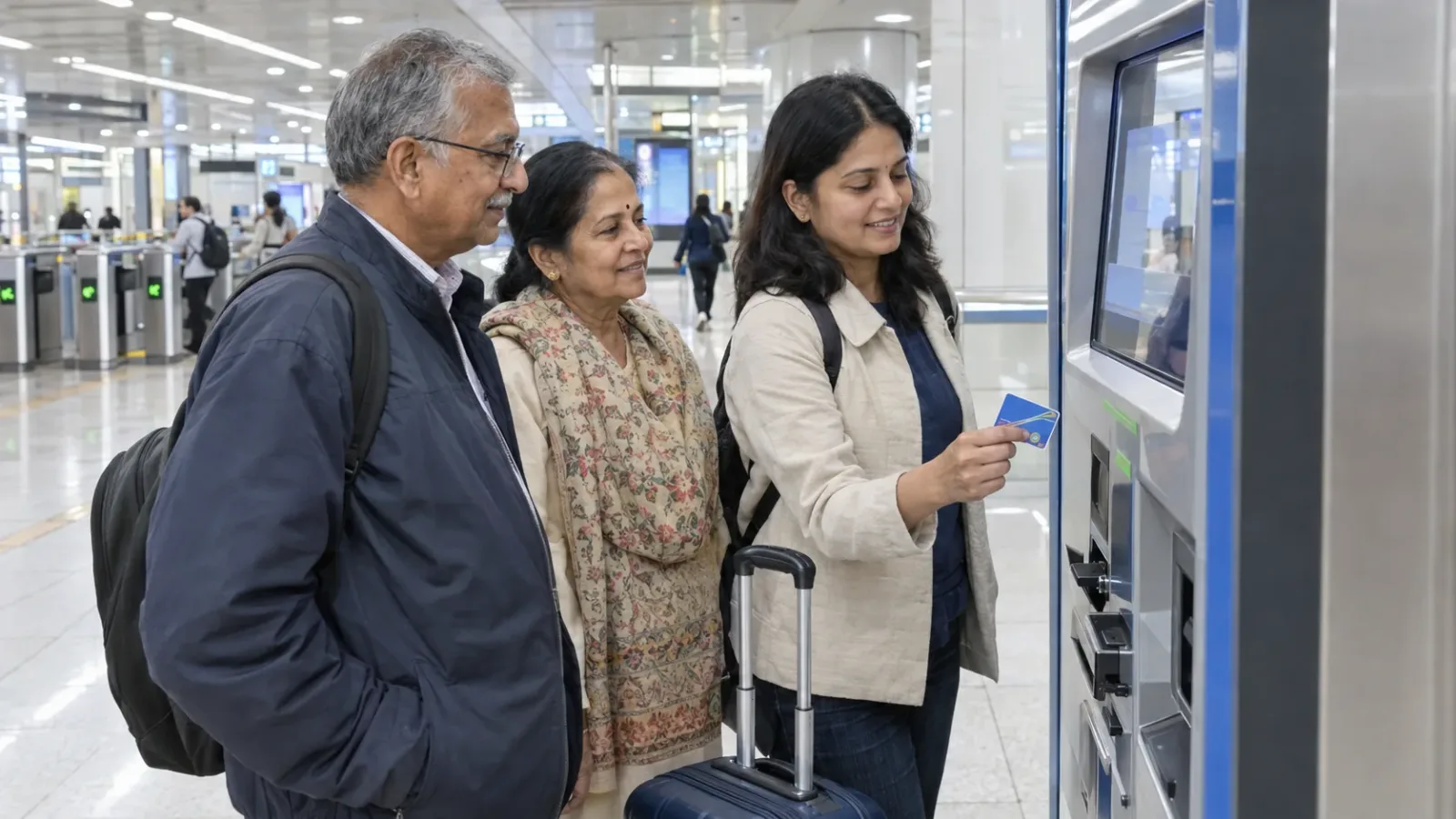
- Charge at a station kiosk. The city page lists cash or a domestic card and says corporate cards are not accepted. The 17 March 2026 announcement adds Visa and Mastercard issued overseas, plus Kakao Pay and Naver Pay, at the new machines it names, in 273 stations on Lines 1 to 8, with an average service fee of about 3.7 percent. It does not say every machine or station takes them.
- Physical card users must register the card online with Tmoney Card & Pay, one card per person. Without it, refunds are unavailable.
- Refund: the page says the amount charged minus the amount used minus a 500 won fee. For a physical card it says to deactivate the card before it expires, at a station kiosk that offers suspension, then file the refund request on the Tmoney Card & Pay website within 15 days of the expiry date, with the card registered there. The page also says refunds can be hard if the card is not in the user's own name, and that foreigners without a Korean bank account can visit Tmoney's headquarters.
- Pass holders get listed discounts at cultural sites, for example 50 percent off Seoul Botanic Park and Seoul Grand Park. Identity and use period are checked, and discounts do not combine with others.
What this covers
This guide covers the short-term Climate Card pass as the Seoul Metropolitan Government's page describes it. It does not cover T-money single fares, the Climate Pass for Seoul residents, taxis or intercity trains.
Our suggestions
- Charge the pass on the morning you start riding and note the last-train cut-off on the final day.
- Check your stations against the coverage table before you rely on the pass, especially if you head outside Seoul.
- If you pay with a foreign card, pick a Lines 1 to 8 station machine that shows the card option, and expect the service fee of about 3.7 percent.
- If charging or a refund goes wrong, the city lists the Korea Travel Hotline, +82-2-1330 from abroad, open 24 hours.
This article covers the Seoul Climate Card short-term pass as the Seoul Metropolitan Government's page read on 27 November 2026 describes it. It does not cover other cards or any change after that date. Check the city page before you rely on it.
Questions people ask at the gate
How much is the Seoul Climate Card?
The Seoul Metropolitan Government lists 1, 2, 3, 5 and 7 day passes at 5,000, 8,000, 10,000, 15,000 and 20,000 won. A physical card costs 3,000 won extra. Subject to change.
When does the pass start and end?
It starts on the day you charge it, with no advance charging. Use runs from the first train at 4:00 AM on the start date to the last train on the expiry date. Subject to change.
Does it work to Incheon Airport?
The page says you can board inside the coverage area and get off at Terminal 1 or 2 on the Airport Railroad. Boarding at those airport stations with the pass is not permitted. Subject to change.
Can visitors buy it with a foreign card?
A 17 March 2026 city announcement says foreign visitors can buy and recharge short-term Climate Cards with internationally issued Visa and Mastercard credit and debit cards at station machines on Lines 1 to 8, with an average fee of about 3.7 percent. Subject to change.
Next walk starts at a new gate.
Was this helpful?
one tap, no sign-up

A Miranda House graduate and lawyer who traded courtrooms for slow travel. Cheshta travels with the batches we host ourselves, with a soft spot for travelling alongside elders.