




- Source
- Royal Botanic Gardens, Kew
- Tree-growing example
- Dendrobium nobile
- Other examples
- Terrestrial and moss positions
- Current display
- Not verified
- Reviewed
- 17 November 2026
Reviewed: 17 November 2026. Selective heritage outline, not a ticket or access guarantee.
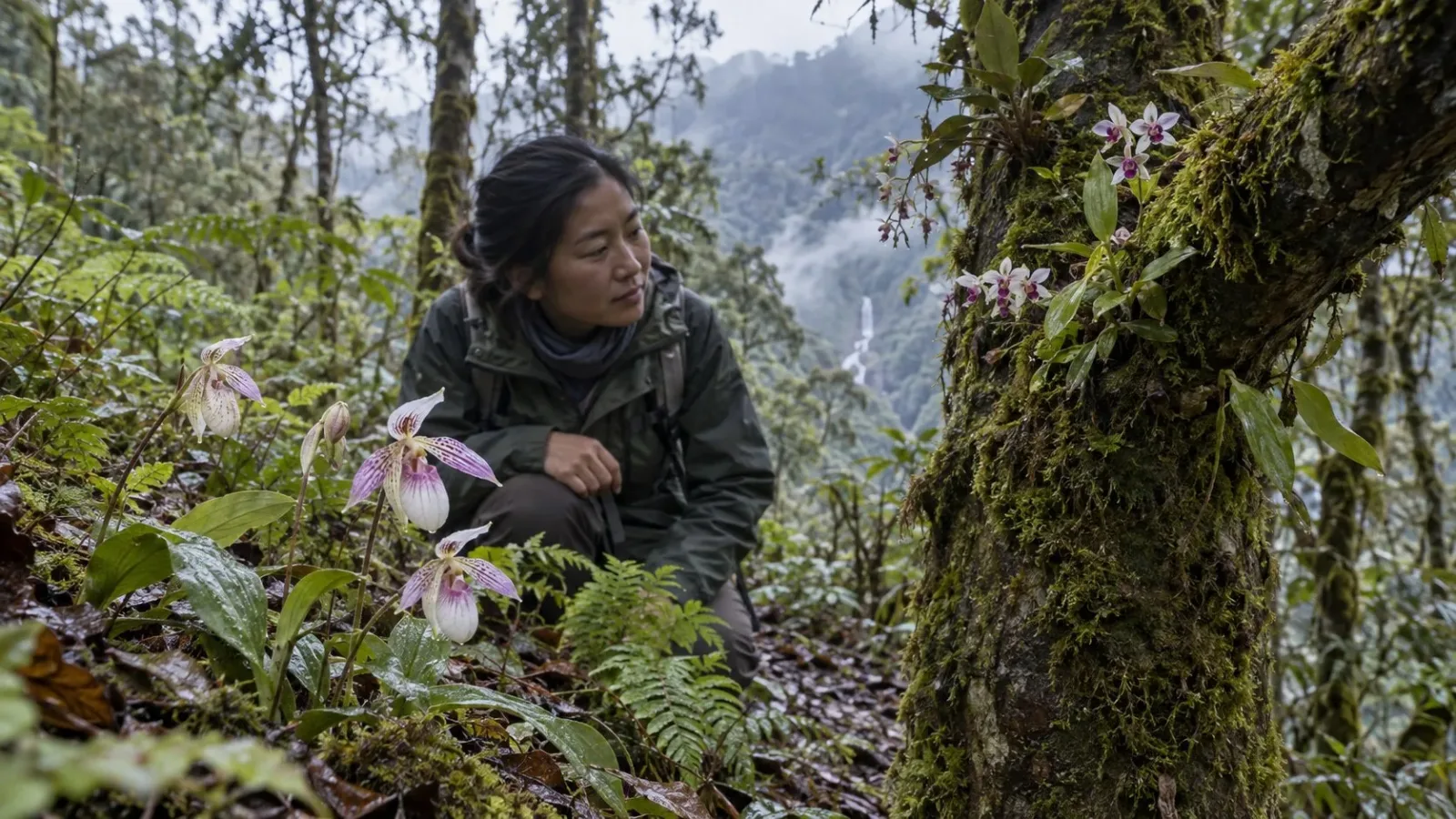
AI-generated fictional botanical scene, not a species identification, verified plant-host relationship, exact growing site, current display or permission to approach wild plants.
An orchid's flower does not by itself explain where the plant grows. In Kew's account of Sikkim orchids, researcher Lauren Gardiner describes Dendrobium nobile on the trunks or branches of host trees. The same account describes Pleione species growing terrestrially and in thick moss on trunks and rocks. These are different growing positions within the orchid account, not one pattern for every orchid.
Understand the tree-growing example
Kew describes Dendrobium nobile as epiphytic, explaining its position on the trunks and branches of host trees. For this article, that term is used to describe the growing position: an orchid situated on a tree rather than necessarily rooted in the ground below it.
The focus is where the orchid grows. It is not an assessment of the relationship between an individual orchid and its host tree, or a diagnosis of either plant's health. A photograph is not used here to identify a species or inspect that relationship.
Leave room for other growing positions
Kew explicitly says that not all Sikkim orchids are epiphytes. Its Pleione examples include terrestrial growth and growth in thick moss on trunks and rocks. Read the examples with that range intact, rather than turn the orchid name into a rule that every plant must grow on a tree.
Nor does the account mean that every Pleione species uses every listed position. This article gives no species-by-species planting instructions, water-storage explanation, care schedule or claim about tolerance of particular conditions.
Separate the description from a display or route
These examples help explain growing positions in a botanical account. They do not identify an orchid visible today, confirm a flowering display or promise that a particular garden contains the named plants.
No wild-plant location, current population, flowering calendar, garden inventory, visitor route, admission, accompanied visit, facility or assistance is verified here. The description is not an invitation to climb a tree, approach a wild plant or collect any part of it. The useful distinction remains the different places in which the source describes orchids growing.
Frequently asked questions
What does epiphytic describe in this article?
The tree-growing position in Kew's Dendrobium nobile example.
Do all Sikkim orchids grow on trees?
Kew explicitly says not all are epiphytes and describes terrestrial Pleione examples too.
Must every Pleione grow in every listed position?
No. The examples should not become a universal rule for each species.
Does this confirm a named orchid will be on display?
No. No current garden inventory, individual plant or flowering display is established.
Does this assess the host tree or orchid health?
No individual plant or host relationship is assessed.
Does this provide planting or care instructions?
No species-by-species planting method or care schedule is supplied.
Official sources and limits
Kew named growing-position examples only. No universal rule, species identification, parasitism or non-parasitism claim, host-health assessment, planting/care method, current population, flowering display, route or access.

A Miranda House graduate and lawyer who traded courtrooms for slow travel. Cheshta travels with the batches we host ourselves, with a soft spot for travelling alongside elders.
Planning your next trip?
We'll handle insurance, hotels, airport assistance and the itinerary — the same way we do it for every trip.
Questions on this article
asked by readers, answered by us
Was this helpful?
one tap, no sign-up