




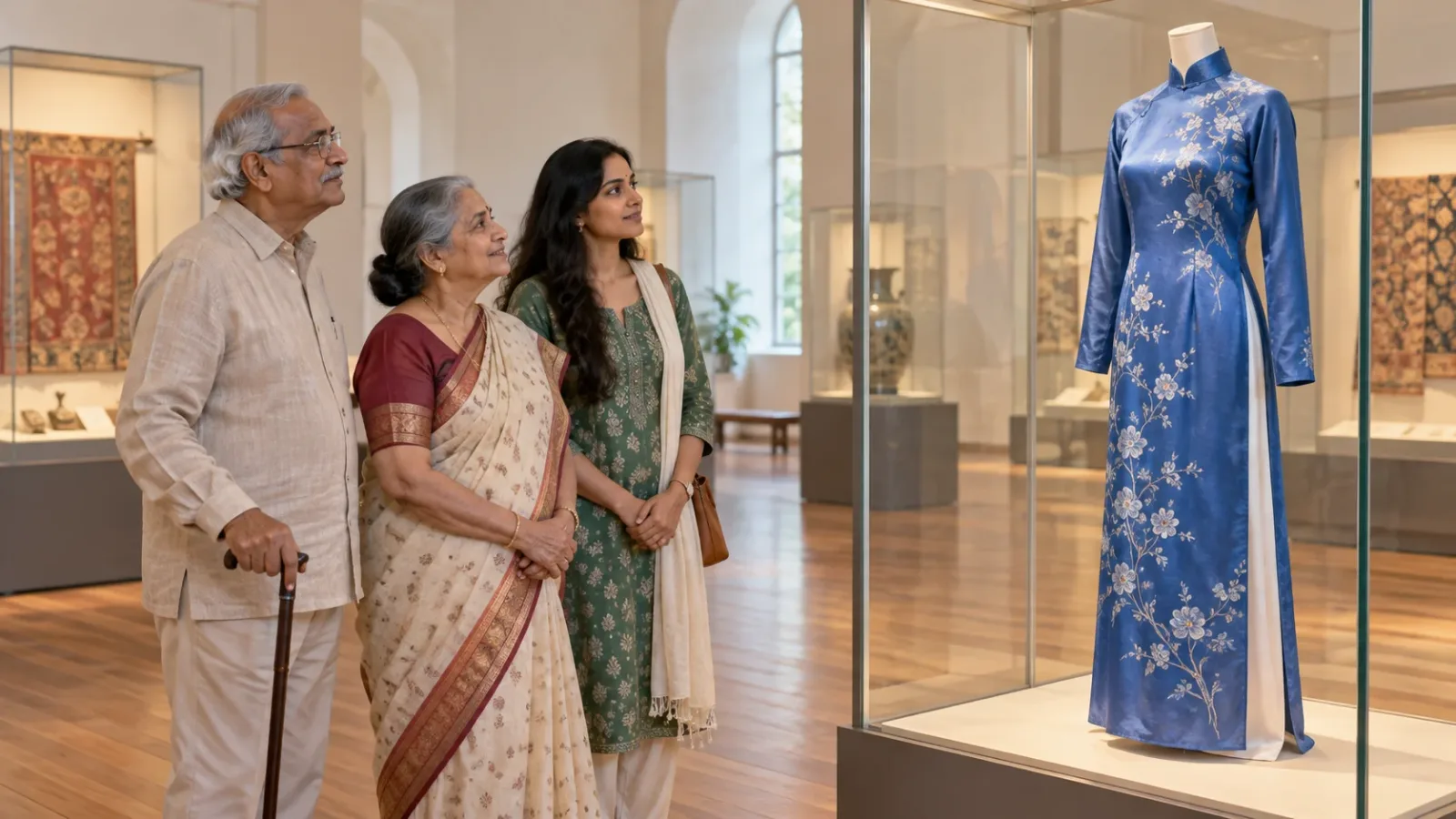
The Southern Women's Museum in Ho Chi Minh City is not just a light costume stop. Ao dai and traditional craft displays can draw parents in, but the museum also tells stories of women in wartime, loss and political struggle. Choose it with parents who want that history, not simply because an online listing says free entry.
Keep the Ho Chi Minh City museum separate from Hanoi
The museum's own website identifies Bao tang Phu nu Nam Bo at 200–202 Vo Thi Sau, Xuan Hoa Ward, Ho Chi Minh City. This is the Southern Women's Museum, not Hanoi's Vietnamese Women's Museum. A Hanoi museum's guide languages, tickets or floor plan do not establish the service here.
Older descriptions use District 3 and the Vo Thi Sau ward name; the current homepage direction block uses Xuan Hoa. Keep the street number, street and actual museum name with the destination pin. Do not let an address-format change send a driver to a different women's museum or a separate Ao Dai Museum.
Clothing is a way into personal stories
The operator's ao dai exhibition article from October 2017 discusses changes in the garment and its links with women's social lives and wartime roles. It is useful background for looking at clothes as lived objects. It is not a current guarantee that the room remains exactly as it opened in 2017 or that a particular dress is on display today.
A separate operator article dated 27 April 2017 tells the story of an ao dai made by a daughter for her mother and later donated to the museum. The account connects clothing with family affection, work, bereavement and wartime experience. A dress can carry a difficult story as well as attractive fabric.
For parents who enjoy textiles, start with one question: who wore the object, who made or donated it and what part of a life it records? That is a suggested way of looking, not a booked theme tour. The museum's collection count in an old article is not the number of objects currently available to see.
Ask about the emotional subject before adding the stop
Lonely Planet's museum entry describes traditional crafts and ao dai alongside photographs and stories of women in history and wartime. A first-person Travelbinger account published 27 August 2026 likewise describes both clothing and wartime material. Do not pitch the museum only as colourful dresses and a pleasant photo background.
Tell parents that wartime sacrifice and loss are part of the subject and ask whether they want that during this part of the holiday. They may prefer one display, a shorter visit or a different outing. No one needs to complete every room to make a family visit worthwhile.
The museum presents its own historical and commemorative account. Read the objects and captions as that institution's account rather than treating a quick visit as a complete history of every southern Vietnamese woman. This guide is about choosing a suitable visit, not ranking whose personal memories should matter.
Use the homepage's split hours, not a broad footer
At the 9 November 2026 check, the operator homepage explicitly gives morning visiting hours 07:30–11:30 and afternoon 13:30–17:00. Some internal pages, including its museum activities page , have a footer saying only 07:30 opening and 17:00 closing. That broad span does not establish uninterrupted access over lunch.
The Vinpearl visitor guide also lists the split morning and afternoon hours. For a parent-friendly plan, choose one window instead of arriving at noon and assuming indoor waiting is possible. Confirm the actual date and any exception with the museum before departure.
These are published visiting hours, not a promise that a live guide, every gallery or a particular room will be available throughout them. If one display is the reason for the journey, ask whether that area can be visited rather than inferring it from the main door's opening time.
Free-entry reports are not a current operator tariff
The August 2026 Travelbinger visit and Vinpearl guide describe admission as free. We did not establish a current admission tariff from the cited operator pages. Treat free entry as those sources' report, not an independently confirmed operator quote for your family's future date.
Ask whether ordinary entry, a special display, a guided visit or another service has a charge. A guide's reference to no ticket fee would not make transport, interpretation, a private explanation or refreshments included. No booking, payment or concession has been arranged here.
English captions may be uneven; Hindi support is unconfirmed
Lonely Planet describes stronger English and French signage around crafts and clothing, with much of the other historical material in Vietnamese. That is editorial guidance about language distribution, not a promise that every caption or a current temporary display is translated.
If parents need Hindi, ask what help is actually available. Read a little background together before the visit and choose objects they can enjoy without a long untranslated explanation. This guide does not establish a Hindi audio guide, a live interpreter or permission to photograph captions for translation.
Do not settle current access from a floor count in a review
The Travelbinger account describes a two-floor visit; Lonely Planet describes themes over three floors. Those descriptions do not establish which galleries will be open on your date or what route is usable by a particular parent. We do not combine them into a fixed “see all floors” plan.
The cited operator pages do not establish a complete step-free route, working lift, wheelchair loan, accessible toilet or seating reservation. Ask about the actual entrance, any thresholds or stairs, the chosen gallery and places to sit. An indoor museum is not automatically an easy walking or standing day.
If the parent can only manage one level, ask whether the subject they want is on that accessible route and whether staff can explain what will be missed. Do not assume a family member can carry a wheelchair or that a building photograph proves a usable alternative.
Viewing a dress is not renting or trying it on
The 2017 operator articles describe collection and display material, not a costume-rental service. Do not promise a parent an ao dai fitting, portrait session, sewing class or access to handle original textiles because clothing is part of the museum.
Vinpearl says photography is allowed except in restricted areas, but a current blanket rule was not established from the cited operator pages. Ask staff and read the signs for the actual room. Neither old exhibit photographs nor a visitor's social post creates permission to use flash, touch an object or make a styled shoot.
Leave the rest of the day flexible
Build the visit around one morning or afternoon window, a subject parents have chosen and an actual language/access plan. Keep lunch and a sitting break separate until the museum confirms what can be used on site. A nearby attraction on a map is not a reason to add another stop if parents have had enough.
For wider planning, use The Trip Keeper's Vietnam trip page and describe the museum and support you want. Admission, a guide, Hindi interpretation, step-free transport, a meal or a costume activity is not implied to be included. Last checked 9 November 2026. Hero: AI-generated fictional family viewing a generic textile display, not actual museum rooms, a current collection object or a booked visit.

A Miranda House graduate and lawyer who traded courtrooms for slow travel. Cheshta travels with the batches we host ourselves, with a soft spot for travelling alongside elders.
Planning your next trip?
We'll handle insurance, hotels, airport assistance and the itinerary — the same way we do it for every trip.
Questions on this article
asked by readers, answered by us
Was this helpful?
one tap, no sign-up