




- Place
- Srirangam
- Focus
- Temple-town enclosure layers
- Source status
- India tentative-list submission
- Inner access
- Not established here
- Reviewed
- 17 November 2026
Reviewed: 17 November 2026. Selective heritage outline, not a ticket or access guarantee.
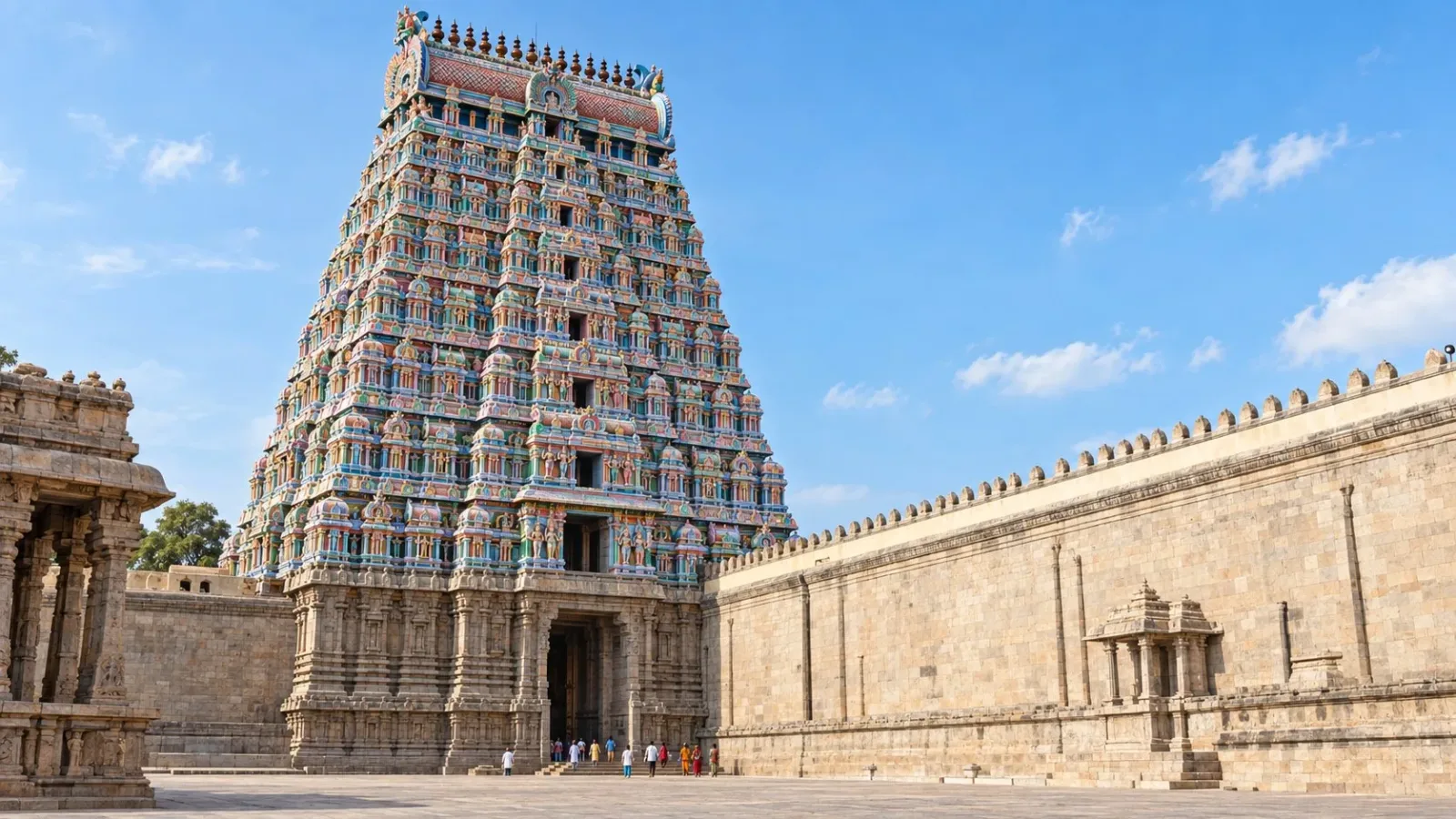
AI-generated fictional Srirangam temple town-inspired scene, not an exact monument layout, current visitor route or access record.
Srirangam is easier to understand when a temple-town and a single shrine are not treated as the same thing. India's tentative-list submission describes concentric rectangular enclosures, with outer settlement and inner temple functions. The useful question is how those layers relate, followed by a separate check of where you may actually go.
Start with a temple-town
The submission describes the Sri Ranganathaswamy Temple as a settlement within an enclosure-based religious complex. Outer areas serve settlement functions while inner areas serve temple functions. This is more helpful for understanding the place than imagining one isolated building with an empty perimeter.
The source is India's tentative-list submission, hosted by UNESCO. It is not a World Heritage inscription, and the page assigns responsibility for its contents to the State Party. Use its planning description with that provenance intact, not as UNESCO certification of every detail or today's arrangements.
Read gateways and walls as relationships
The district page describes substantial enclosure walls and towers, and identifies the temple with Ranganatha, a form of Vishnu. Read walls and gateways in relation to the religious and settlement layers they organise, rather than count towers as independent attractions.
The submission distinguishes prakarams and enclosures in its text and footnote. This guide does not turn those terms into an unexplained exact layer total or a numbered visitor circuit. A conceptual plan is not a gate-by-gate route from your vehicle to the shrine.
Separate the described plan from visitor access
A hall, gateway or inner court appearing in a heritage description does not establish that every visitor may enter it. Confirm current eligibility, permitted areas and any different rules for particular religious spaces. Do not infer inner access from being able to move through an outer settlement area.
The same distinction applies to towers and halls. A named tower is not a promise of a climb or viewpoint; a described hall is not necessarily open for unrestricted visiting. This article does not settle non-Hindu access areas, photography, clothing, device rules or worship-session arrangements.
Plan only the visit you can confirm
Ask for the current visitor entrance and the parts open to your group. Confirm opening, last entry, worship-related restrictions, security arrangements and any service or ticket you actually intend to use. Nothing here books darshan, guarantees a queue time or treats a service label as admission everywhere.
Then check the practical route: permitted drop and collection, walking, steps, surfaces, rest points, toilets and assistance. The river-island setting described by the district is geographical context, not a verified arrival route or flood/road update.
Keep a selective visit within those confirmed limits. You can understand the relationship between town and temple without promising to traverse every enclosure or enter every religious area. No fixed duration, tower view, procession or step-free circuit has been verified here.
Frequently asked questions
Is Srirangam only one isolated shrine?
The cited submission describes a temple-town with related settlement and religious layers.
Is the UNESCO-hosted page an inscription?
No. It is India's tentative-list submission, with State Party responsibility for the content.
Can I assume every enclosure and hall is open to me?
No. Confirm actual eligibility and current permitted areas separately.
Does this guide book darshan or promise a tower climb?
No. It explains the planning relationship and leaves current visitor arrangements to be confirmed.
Does this article reserve a guide or transport?
No. Confirm the actual provider, language, meeting point, fee and return separately. A heritage description does not book a service.
Is there a fixed visit duration for every traveller?
No. This is a selective editorial outline. Check your group and actual route before adding further stops.
Official sources and limits
Official heritage descriptions support the named structures and architectural features, not current opening, final fees, combined ticket scope, services or continuous accessible routes. Verify the actual visit separately.

A Miranda House graduate and lawyer who traded courtrooms for slow travel. Cheshta travels with the batches we host ourselves, with a soft spot for travelling alongside elders.
Planning your next trip?
We'll handle insurance, hotels, airport assistance and the itinerary — the same way we do it for every trip.
Questions on this article
asked by readers, answered by us
Was this helpful?
one tap, no sign-up