




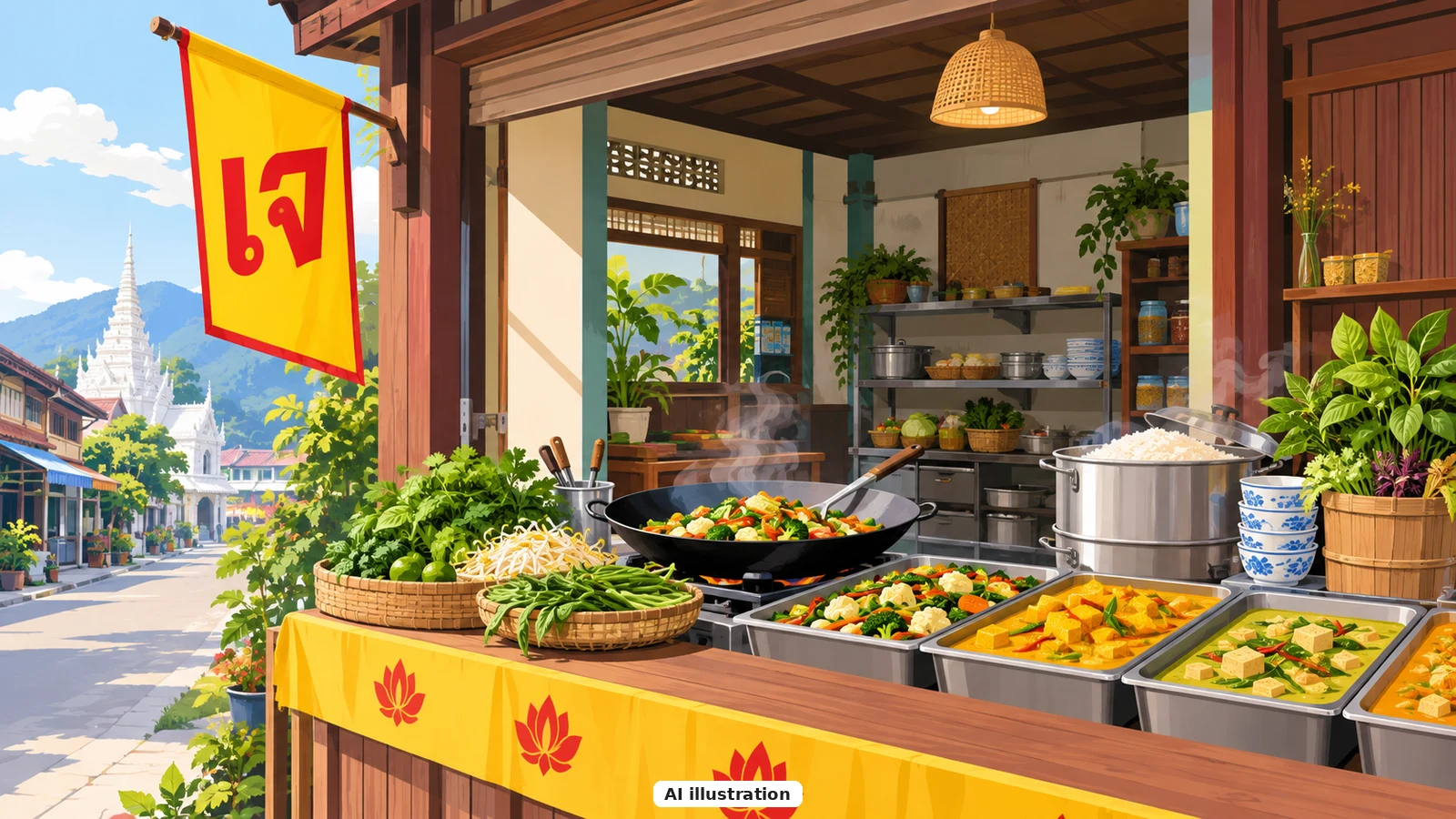
Thai food has a reputation problem among vegetarian Indian travellers: the curries look vegetable-forward, and then the fish sauce arrives in everything. Chiang Rai is kinder than the reputation. Buddhist food traditions run deep here, the night markets have genuinely improved for plant-based eating, and a couple of short Thai phrases close most of the gap. This is the practical version - what the yellow flags mean, exactly what to say, which famous dishes need a question first, and the fallback when you just want dal.
1. The short answer
Eat one meal a day at a jay restaurant and the rest sorts itself out. Jay (เจ) kitchens are strictly vegetarian Thai eateries following Buddhist dietary practice - no meat, no fish sauce, no oyster sauce, usually no egg - and they cluster near the temples, marked by yellow flags with red characters outside ordinary-looking shophouses. Dishes like pad pak ruam (stir-fried mixed vegetables), khao man (rice cooked in soy milk) and tofu curries run about 50-80 baht a plate. At markets and everywhere else, two phrases do the work: "kin jay" (กินเจ - I eat vegetarian) for the general signal, and for strict preparation, "mai sai nam pla, mai sai man hoi" - no fish sauce, no oyster sauce; add "mai sai kapi" if shrimp paste matters to you. A full street-and-jay day costs roughly 150-300 baht per person.
2. The jay system: your most reliable meal
Jay eating is Thailand's own answer to strict vegetarianism, older than any tourist demand, and Chiang Rai's temple neighbourhoods support several kitchens. Walk the streets around the wat closest to your hotel in the late morning and look for the yellow flags; the food is usually laid out as a point-and-choose counter, which also solves the language problem - you see exactly what you are getting. The style will feel familiar to Indian vegetarians: tofu in various gravies, stir-fried greens, mock meats made from soy and wheat, rice, and clear soups. Two things to know: jay cooking also skips pungent roots like garlic and onion in strict kitchens, which Jain travellers may welcome but others should not be surprised by, and many jay shops wind down after lunch, so make it your midday anchor rather than a dinner plan.
3. The dishes that need a question first
Three Chiang Rai favourites are traps only if ordered blindly. Khao soi, the northern curry-noodle bowl, is traditionally built on meat stock and a curry paste that can contain shrimp - a vegetarian version exists (the jay kitchens make one), but confirm the broth and paste before ordering anywhere else. Som tam, the green papaya salad, is dressed in fish sauce by default; ask for it without ("mai sai nam pla") and most stalls will make it so. And tofu is not a guarantee: tofu dishes routinely arrive in oyster sauce or meat-based broth, so the sauces still matter even when the protein is plant. The market-safe list that needs no negotiation: grilled corn, fresh spring rolls where you can watch them made, fresh fruit and smoothies, mango sticky rice, and coconut desserts. The Night Bazaar and walking-street markets have marked plant-based options far more clearly since 2024, but the phrases above remain the real safety net.
4. When you want familiar food
Some evenings, especially with parents, the answer is not adventure but dal-roti. Chiang Rai has a small Indian restaurant scene in the town centre that serves exactly this need - vegetable curries, lentil dishes, paneer, naan and rice - and it is the easiest way to feed a mixed group where only some want to experiment. Two practical notes rather than recommendations: check current opening days locally (small restaurants keep flexible schedules), and do not assume familiar-looking items elsewhere are vegetarian by default - even fries and café food in Thailand can involve shared oil or non-vegetarian seasonings, so ask. Hotel breakfasts, if your booking includes them, are the other quiet win: fruit, rice, eggs for those who take them, and one less decision each morning.
5. Making it work day to day
Save the two phrases on your phone in Thai script as well as transliteration, and show the screen rather than trusting pronunciation under market noise. Anchor lunch at a jay kitchen near whichever temple is on your route, treat the Night Bazaar as a grazing dinner with the safe list plus one negotiated dish, and keep breakfast at the hotel or the market's fruit stalls. Budget is almost a non-issue: a jay plate is 50-80 baht, a khao soi 60-80, and a full day of street and market eating runs 150-300 baht per person. And carry the same habit that protects vegetarians everywhere in Thailand: ask about the three hidden ingredients - fish sauce, oyster sauce, shrimp paste - even when the dish looks like pure vegetables. In Chiang Rai, the asking is usually met with a smile and a workable answer.
Sources: Chiang Rai food guide covering jay restaurants, market eating and 2026 prices (thailandjourney.org) and an on-the-ground vegetarian eating report from Chiang Rai (veggietravelgirl.com). Menus, stalls and schedules change - confirm ingredients when ordering.

A Miranda House graduate and lawyer who traded courtrooms for slow travel. Cheshta travels with the batches we host ourselves, with a soft spot for travelling alongside elders.
Planning your next trip?
We'll handle insurance, hotels, airport assistance and the itinerary — the same way we do it for every trip.
Questions on this article
asked by readers, answered by us
Was this helpful?
one tap, no sign-up