




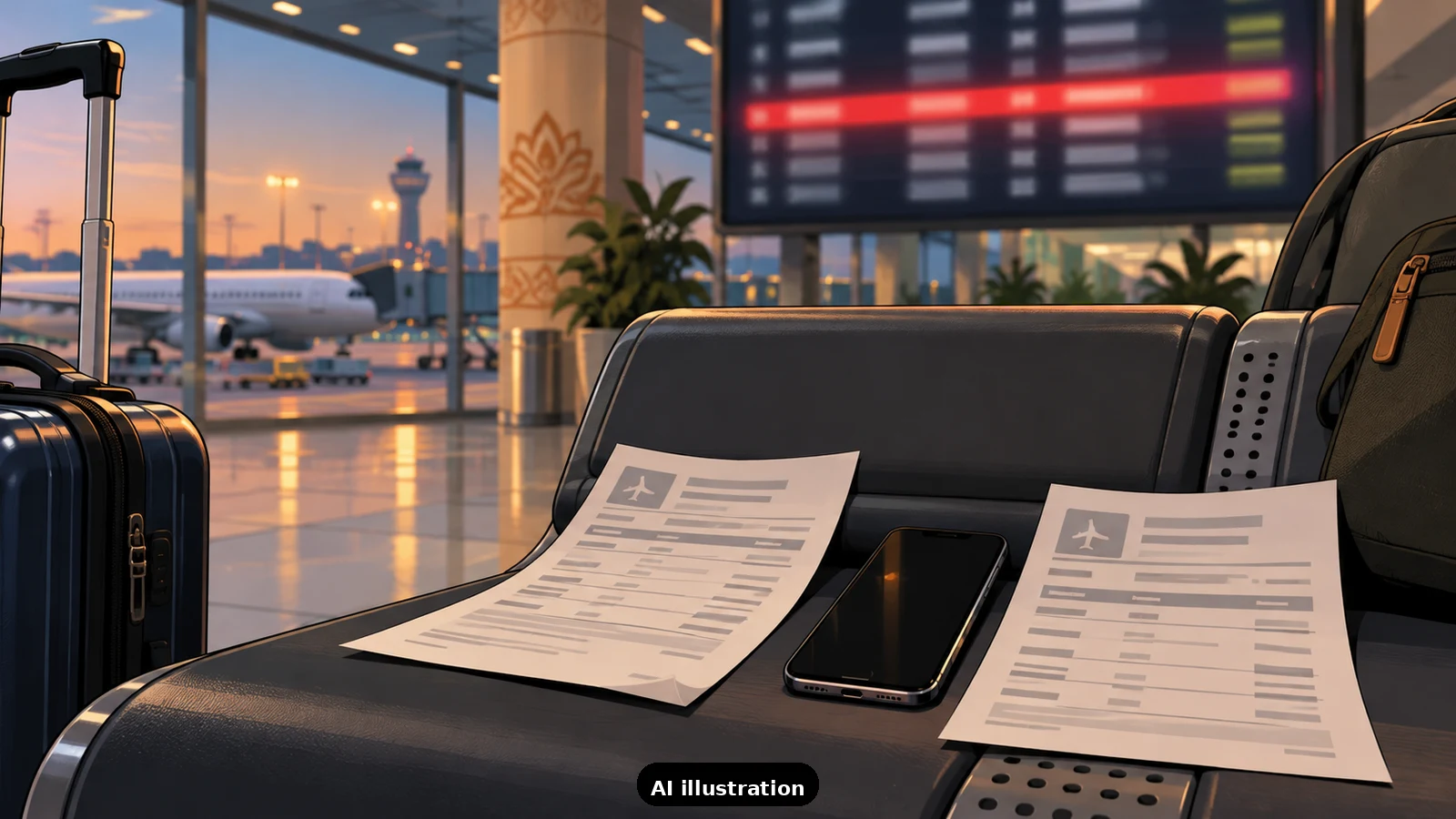
Short answer: two contracts, two separate fights. When your first flight is cancelled, that airline owes you a refund or rebooking for its own leg. The second flight - on a different ticket - remains a live, valid booking that expects you at check-in on time. If you no-show it, its airline treats it exactly like any no-show: the coupon is gone and, on round trips, the return can cancel too. Nothing about your first airline's fault transfers. That is the price of the cheaper separate-ticket itinerary, and it is why the first hour after the cancellation notice decides whether you lose one flight or three.
Hour one: protect the second ticket. The moment the cancellation lands, do two calls in parallel. Call the first airline and get the cancellation confirmed in writing - the email or SMS stating the flight was cancelled is your evidence for everything that follows. Simultaneously, call the second airline's reservations line, explain that your inbound cancelled, and ask what they can do: airlines are not obliged to help, but many will move you to a later flight for the change fee, sometimes waived as a goodwill gesture when you call before departure rather than after a no-show. The pre-departure call is the whole game - a passenger who warns the airline keeps options; a no-show keeps nothing.
Then triage the first ticket. Take the rebooking if the offered alternative still lands you in time for the second flight with a realistic buffer - and be honest about what realistic means across terminals and check-in deadlines, not just wheels-down to wheels-up. Take the refund when the alternative arrives too late, and use the freed money plus time to re-shop the whole journey. Insist on the full refund for the unused cancelled leg in cash to the original payment method, not a shell of credit-shell games you did not ask for.
Where travel insurance earns its premium. This exact scenario - a cancellation on one ticket cascading into a loss on another - is what trip-interruption and missed-connection covers exist for. If you hold a policy, file the claim with the first airline's written cancellation proof and the second ticket's receipts; the no-show or rebooking costs on the second ticket are the claimable loss. Families flying separate tickets without insurance are self-insuring a risk they usually have not priced.
Prevention for next time. Separate tickets save real money on some routings; respect what they cost in protection. Leave a long buffer - overnight for international onward connections is the careful standard, not three hours. Keep both airlines' phone numbers and both PNRs in one note. And when the routing allows, a single through-ticket puts the connection risk on the airline instead of you - the airline must then rebook you through, hotels and all, when its first leg cancels.
How TripKeeper builds connections. When we plan itineraries that mix carriers or tickets, the buffers, the insurance and the what-if phone tree are part of the plan, and a cancellation becomes a call to us. If you want connections engineered rather than hoped through, send us a trip-planning inquiry.

A Miranda House graduate and lawyer who traded courtrooms for slow travel. Cheshta travels with the batches we host ourselves, with a soft spot for travelling alongside elders.
Planning your next trip?
We'll handle insurance, hotels, airport assistance and the itinerary — the same way we do it for every trip.
Questions on this article
asked by readers, answered by us
Was this helpful?
one tap, no sign-up