



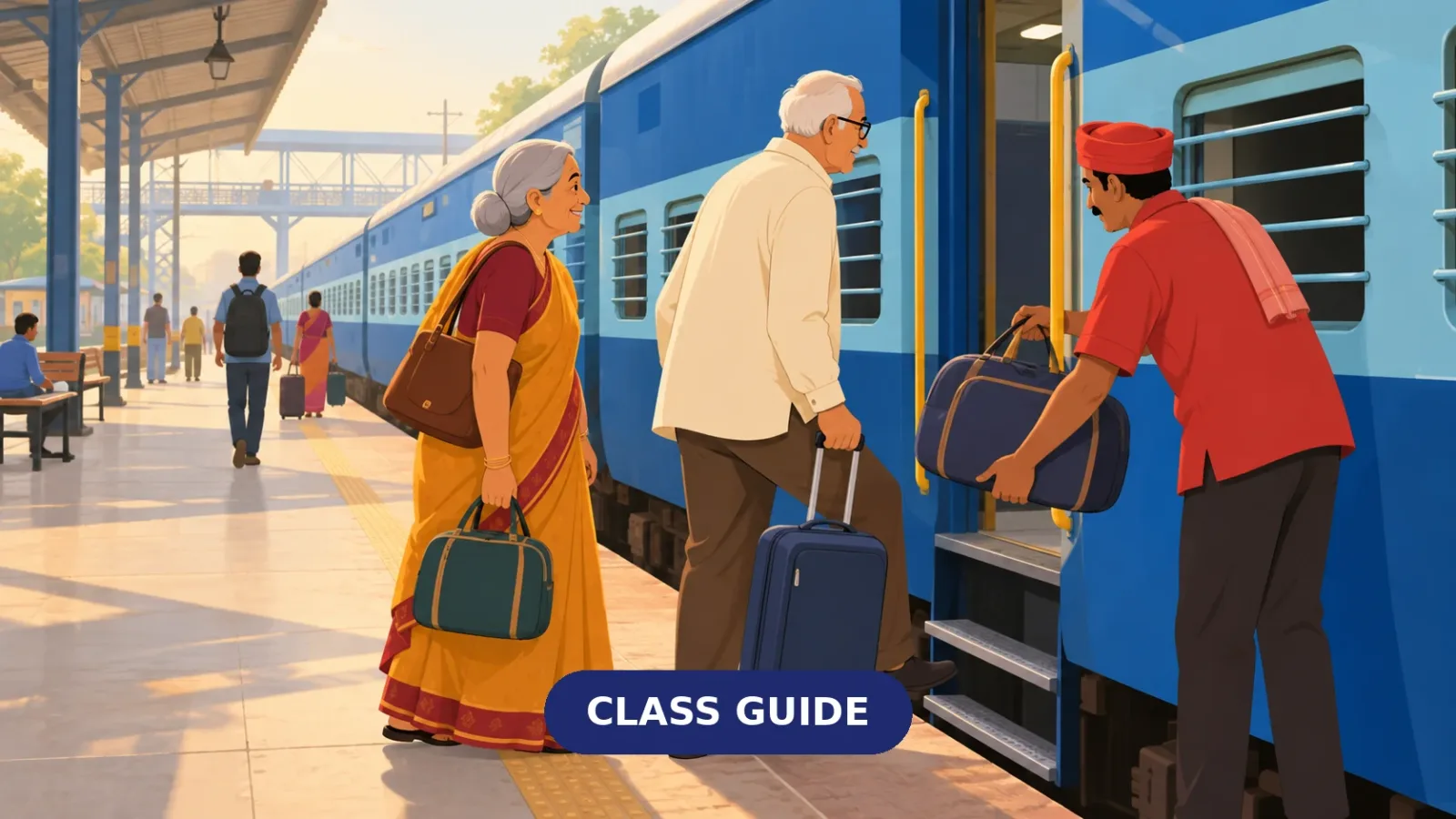
- Berth first
- Lower berth matters more than class
- Auto-allotment
- Seniors & women 45+ get lower berths if available
- Daytime trips
- Chair car is often the simplest
- Station help
- Free wheelchairs at 5,868 stations
Parents asking for "the easiest class" are usually asking three separate questions: will they get on and off the berth easily, will the heat and crowd tire them out, and how much walking does the journey involve. Answer those, and the class mostly chooses itself.
Start with the berth, not the class
For an overnight journey, start with the berth, not the class. If climbing is hard for your parent, the berth matters more than the class printed on the ticket: a lower berth in Sleeper class involves no climb, while an upper berth in AC 2-tier still does. A lower berth also makes toilet trips at night easier and gives a seat to sit on during the day. The Railways' reservation system automatically allots lower berths to senior citizens and women aged 45 and above when available, even without a specific request, and a combined quota of lower berths is earmarked per coach for senior citizens, women 45 and above, and pregnant women - six to seven in Sleeper, four to five in AC 3-tier, and three to four in AC 2-tier coaches, depending on the train. Booking early improves the chances of landing one; it is never guaranteed. If your parent ends up on an upper or middle berth, they can ask the on-board ticket checking staff after departure - staff are authorised to allot a vacant lower berth to senior citizens, with an entry in the chart. Never shift to a vacant berth without the staff recording it.
How the classes compare for older travellers
Sleeper (SL) - non-AC, with open bays of six berths and side berths across the aisle. AC 3-tier (3A) - a similar six-berth bay layout in an air-conditioned coach. AC 2-tier (2A) - four berths per bay instead of six, plus side berths along the aisle; the side berths have curtains. First AC (1A) - cabins of two or four berths; not every train carries it. Chair Car (CC) and Second Sitting (2S) - seats only, no berths; for a daytime journey of a few hours, a reserved seat means no climbing and no berth to manage. Layouts above follow the standard coach arrangements described in this train classes guide (updated April 2026): bedding is provided in the AC sleeper classes - a bedroll can be chargeable on some 3-tier trains - and not in Sleeper. Amenities can still vary by coach and train, so check the exact coach amenities for yours when booking.
A simple way to decide
Daytime journey under about five hours: look at chair car first. Overnight: pick the AC class the budget allows, and put your effort into securing lower berths - if climbing is hard, the difference between a lower and an upper berth will matter to your parents more than the difference between classes. For parents with specific mobility or health needs, treat the class as a comfort choice and ask their doctor about any travel-specific precautions; for the station itself, wheelchairs are available free of cost at 5,868 stations across the country and licensed porters (Sahayaks) can be hired at pre-fixed rates, according to the Railways' December 2025 statement in Parliament. Battery-operated vehicles run at 79 major stations, prioritising senior citizens, on a first-come basis.
Before you book
Check the train's coach composition when choosing - not every train has every class. Book as early as reservations open for popular trains, since the earmarked lower berths go early. And if two trains work, prefer the one whose timings keep your parents off the platform in the very early morning or late at night.
Quick questions
Is Sleeper class okay for elderly parents? It can be, with a lower berth and mild weather, for parents used to it. Sleeper is non-AC and bedding is not provided, while the AC sleeper classes include bedding (a bedroll can be chargeable on some 3-tier trains). If the budget allows, an AC class with bedding can make an overnight journey easier - check the exact coach amenities for your train when booking.
Will my parents automatically get a lower berth? The reservation system allots lower berths to senior citizens and women aged 45 and above automatically when available, and a per-coach quota of lower berths is earmarked for them. Availability is the catch - book early, and if they still get an upper or middle berth, the on-board ticket checking staff can allot a vacant lower berth after departure, recorded in the chart.
Is chair car better than a sleeper for elderly parents? For daytime journeys of a few hours, it is worth a look - a reserved seat involves no climbing and no berth to manage. For overnight travel, a berth class with a lower berth is the better choice.
Is First AC worth it for elderly parents? First AC has cabins of two or four berths and more privacy than the open bays, but not every train carries it. If climbing is the main concern, a lower berth in any class addresses it; AC 2-tier has four-berth bays and curtained side berths.
What help is available at the station? According to the Railways' December 2025 statement, wheelchairs are available free of cost at 5,868 stations, licensed porters (Sahayaks) work at pre-fixed rates, and battery-operated vehicles run at 79 major stations with priority for senior citizens, on a first-come basis.

A Miranda House graduate and lawyer who traded courtrooms for slow travel. Cheshta travels with the batches we host ourselves, with a soft spot for travelling alongside elders.
Planning your next trip?
We'll handle insurance, hotels, airport assistance and the itinerary — the same way we do it for every trip.
Was this helpful?
one tap, no sign-up