




An English webpage is not a promise of an English-taught workshop. At Yamadamatsu's Kyoto incense workshops, the operator's linked booking inquiry form separates Japanese oral explanations from English written descriptions. For parents who need a companion to translate, that is the decision to settle before choosing a date.
Choose listening, practice or making
The official workshop page describes a beginner-welcoming Monko experience using a five-round incense-comparing game. Its separate Monko Practice workshop introduces procedures such as preparing a censer and heating incense wood, and is recommended for people who have attended Monko or want to do it at home.
The making options are different again: a scented sachet, or kneaded incense. Do not book the practice option simply because its name sounds similar to the introductory experience. Our suggested first question is what the parent actually wants to do: compare fragrances, learn procedures or make a blend.
English writing does not replace spoken translation
The official inquiry form says all oral explanations are in Japanese. It offers written descriptions in English or Japanese, with other written languages unavailable. It says the operator cannot arrange interpreting services and asks visitors to make their own arrangements if needed.
It also warns that, depending on the workshop, time for interpretation may not be available. An English handout therefore does not settle whether a parent can follow the activity, nor does bringing a bilingual companion automatically create extra teaching time. Ask about the exact course and how interpretation can work before committing.
Count the interpreter's role correctly
The form distinguishes an interpretation-only companion, described as no charge, from an interpreter who participates in the workshop and belongs in the participant count. It also includes an option for adding a participating interpreter with an additional workshop fee.
It generally assumes one interpreter and asks for details if there are more. Our suggestion is to state how many people will make or take part and how many will only interpret, then have the operator confirm the total and arrangement. Do not assume a free interpretation-only place includes a second set of materials or participation.
The form is an inquiry, not a reserved place
The form asks visitors to contact the operator at least one week before the desired date, says a reply may take one to five days and states that seats are not reserved until notification of completed reservations is received. If its email cannot reach you, the form says seats will not be reserved.
It asks anyone booking for someone else to watch for a separate email confirmation before completion. Sending the form is not the end of the task: check the reply and retain the completed reservation details.
The date section also uses different wording about its advance booking window: a heading refers to seven days to one month, while a note describes opening requests in the first week of the preceding month. We have not reconciled those wordings. Ask the operator about your intended date rather than calculate a guaranteed opening day from this article.
Store opening is not a choice of every course
The form says only one workshop is held per day and that workshops are not held on unlisted dates. It gives a 3 pm start and asks for arrival ten minutes before. That does not mean every course is offered every afternoon or that a displayed date still has places.
The English form is specifically for the Kyoto main store, not the Tokyo branch. Different store-opening descriptions on the website should not be used as a workshop calendar. Check the current form and the operator's reply. We do not reproduce its changing date list or quote a final booking price here.
Table seating is only one part of the visit
The English workshop page explicitly describes table seating rather than seiza floor sitting for its Monko and Monko Practice workshops. That is not a whole-building access inspection or a confirmed seating arrangement for every making course.
Ask about the entrance, steps, toilet route, chair and any assistance the actual parent needs. The same page asks Monko visitors not to wear perfume or cologne because the fragrances are subtle. No claim about medical benefit or individual scent suitability is made here.
For the wider route, use our Japan itinerary enquiry page to explain the chosen activity and language support needed. A package enquiry does not confirm a workshop place or interpreter.
Questions families ask
Are the workshops taught orally in English?
The linked inquiry form says oral explanations are Japanese. English written descriptions are a separate option.
Can the operator arrange an interpreter?
The form says it cannot arrange interpreting services. Visitors must make their own arrangements if needed, and time for interpretation may not be available.
Is a form submission a booking?
No. The form says seats are not reserved until completed-reservation notification is received.
Can an interpreter join the craft for free?
The form separates interpretation-only attendance from participation. Confirm the participant count and fee if the companion will also take part.
Sources and review
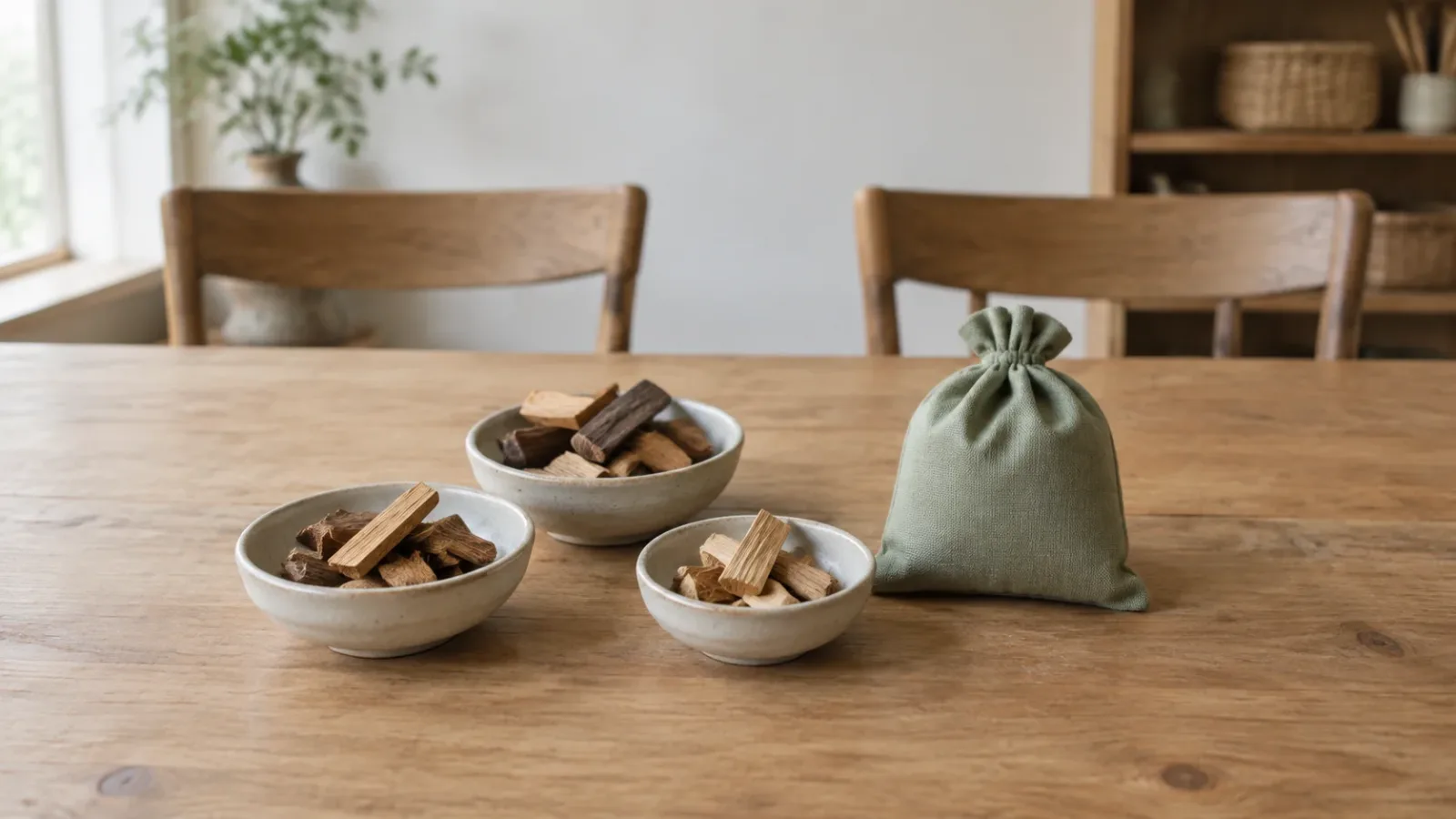
Reviewed 8 November 2026 using the official English workshop page, Japanese workshop page and the booking inquiry form linked by the operator. Pages/form are undated and can change. No form was submitted and no place, price or individual suitability was confirmed. Image: AI illustration of generic wood chips and a sachet, not venue materials or a promised finished project.

A Miranda House graduate and lawyer who traded courtrooms for slow travel. Cheshta travels with the batches we host ourselves, with a soft spot for travelling alongside elders.
Planning your next trip?
We'll handle insurance, hotels, airport assistance and the itinerary — the same way we do it for every trip.
Was this helpful?
one tap, no sign-up