




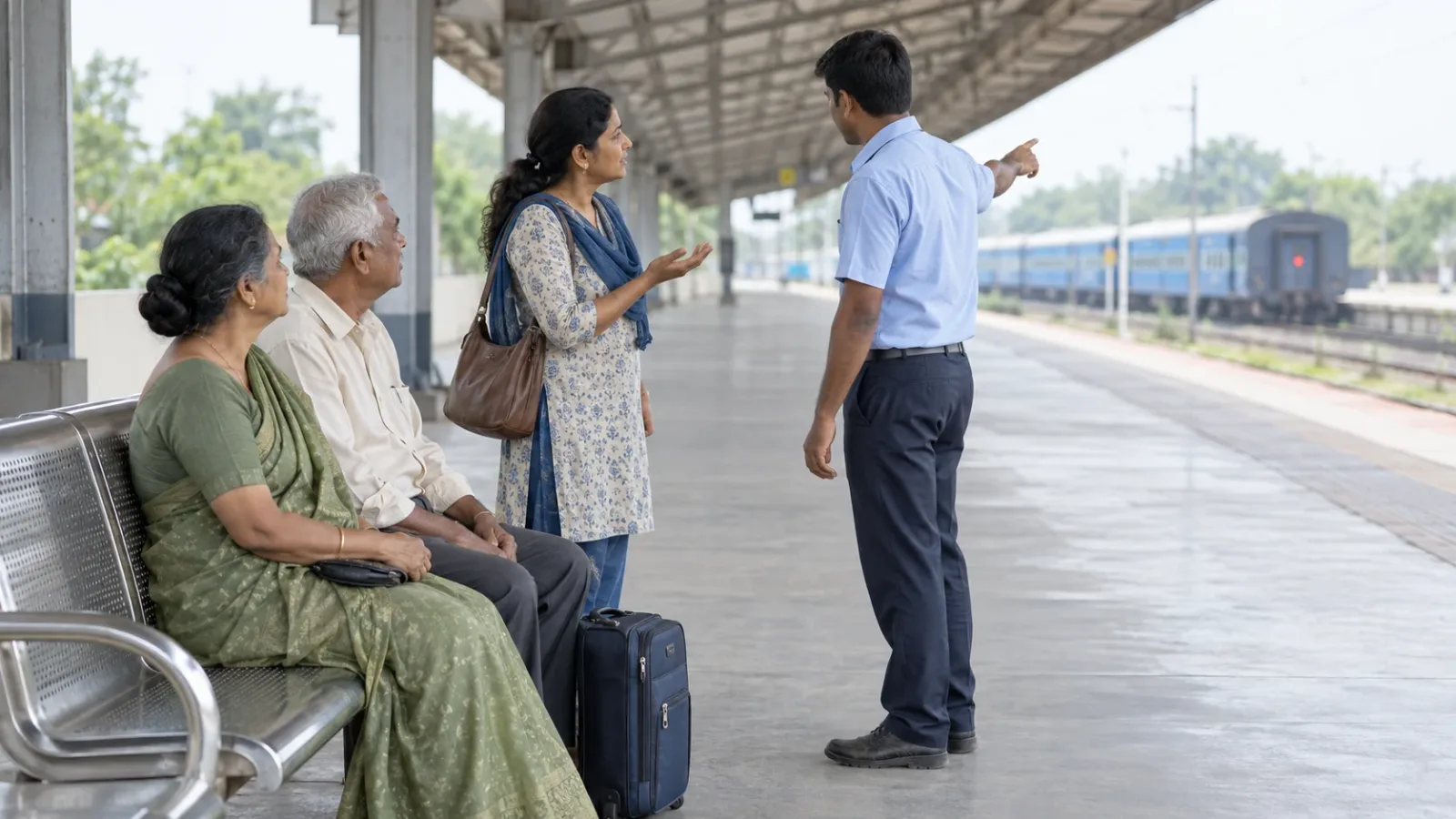
The train has arrived, but the platform has no lift you can use and your parent cannot manage the stairs. The immediate job is a safe, confirmed route from this platform to the exit, not a repair complaint alone. Stay together, explain the actual need to authorized station staff and ask who will help with the next step.
AI-generated fictional photographic-style arrival scene. It does not identify a real station, inspect its access route or show a confirmed assistance service.
Locate the traveller before discussing the taxi
Give the station name and code, platform, train and coach area, arrival time and a reachable contact. Explain the practical limit: the traveller cannot climb stairs, uses a wheelchair, needs a shorter walk or cannot transfer without suitable help. Share only the details needed for assistance.
If still aboard as the station approaches, tell ticket-checking staff or the coach attendant about the concern before arrival where possible. Ask for a safe alighting and receiving plan. Do not assume you may remain aboard to another station, that the train will wait or that someone on the platform already knows the request.
Once safely on the platform, agree a safe waiting place with staff, away from the edge and passenger flow. Keep an agreed companion with the parent and keep the luggage accounted for. If the only companion must seek help, explain that the traveller cannot be left alone and ask staff how to contact assistance without separating.
Ask for the whole platform-to-exit route
Ask: "From this platform, what route can this traveller actually use without stairs? Where does it lead, who will meet us, and does it reach the pickup point?" A lift elsewhere in the station, a ramp at the main entrance or a different platform's accessible exit may not connect to your present position.
Distinguish no lift from a lift that is closed, broken or simply not yet found. Ask staff to identify any authorized usable route, whether it is operating now and what equipment or trained assistance it requires. Do not invent a shortcut from a map. Never cross tracks, enter staff-only areas on your own or try an improvised ramp. Do not carry an occupied wheelchair on stairs.
The Ministry's 10 July 2019 accessibility statement describes station facilities and staged provision of lifts, ramps and other amenities. It is historical national context, not evidence that your arrival platform has an accessible exit today. No current station-specific route or repair time is confirmed by this article.
Separate equipment from the person helping
A wheelchair does not itself remove stairs or supply a trained transfer. Ask who will collect and return it, who will push it, whether the route fits the device, who handles the bags and what any service costs. Ask the traveller what help they can use rather than letting an unverified promise of a quick lift settle the plan.
The 10 December 2025 Ministry statement describes railway wheelchairs supplied free to attendants for escorting senior citizens and other eligible passengers to and from trains, and licensed porters hired at displayed pre-fixed rates when attendants are unavailable. It does not reserve equipment or promise a staffed stair transfer for this arrival. Current local availability, scope and charges need confirmation.
Seek immediate help and record the problem separately
Ask for the station manager, superintendent or authorized assistance point. Explain that this is an immediate exit-access problem, not only a request to repair a lift later. The government's 6 August 2026 PRS overview lists RailMadad and Railway Helpline 139 among assistance and grievance routes. Use the current prompts and keep any reference number.
Record the actual barrier and its location accurately. If safe to do so, take a photo without exposing other travellers' faces or private documents. A complaint acknowledgement is not proof of a usable route, staff dispatch or a repair deadline. If the reported solution does not meet the traveller's needs, say so and ask what authorized alternative remains.
Move the pickup to the confirmed exit, not the other way round
Once staff confirm a usable route, check which exit and vehicle meeting point it reaches. Tell the driver the corrected exit and agree waiting charges or a new pickup only after checking the terms. A waiting car at the main entrance is not a reason to attempt stairs the parent cannot use.
Update the family and any onward connection with what is confirmed and what is still unresolved. Before buying another journey or accepting a paid alternative, verify that it is usable, authorized and within the agreed cost. No free taxi, automatic compensation, onward ticket validity or guaranteed refund is established here.
For checks before departure, use the working-lift and complete-route guide. A complaint about a broken lift and an immediate arrival-exit plan are different jobs; do not wait for a complaint to be closed before asking for help with the person now on the platform.
Sources and limits
Reviewed 14 November 2026. The dated Ministry sources above support historical accessibility context, stated wheelchair/porter provision and assistance channels only. The official RailMadad portal and IRCTC e-wheelchair page were also checked; their relevant current revision dates were not established. No actual station route, working lift, equipment, helper, response time, local price or remedy has been verified for the reader's journey.

A Miranda House graduate and lawyer who traded courtrooms for slow travel. Cheshta travels with the batches we host ourselves, with a soft spot for travelling alongside elders.
Planning your next trip?
We'll handle insurance, hotels, airport assistance and the itinerary — the same way we do it for every trip.
Questions on this article
asked by readers, answered by us
Was this helpful?
one tap, no sign-up