



A sensory-friendly airport routine: use the map before the journey
Start with the traveller’s own triggers, then use the airport’s sensory information to plan a quieter route and a clear next step. No lanyard can promise a quiet terminal.
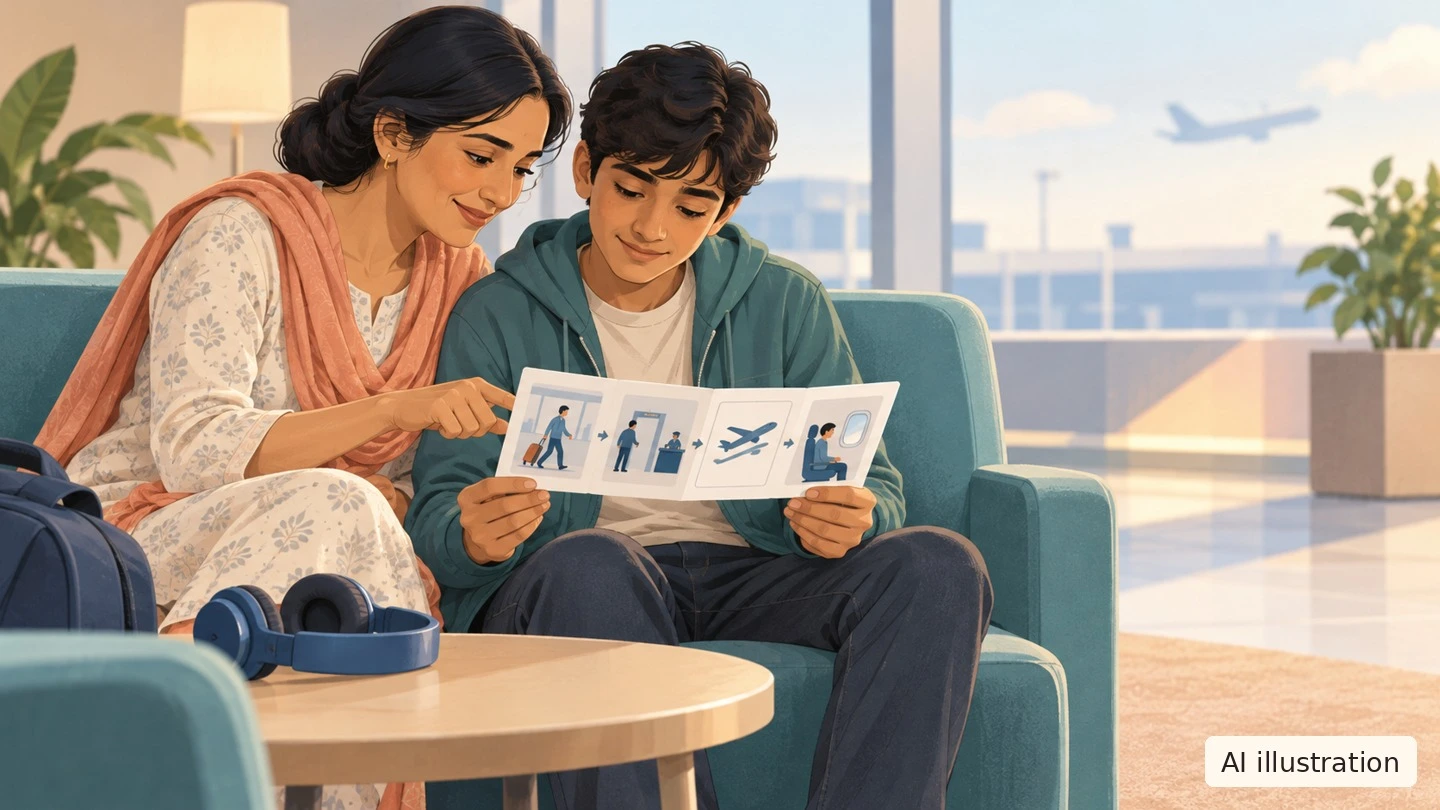
AI illustration: A family reviews a simple airport sequence in a softly lit, uncluttered waiting area. Fictional scene, not an actual location, person or service.
Name the difficult parts
Ask which situations are hardest: bright light, announcements, queues, unfamiliar touch, crowds or a sudden change of plan. Record what helps and what makes things worse. “Special assistance” is too broad to tell a staff member whether the traveller needs a clear verbal explanation, time to process it or a less crowded place to wait.
Use a real airport example
Singapore Changi publishes a social story and a sensory map for travellers with invisible disabilities. Review those with the traveller before the trip, using the actual terminal for the journey. These are planning aids, not forecasts of crowding or promises that every mapped space will be quiet when you arrive.
Make the sequence predictable
Write a short sequence in the traveller’s preferred form: arrive, check in, security, a break, then the gate. Leave room for a changed gate or extra screening. Rehearse asking “What happens next?” and “Can you explain before you do that?” Keep a familiar calming item or headphones available if these help, while remaining able to hear safety instructions.
Arrange help without promising exemptions
Ask the airport and airline what help can be requested, where to meet staff and how to contact them on the day. Changi describes an optional invisible-disability lanyard. It is a discreet awareness aid, not a guarantee of priority, an escort or exemption from screening. The traveller should choose whether to use it.
Protect the recovery break
Choose a break after demanding stages instead of adding shopping to every spare minute. If the planned waiting place is noisy or closed, ask staff for another suitable location on the correct side of security. Keep documents and the next gate details with the accompanying adult so the traveller is not repeatedly asked to reorganise everything.
Questions before you travel
Is a sensory map a quiet-space guarantee?
No. It helps planning; noise, access and crowds can change.
Does a lanyard skip security?
No. Changi’s lanyard is an awareness aid, not a screening exemption or guaranteed priority.
Is this only about the checkpoint?
No. This routine covers the whole airport journey and recovery breaks; checkpoint-specific rules are separate.

A Miranda House graduate and lawyer who traded courtrooms for slow travel. Cheshta travels with the batches we host ourselves, with a soft spot for travelling alongside elders.
Planning your next trip?
We'll handle insurance, hotels, airport assistance and the itinerary — the same way we do it for every trip.