




A message claiming to be from an airline asks for another payment after you booked. Do not decide from the logo, booking reference or link alone. Independently confirm three things: whether anything is actually due for this booking, who is authorised to collect it, and which payment route the genuine airline or issuing seller confirms. If any part remains unexplained, pause that payment and contact the established service channel promptly.
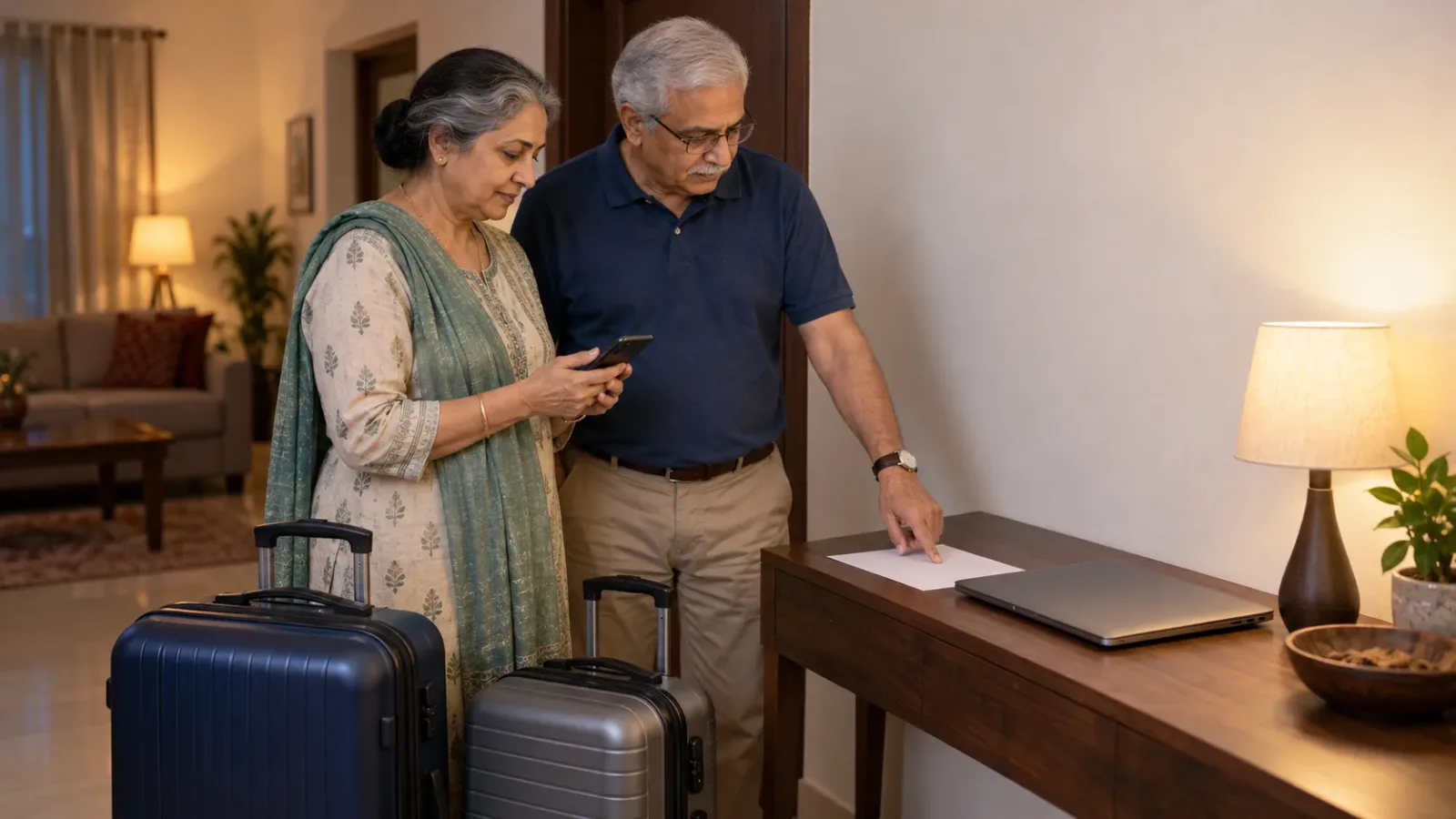
AI-generated fictional photograph of an Indian couple checking a phone and blank travel paper at home. It is not a real airline message, payment screen or authenticated booking.
A payment link is neither automatically genuine nor automatically fake
A dated official example shows why a blanket rule is unsafe. Bulgaria Air's notice of 2 January 2026 explicitly refers to payment links sent by its Customer Service Center while describing a past payment-system interruption. That is evidence that this airline described such a channel, not proof that your link came from it or that another airline uses the same process. The old interruption is not a current outage warning.
For your airline, the legitimacy of this particular request, its payment route and any actual amount due remain unconfirmed until checked through the genuine service. A link arriving just after a booking or support call is not enough. In its security article dated 10 September 2025, Finnair describes convincing fake sites, flight-change messages, fake support contacts and search advertisements. It advises managing a booking directly through its own site or app rather than suspicious links.
Start outside the message
Open the airline's established website or installed genuine app independently. Use the contact route published there, not a phone number, QR code or reply address supplied by the payment demand. Search results and sponsored listings are not themselves verification. If an agency issued the ticket, separately use that agency's established contact and ask which party is handling this request.
Ask the genuine airline or issuing seller to review the original booking and the new demand. Keep the sender identifier, time, claimed reason, amount, currency and link as text for private checking. Do not post the booking reference, ticket or boarding-pass image publicly. Air India's fraud-awareness guidance recommends independently accessing booking information, checking booking details through its website and using official support contacts. It also warns against sharing booking screenshots with unknown parties. This is security guidance, not a statement of a payment deadline or fare rule.
Confirm the obligation before the collector
Compare the original invoice, receipt, booking confirmation and actual payment entry. Ask what the new amount buys or clears: an alleged outstanding balance, a change you requested, an optional service, or a claimed correction. These are questions to resolve, not a list of fees that every airline may charge. Ask which passenger, service and booking the payment would cover and what record will change after it succeeds.
If you already paid an agent, ask how that payment has been credited and why another collector is involved. If the airline cannot locate the booking or the issuing document is missing, reconcile that record first rather than buying a replacement simply because a caller demands it. Neither a visible booking nor a payment screenshot, by itself, answers whether an additional amount is due. No universal ticketing or cancellation consequence is established here.
Ask the genuine service to identify the expected checkout
Have the independently contacted service confirm the request or supply a supported way to complete the same verified task. Ask for the expected collector or processor, payment purpose, exact amount and currency, reference, validity and what to do if it expires. If an outside processor is involved, have the genuine service explain that route before entering information. Do not invent an approved-domain list or accept a stranger's assurance that any familiar payment brand must be collecting for the airline.
Read the full address carefully, including redirects and spelling. A brand name in a page heading, logo or part of an address does not establish ownership. The FBI's 10 June 2019 HTTPS-phishing advisory specifically warns that criminals use certificates and that HTTPS or a lock icon does not establish legitimacy. Encryption and authentic collection for your booking are different checks.
Virgin Atlantic's security guidance warns against unexpected links and unusual requests for financial information and says it will not ask for passwords or card information over email, text or social media. Keep that statement attributed to Virgin Atlantic; do not turn one airline's wording into a universal description of all carriers' checkout flows.
Read the actual approval, not the caller's explanation
Only after the obligation, collector and route are independently clear, compare the genuine checkout with the agreed task: passenger or booking reference, amount, explicit currency, service and any fees or conditions. Stop if the collector, amount or route changes without an explanation you can verify. Ask the airline or issuer about an unclear authentication screen rather than sharing a code with the requester.
Do not disclose passwords, PINs, OTPs or CVV in a call, chat or email, install remote-access software for airline support, or let an unknown person watch your banking screen. Air India's cited security page warns against remote access and sharing sensitive credentials. Entering a payment in a genuine authorised checkout is different from telling credentials to a caller. If the message promises a refund instead of asking you to buy something, use the separate refund-safety check rather than treating a debit authorisation as receipt of money.
After paying, reconcile the result instead of paying again blindly
Keep the independently confirmed request, checkout amount and currency, transaction reference and actual status, then check the airline or issuing seller's record for the intended change. If the bank shows a debit but the seller says unpaid, ask both sides to reconcile that attempt before another payment. A payment receipt does not alone confirm that the requested service or booking change was completed. Ask for the relevant updated document or written status.
If you only opened a page, typed details, installed software or approved money, describe exactly which happened when contacting your bank or payment provider through its genuine channel. Preserve evidence and ask for the applicable protective and reporting steps promptly. Do not assume that merely opening a link proves a debit, or that a genuine-looking receipt guarantees recovery.
For an unresolved consumer-service grievance in India, the National Consumer Helpline describes a pre-litigation route, not a guaranteed remedy. Suspected financial fraud needs prompt bank and appropriate reporting attention rather than waiting for a routine customer-service exchange.
Reviewed 14 November 2026 using the six primary pages linked above. The Finnair, Bulgaria Air and FBI records have the dates stated; exact revision dates were not established for the Air India, Virgin Atlantic and NCH security or service passages. No particular link, caller, payment obligation, fee, expiry, ticket status, airline operational rule or recovery outcome has been authenticated here.

A Miranda House graduate and lawyer who traded courtrooms for slow travel. Cheshta travels with the batches we host ourselves, with a soft spot for travelling alongside elders.
Planning your next trip?
We'll handle insurance, hotels, airport assistance and the itinerary — the same way we do it for every trip.
Questions on this article
asked by readers, answered by us
Was this helpful?
one tap, no sign-up