




Reviewed 18 November 2026. A collection-first guide using the Assam museum directorate, district and state tourism sources. Check current official visitor information.
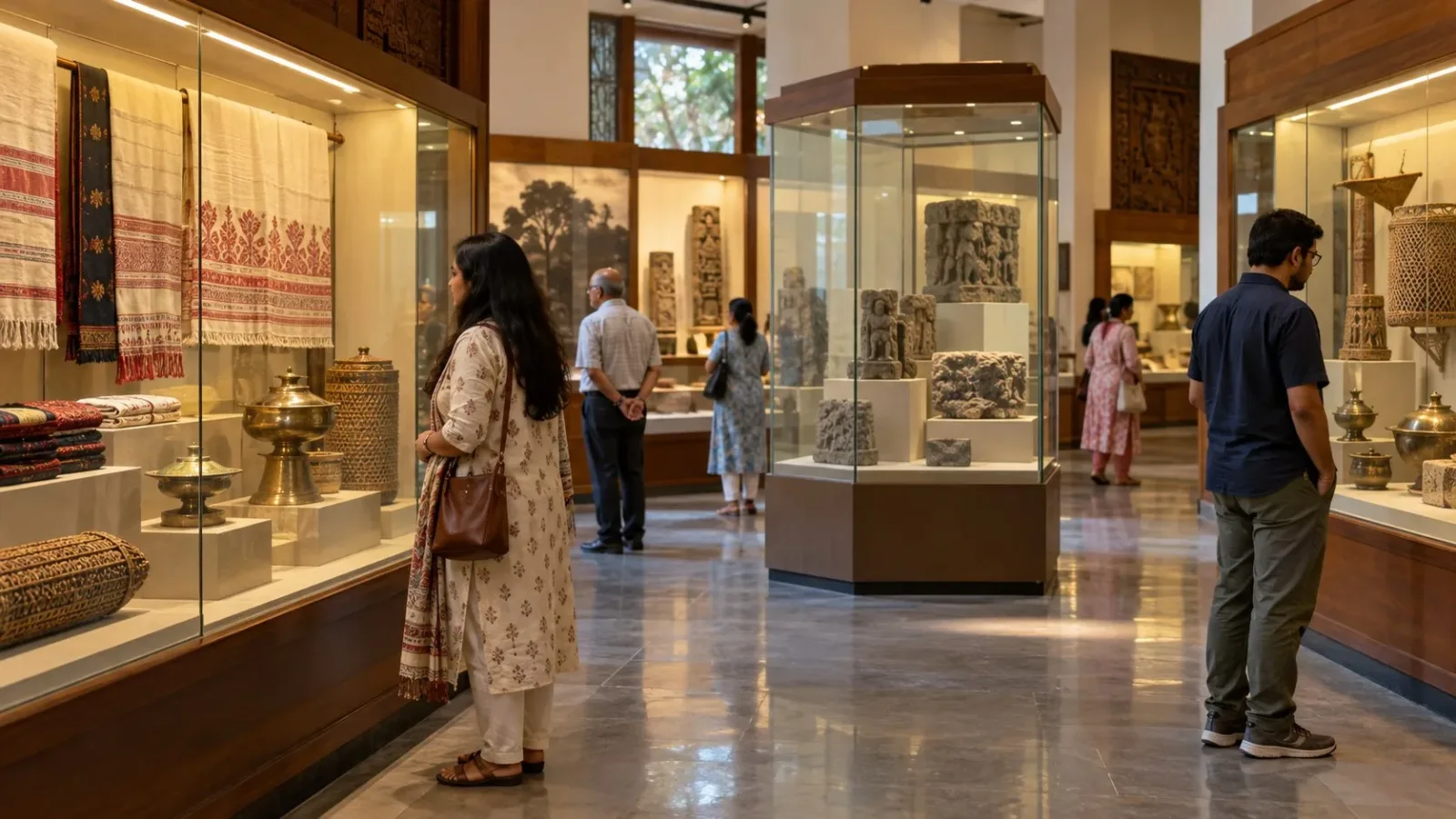
AI illustration: a fictional museum scene inspired by Guwahati. Not an actual location, person, collection display, route inspection or service.
Choose a collection thread first
Assam State Museum can be a focused cultural outing in Guwahati. The Directorate of Museum describes a broad collection, but breadth does not need to become the group’s checklist.
Our recommendation is textiles, manuscripts or sculpture as a main thread. Keep a meal, a break and the return in the plan, and check current official visitor information.
Textiles: look at material and use
The Directorate describes pat and muga garments, riha and historic clothing including royal dress. That gives a way to think about material, dress and use rather than simply colour.
Read the explanation for the particular object. A selected historic garment cannot tell you how everyone in Assam dresses today, and different communities should not be treated as interchangeable.
Manuscripts: notice the writing surface
The Directorate describes manuscripts in old Assamese, Tai and Burmese, on materials it calls sanchipat, tulapat and tal pat. It also notes illustrated Assamese manuscripts.
A script you cannot read can still raise useful questions about material, layout and illustration. Use reliable interpretation for a specific text rather than inventing a translation from its appearance.
Sculpture: ask where an object came from
The Directorate describes sculptures from Ambari excavations and others received from institutions including Bharat Kala Bhavan and Banaras Hindu University. Provenance is part of the story.
An object displayed in Guwahati was not necessarily found at the museum site. Compare the individual object’s origin and explanation rather than assigning every sculpture to one place or period.
Models represent life, not a live appointment
The village-life account includes a model Assamese household, cottage industries and a namghar. Read these as selected museum representations, not a promise of a person weaving or a workshop taking place.
The natural-history account depicts animals and habitats associated with Assam, including Kaziranga and Manas. A habitat display is a museum subject, not a wildlife sighting or a safari.
Finish with a few objects understood
The district places the museum at the southern end of Dighalipukhuri Tank, and Assam Tourism also identifies the city setting. Choose the museum for its collection, not simply as a spare stop between journeys.
Check current official visitor information and keep the amount the group actually wants. A few objects, a conversation and time for food, rest and the real return can be a complete outing.
Sources
Questions people ask at the gate
Which collection thread can we choose?
Textiles, manuscripts or sculpture are useful starting points described by the Directorate of Museum.
What can textiles help us consider?
Material, dress and use, while keeping a selected historic object distinct from everyone’s present-day life.
Must we read a manuscript’s script to find it interesting?
No. Material, layout and illustration can be subjects, with reliable interpretation for specific text.
Why does provenance matter for sculpture?
An object displayed in Guwahati may come from an excavation elsewhere or another institution.
Do village-life models promise live craft demonstrations?
No. Treat them as museum representations, not a dated workshop or live activity.
How much should we try to see?
Our recommendation is a few objects understood, with current official visitor checks, food, rest and the return.
Next walk starts at a new gate.
Was this helpful?
one tap, no sign-up

A Miranda House graduate and lawyer who traded courtrooms for slow travel. Cheshta travels with the batches we host ourselves, with a soft spot for travelling alongside elders.